
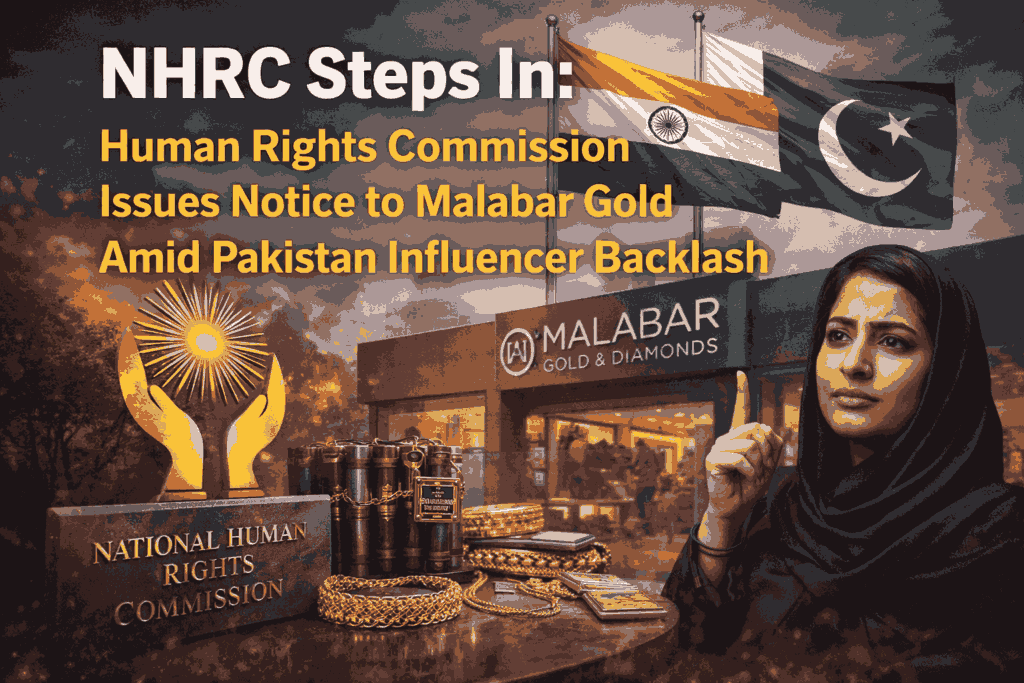
In a development that has ignited fresh debate over corporate responsibility, national pride, and freedom of expression, the National Human Rights Commission (NHRC) has issued a notice to Kerala-based jewellery giant Malabar Gold and Diamonds following public outrage over its collaboration with a Pakistani social media influencer who made controversial remarks about India’s Operation Sindoor. The move by the NHRC comes amid intensifying scrutiny of the role businesses play in shaping public narratives and the boundaries of cultural engagement in a politically charged era.
The NHRC’s notice, issued on February 20 under Section 12 of the Protection of Human Rights Act, 1993, follows a complaint alleging that the jewellery group’s association with the influencer raised serious concerns regarding corporate governance, cross-border compliance and the safeguarding of public order. The NHRC directed multiple authorities to submit an action taken report within two weeks, including the Ministry of Home Affairs, the Ministry of Corporate Affairs and the Kerala Director General of Police.
At the core of the controversy is Alishba Khalid, a Pakistani Instagram personality who was reportedly invited to a Malabar Gold promotional event in Birmingham last year that featured prominent Indian personalities. Social media users circulated past posts attributed to Khalid in which she criticised Operation Sindoor, a military operation launched by India against terrorist infrastructure after a deadly terror attack at Pahalgam. The posts labelled the operation as a “cowardly act” and included content that many in India found deeply offensive and unpatriotic.
Public backlash against the collaboration quickly spread across social media platforms, with many users calling for accountability and even boycotts of the brand. Critics argued that a prestigious Indian company should have been more diligent in vetting its ambassadors, especially given the heightened sentiments surrounding national security initiatives like Operation Sindoor. Amid this criticism, the NHRC determined that the issue did not merely concern business decisions but appeared to raise “human rights issues warranting examination” — notably in relation to corporate due diligence, cross-border financial compliance, and the potential impact on public order.
This is not the first time the NHRC has been called upon in matters that intersect commerce with cultural sensitivity. Historically, the commission has played a role in assessing whether business practices or public actions impinge on citizens’ rights or communal harmony, balancing constitutional freedoms with broader societal interests. Its involvement in this matter signals that public grievances about perceived disrespect towards national symbols or operations can escalate into human rights concerns when they involve major corporations with wide public engagement.
Malabar Gold and Diamonds, for its part, has argued that it was unaware of the influencer’s alleged anti-India stance at the time of the engagement. In filings before the Bombay High Court, the company described the linked social media content as defamatory, stating that the collaboration had been managed by an external agency and was finalised before Khalid’s controversial posts gained attention. The jewellery group also insisted that it had severed ties with the influencer once the allegations surfaced.
The NHRC’s directive highlights the legal and ethical weight of cross-border corporate collaborations in a globally connected marketplace. In addition to probing whether Malabar Gold adequately followed FEMA (Foreign Exchange Management Act) norms, the commission’s action suggests that corporate interactions with public figures — especially those with polarising political histories — can have implications beyond marketing strategy, potentially affecting public sentiment and national unity.
The case has sparked broader reflection on how businesses should navigate the complex terrain of international brand promotion in politically sensitive times. Critics of Malabar Gold argue that even if the initial association was inadvertent, the subsequent public backlash revealed a failure of foresight that could have significant reputational damage. Some social media commentators have gone as far as calling for continued boycotts or heightened scrutiny of any international partnerships involving high-profile Indian brands.
At the same time, defenders of corporate freedom have pointed to legal protections for artistic and commercial expression, warning against conflating political opinion with human rights violations. They argue that the NHRC’s involvement should not become a precedent for policing artistic or commercial associations merely because they intersect with contemporary political sentiments. The debate touches on fundamental questions about when and how freedom of speech and corporate autonomy should give way to public order concerns.
As the NHRC process unfolds, with reports due from central and state authorities, both legal and public attention will remain firmly fixed on Malabar Gold and Diamonds. The outcome could influence how corporations manage influencer collaborations going forward and how regulatory bodies like the NHRC interpret their mandate in an age where cultural sensibilities and business strategies increasingly intersect.
Whether the NHRC’s notice leads to concrete regulatory action or merely serves as a cautionary tale for corporate India remains to be seen. However, the episode underscores the delicate balance that companies must strike between global marketing ambitions and the domestic expectations of national pride and cultural respect — a balance that, if misjudged, can quickly escalate into complex legal and ethical scrutiny.