
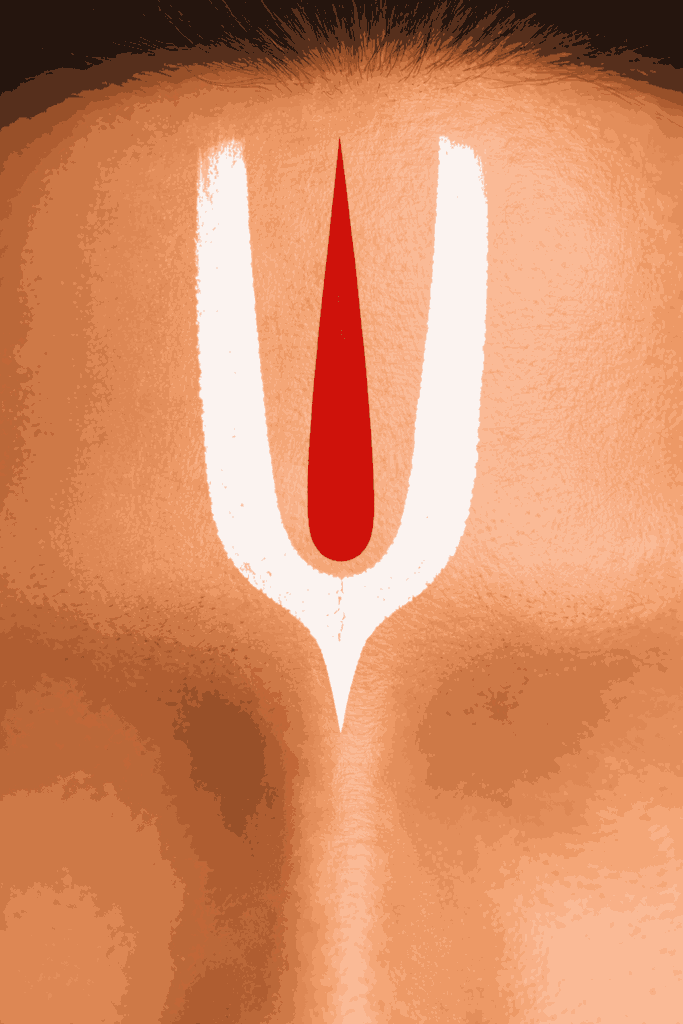
An incident at a Croma electronics store in Mumbai’s Bhandup West recently ignited a fierce debate on religious expression in the workplace after an employee was allegedly asked by a senior colleague to wipe off his tilak on the day of Eid al-Adha, leading to public outrage and wider discussions on secularism and workers’ religious rights.
On June 7, while many across the city were observing the Eid holiday, tensions reportedly flared within the Croma outlet when Jitesh Sharma, an employee at the store, was confronted by his senior, identified in social media posts as Rashid. The controversy stemmed from a request allegedly made by the senior staff member, asking Sharma to remove the religious tilak mark on his forehead — a visible symbol of his Hindu faith — if he wished to continue working that day.
The incident quickly drew attention after a video surfaced online showing a heated exchange between Hindu advocacy activists and store authorities. In the clip, the activists demanded an apology and sought punitive action against Rashid, arguing that no employee should be made to feel ashamed of practicing their faith openly at work. One commenter in the video insisted, “This is Bharat, not the Middle East,” highlighting the symbolic value of the tilak in India’s diverse cultural space.
The ensuing reaction was swift. Within hours of the video circulating, various online communities and political groups amplified the story, condemning the alleged action as discriminatory and calling for accountability. Many right-wing and Hindu advocacy groups demanded an explanation and formal apology from the store management, asserting that asking someone to erase their tilak amounted to an affront to religious sentiment.
Despite the uproar, there has been no official police complaint filed by Sharma, according to reports. Some commentators have pointed out that the lack of legal action might reflect a preference for resolving such matters through administrative channels or internal conflict resolution, rather than immediately involving law enforcement.
The management of the Croma store has not issued a formal statement on the issue, leaving room for speculation on company policy regarding personal religious symbols at the workplace. In corporate India, dress code and uniform policies often raise questions about the balance between professional appearance and individual beliefs, especially in customer-facing roles.
Observers of the situation note that this controversy comes at a time when religious identity in public spaces is an especially sensitive topic in India. Many argue that respecting employees’ cultural and spiritual practices, such as wearing a tilak, is part of upholding constitutional freedoms, particularly in a secular republic. Others caution that workplace norms should be consistent and non-disruptive, and that policies must be applied uniformly to avoid perceived discrimination.
The debate also highlighted contrasting views on what constitutes essential religious expression. Supporters of Sharma’s stance emphasise that wearing a tilak is a deeply personal and faith-based practice for many Hindus, a visible affirmation of religious identity that deserves respect. Critics on social platforms questioned whether such symbols should be regulated at work, particularly in environments that prioritize uniform branding and neutrality.
Some social media users drew parallels to other workplace dress and appearance policies, suggesting that similar questions arise for other religious symbols, clothing, or grooming practices. These discussions reflect a broader struggle within diverse workplaces to balance respect for religious freedom with corporate norms.
As public discourse continues, there have been calls from certain political factions, such as the Maharashtra Navnirman Sena (MNS), to take stronger action, potentially using the incident as a rallying point for broader conversations about secularism and cultural sensitivity in the workplace. The MNS and other groups have urged authorities to hold those responsible accountable, although tangible outcomes — such as disciplinary measures — have not been publicly confirmed.
Beyond the immediate aftermath, this event has provoked introspection about the intersection of religious identity and professional expectations in India’s urban work culture. Many analysts see it as part of a larger pattern in which symbols like the tilak can take on political as well as spiritual significance, especially when incidents are shared widely through digital platforms.
Critically, the episode underscores how easily workplace disagreements can escalate into broader cultural debates in an age of social activism and instantaneous online communication. Whether or not formal legal action follows, the conversation around religious symbols in public spaces and employment settings is likely to persist, influencing future dialogue between employers, employees, and civic institutions.
In the end, while the immediate controversy at the Croma store may fade from headlines, the fundamental questions it raises about coexistence, respect for diverse beliefs, and the role of cultural expression in modern workplaces remain highly relevant in India’s vibrant democratic fabric.