
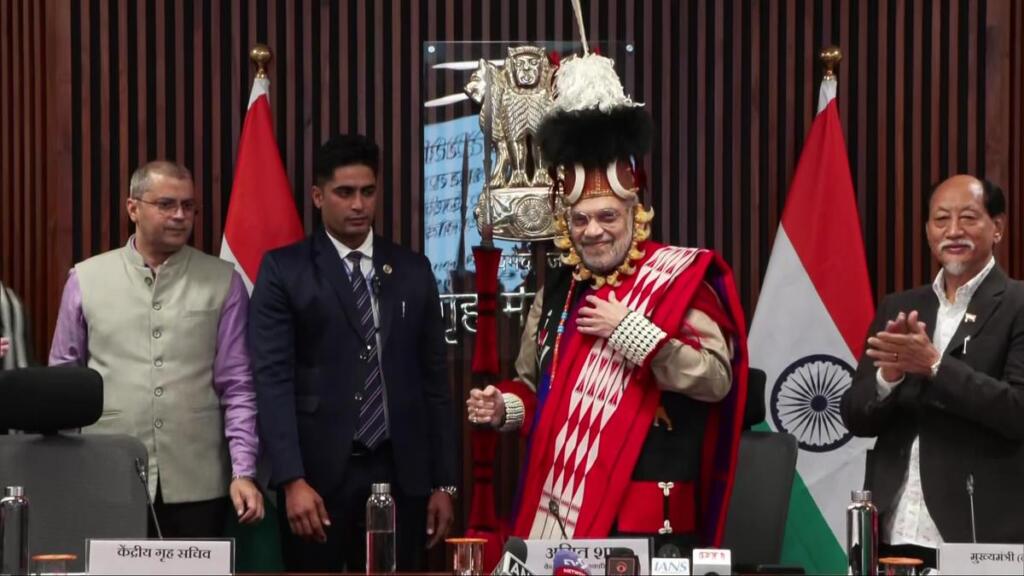
On February 5, 2026, a significant political and administrative event unfolded in New Delhi with the signing of a landmark MoA that lays the foundation for the Frontier Nagaland Territorial Authority (FNTA). This Memorandum of Agreement represents the culmination of long-standing aspirations by communities in Eastern Nagaland for greater administrative autonomy and a renewed focus on development. The tripartite arrangement was formalised in the national capital, with representatives of the Government of India, the Government of Nagaland, and the Eastern Nagaland Peoples’ Organisation (ENPO) putting pen to paper on a pact that many political analysts are calling historic.
The MoA is seen as a breakthrough in negotiating a political solution to grievances that have persisted for decades. Eastern Nagaland, a region comprised of remote hill districts — Tuensang, Mon, Kiphire, Longleng, Noklak, and Shamator — has long felt marginalised in terms of infrastructure, government services, and economic growth compared with other parts of the state. ENPO, an umbrella body representing eight recognised tribes from these districts, has campaigned for far-reaching change, including separate statehood at times. After years of sustained dialogue and negotiations, the leadership agreed to pursue a model of autonomy within the existing constitutional framework, culminating in the MoA that establishes the FNTA.
A central feature of the agreement is the creation of the Frontier Nagaland Territorial Authority, an administrative entity entrusted with powers over forty six subjects to address local governance functions effectively. The pact also envisages a mini-secretariat for the FNTA, headed by senior civil authorities such as an Additional Chief Secretary or Principal Secretary. According to government statements, the arrangement will not alter Nagaland’s constitutional status or affect provisions under Article 371(A) of the Indian Constitution, which safeguards Naga customary laws and traditional rights. This clear constitutional assurance was designed to balance regional aspirations with the integrity of the state’s legal framework.
Financial autonomy forms another critical element of the MoA. With the Centre agreeing to bear the initial establishment costs of the FNTA and to share development outlays proportionally based on population and area, stakeholders hope to accelerate investment in infrastructure, healthcare, education, and economic opportunity in Eastern Nagaland. The decentralisation of decision-making and financial resources aims to empower local leaders to prioritise development initiatives that reflect the region’s unique challenges and aspirations. This fiscal partnership underscores the collaborative spirit underpinning the agreement and seeks to build confidence among historically underserved communities.
Leadership from both the state and central governments greeted the signing of the MoA as a milestone. Union Home Minister Amit Shah described it as a giant step toward peace, stability, and inclusive progress in the North East. He emphasised that the agreement would help resolve decades-old disputes and integrate Eastern Nagaland more fully into development frameworks. The presence of Nagaland Chief Minister Neiphiu Rio at the signing ceremony further underscored the broad political backing for the initiative. Government officials highlighted that this pact demonstrated how patient diplomacy and dialogue can deliver lasting outcomes without resorting to conflict or force.
Local communities in Eastern Nagaland have responded with cautious optimism. For many residents and tribal leaders, the MoA reflects recognition of long-neglected concerns and a genuine effort by authorities to address imbalances. The guarantee of increased administrative presence and tailored development funding has been welcomed as an opportunity to bring essential services closer to the people. At the same time, stakeholders have stressed the need for effective implementation to ensure that the promises embedded in the agreement translate into tangible improvements in people’s lives.
Observers note that the establishment of the Frontier Nagaland Territorial Authority does more than respond to local demands. It also represents a broader experiment in flexible federalism within the Indian constitutional framework. Autonomy arrangements such as the FNTA could serve as a model for peacefully addressing regional aspirations in other parts of the country, where similar demands have emerged. By maintaining constitutional safeguards while devolving powers and resources, the MoA sets a precedent for balancing unity and diversity in a complex multi-ethnic democracy.
Despite widespread support for the pact, the road ahead remains challenging. Ensuring that the new authority operates efficiently, transparently, and in the public interest will require coordinated efforts from the central government, the Nagaland state administration, and local representatives. There is also an expectation that development planners and civil society groups will work closely with the FNTA to craft initiatives that reflect both immediate needs and long-term visions for the region’s future. Successful implementation could vindicate years of negotiations and foster a new era of trust between Eastern Nagaland communities and the state.
In summation, the signing of the MoA to establish the Frontier Nagaland Territorial Authority marks a watershed moment in the political history of Nagaland. It reflects a pragmatic approach to addressing longstanding regional grievances, prioritising dialogue, autonomy, and development without compromising constitutional principles. As the authority begins its work, the hope among leaders and citizens alike is that the pact will pave the way for sustained peace, equitable growth, and stronger integration of Eastern Nagaland into broader state and national progress.