
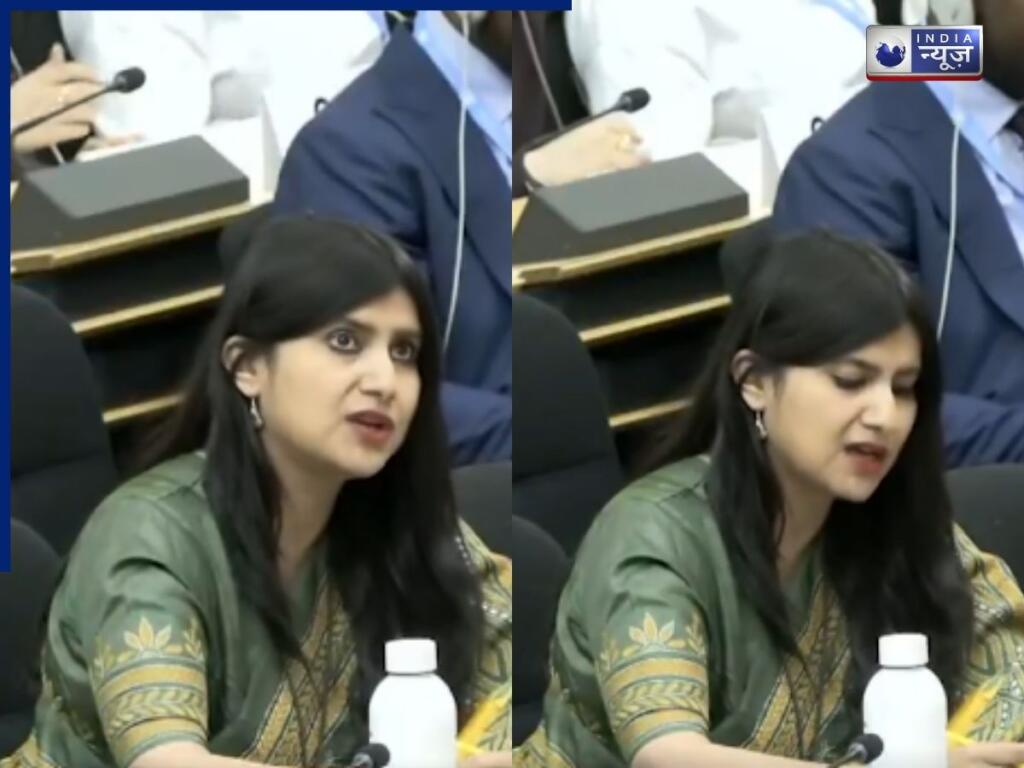
India delivered a sharp and assertive response to Pakistan at the 61st session of the United Nations Human Rights Council (UNHRC), which is being held from 23 February to 31 March. The intervention came during the high-level segment on 25 February, when New Delhi exercised its Right to Reply to counter what it described as misleading and politically motivated claims on Jammu and Kashmir.
India’s representative, Anupama Singh, rejected the allegations raised by Pakistan and the Organisation of Islamic Cooperation, saying the grouping had allowed itself to be used as an “echo chamber” for one member state.
“We categorically reject these allegations,” Singh said, adding that Pakistan’s “incessant propaganda now reeks of envy”. She stated that India had no desire to dignify the accusations but would make a few points to dismantle them with facts. A video of her remarks from Geneva was later circulated on social media.
Reasserting Jammu and Kashmir’s Legal Position
Reiterating India’s long-standing stance, Singh declared that Jammu and Kashmir “was, is, and will always remain an integral and inalienable part of India”. She stressed that the region’s accession to India in 1947 was completely legal and irrevocable, in accordance with the Indian Independence Act and international law.
“No amount of wishful rhetoric or audacious propaganda can alter this immutable fact,” she asserted.
She further maintained that the only outstanding dispute in the region was Pakistan’s illegal occupation of Indian territory and called on Islamabad to vacate areas under its control.
Development Versus Economic Fragility
Highlighting infrastructure and economic progress in the Union Territory, Singh referred to the inauguration of the Chenab Rail Bridge, described as the world’s highest railway bridge and inaugurated in the region last year.
“If the Chenab Rail Bridge is fake, then Pakistan must be hallucinating or living in La La Land,” she remarked.
She also stated that Jammu and Kashmir’s development budget was more than double the recent bailout package sought by Pakistan from the International Monetary Fund. The comparison, she said, reflected the contrast between sustained governance and Pakistan’s deepening financial difficulties.
Democracy, Elections, and Security
Responding to criticism over democratic processes, Singh said it was “hard to take lectures on democracy” from a country where civilian governments rarely complete their terms. She pointed to voter turnout in recent general and assembly elections in Jammu and Kashmir as evidence that people had rejected terrorism and violence and were choosing peace and development.
She also accused Pakistan of pursuing “relentless state-sponsored terrorism” to destabilise the region, while maintaining that Jammu and Kashmir continued to make steady political, economic, and social progress.
Call for Introspection
Concluding her remarks, Singh urged Pakistan to focus on resolving its internal crisis rather than masking it with grandstanding on global platforms. “The world can certainly see through its charade,” she said.
The exchange marks the latest round of sustained diplomatic confrontation between India and Pakistan at multilateral forums, underscoring how the issue of Jammu and Kashmir continues to shape regional tensions and international discourse.