






















The Union Cabinet is likely to consider a bill today proposing to change the name of Kerala to “Keralam”, following the state assembly’s approval of the move ahead of upcoming elections.
In a significant step just a month before the Assembly polls, the Cabinet is expected to take up the proposal in its meeting at Prime Minister Narendra Modi’s new office at Seva Tirtha.
This marks the first Cabinet session at the location since the previous meeting at South Block on February 13.
The state legislative assembly had earlier passed a resolution urging the central government to officially recognise the name Keralam in all languages.
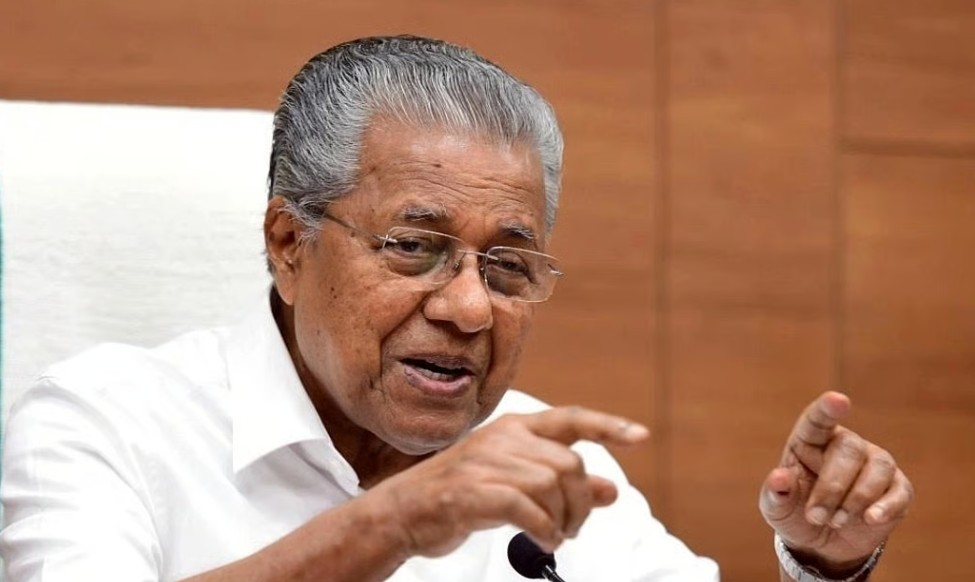
Chief Minister Pinarayi Vijayan, who tabled the resolution, emphasised the importance of aligning the state’s name with its local language and historical roots.
The assembly passed the resolution for the second time on June 25, 2024, after the Union Home Ministry reviewed the initial resolution and suggested technical modifications for clarity and compliance.
Chief Minister Vijayan explained that ‘Keralam’ is used in Malayalam and is rooted in the region’s history, referencing the aspiration for a united Malayalam-speaking state dating back to the national freedom struggle.
“The name of our state is written as Kerala in the First Schedule of the Constitution. This Assembly requests the Centre to take immediate steps to amend it as ‘Keralam’ under Article 3 of the Constitution and have it renamed as ‘Keralam’ in all the languages mentioned in the Eighth Schedule of the Constitution,” Vijayan said.
The assembly’s request centres on updating the constitutional listing to reflect the local nomenclature and ensure consistency across all languages cited in the Eighth Schedule of the Constitution.
Here’s a comprehensive opinion piece with subheadings, providing context, historical significance, and implications of renaming Kerala to “Keralam.”
Reclaiming Linguistic Heritage: Why ‘Keralam’ ?
Renaming Kerala to Keralam carries strong cultural and linguistic symbolism. The term “Keralam” is the name traditionally used in Malayalam, the state’s native language, and is deeply rooted in the region’s history and identity.
The name reflects the aspiration for a united Malayalam-speaking region, an idea that dates back to the national freedom movement when linguistic and cultural unity played a key role in mobilising regional identity.
Aligning the official nomenclature with the local language sends a message of cultural affirmation and recognition of the state’s heritage.
Historical Dimensions of the Name Change
Currently, the state is listed as Kerala in the First Schedule of the Indian Constitution, and official references in multiple languages follow this version.
Changing the name requires an amendment under Article 3 of the Constitution, which allows the Parliament to alter the names of states.
Such a move is not merely symbolic; it ensures that all official documents, legal texts, and constitutional references consistently reflect the local terminology.
By requesting the update across all languages mentioned in the Eighth Schedule, the state aims to preserve linguistic integrity while standardising official usage nationwide.
Political Resonance and Administrative Challenges
The timing of this move, just ahead of Assembly elections, adds a political dimension. Name changes often resonate strongly with regional pride and can strengthen a party’s connection with local voters.
Moreover, adopting “Keralam” would require administrative updates across government databases, signage, maps, and legal instruments, a process that involves coordination between the state and central authorities.
While primarily symbolic, such a renaming carries practical consequences, including revisions in official forms, publications, and international references.
Continuation of a Broader Trend
Prime Minister Narendra Modi’s government has pursued similar initiatives in recent years, renaming cities and states to reflect historical and linguistic heritage.
Examples include changing “Bombay” to Mumbai, “Calcutta” to Kolkata, and “Orissa” to Odisha, moves widely defended as correcting colonial-era distortions and reclaiming indigenous identities.
Renaming Kerala to Keralam fits this broader pattern of asserting cultural authenticity, reflecting both nationalistic sentiments and efforts to harmonise official terminology with local heritage.
If approved, the change will symbolically strengthen Kerala’s identity while continuing the government’s trend of historicising state and city names across India.





