















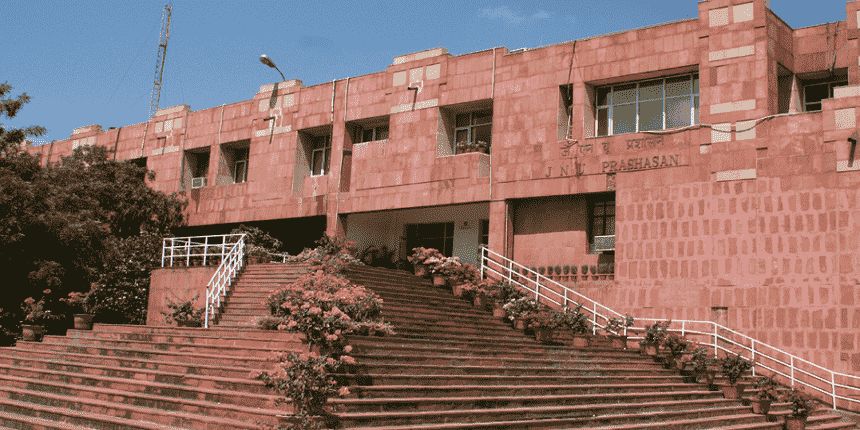
Jawaharlal Nehru University (JNU) rusticated five PhD students, including four office-bearers of the JNU Students’ Union (JNUSU), for two semesters after a proctorial inquiry found them guilty of vandalising Facial Recognition Technology (FRT) access gates at the Dr BR Ambedkar Central Library on November 21, 2025.
The students, Kizhakoot Gopika Babu, Aditi Mishra, Sunil Yadav, Danish Ali, and Nitish Kumar, have been declared “out of bounds” from the entire campus with immediate effect and fined Rs 20,000 each.
Eight other students implicated in related incidents have also been fined Rs 19,000, with the deadline for payment set at February 13, 2026.
According to the suspension letters and proctorial inquiry, the group forcibly pulled out cameras and camera stands installed on the FRT machines, ignoring repeated pleas from security personnel.
Two female security guards sustained injuries “leading to blood loss” during the incident. The FRT system was installed at an estimated cost of Rs 20 lakh.
The inquiry assigned specific roles, JNUSU president Aditi Mishra and vice-president Gopika Babu led the vandalism, while joint secretary Danish Ali and Nitish Kumar dismantled panels.
The notice served to Gopika Babu stated she stood on dismantled panels and delivered a provocative speech justifying the act of vandalism, also sloganeering inside the library, disrupting academic operations.
The rustication spans the Winter and Monsoon semesters of 2026, and the students must submit proof of fine payment to the Chief Proctor’s Office within ten days.
The university also warned that anyone providing shelter to the rusticated students in campus hostels will face disciplinary action.
This unprecedented action marks the first time in JNU’s history that an entire students’ union panel has been rusticated, leaving the university without elected student representation for eight months.
The decision triggered a university-wide strike on Thursday, with several students boycotting classes in protest.
The absence of a caretaker union has raised concerns about the conduct of upcoming JNUSU elections. Former JNUSU president Nitish Kumar flagged potential administrative intervention, although JNU officials stressed that no interim elections will be held and the next elections will proceed as per Lyngdoh Committee guidelines, which require elections to be held six to eight weeks after all admissions conclude, typically late October.
The administration emphasized that the action is consistent with university statutes covering violence, damage to property, and disruption of academic functioning, and that protests crossing into vandalism or endangering staff will not be tolerated.
The move underscores JNU’s zero-tolerance approach to campus disruptions, particularly when public property and staff safety are at risk.
This decisive response comes amid ongoing administrative reforms and infrastructure changes, including technology-driven access systems, which some student groups have criticised as intrusive.
Officials maintain that such measures are aimed at strengthening security and regulating access to key academic spaces.
During the strike, student groups demanded revocation of the rustication orders and withdrawal of fines, alleging that the action was intended to suppress mobilisation against the UGC Equity Regulations and the Viksit Bharat Shiksha Adhishthan Bill, 2025.
Addressing the press, Rajya Sabha MP Manoj Jha stated, “Targeting student leaders for defending social justice is a sign of institutional weakness, not strength.”
Teachers’ representatives and other student organisations, including Congress-backed NSUI, expressed solidarity with the rusticated students.