

















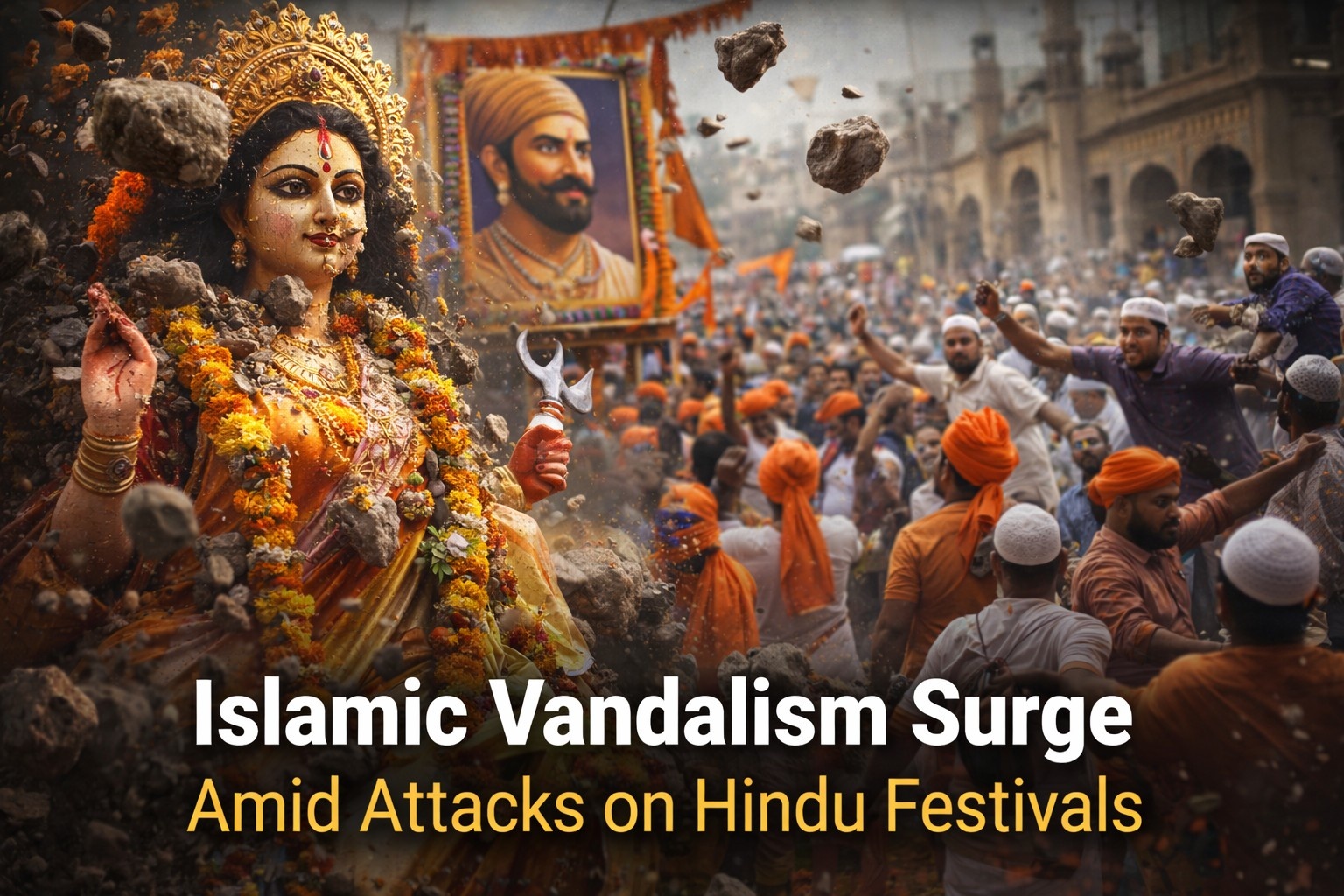
Recent days have seen a disturbing spike in communal tensions across multiple Indian states, with incidents that critics are calling Islamic vandalism targeting Hindu religious observances, processions and temples. From stone-pelting at a Shivaji Jayanti procession in Karnataka to clashes near a Durga temple in Madhya Pradesh, these episodes raise serious questions about rising hostility, enforcement of the rule of law, and what many observers describe as the spinelessness of authorities in protecting Hindu communities and their sacred institutions.
The trouble erupted on 19 February 2026 when a procession celebrating Chhatrapati Shivaji Maharaj Jayanti in Bagalkote, Karnataka, was disrupted as it passed near a mosque. As participants marched with music and religious fervour, tensions quickly escalated when stones were allegedly hurled from the vicinity, in what many on social media described as an act of Islamic vandalism against a peaceful Hindu event. Police were forced to intervene, and at least eight people were arrested in connection with the incident after CCTV footage was reviewed.
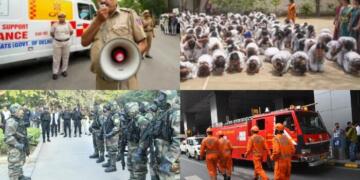
Security forces subsequently imposed prohibitory orders under Section 163 of the Bharatiya Nagarik Suraksha Sanhita in several localities, curbing movement and gatherings to prevent further escalation of violence. Additional police personnel were stationed around both the procession route and sensitive religious sites to avoid repeat clashes.
Almost simultaneously, in Sihora tehsil of Jabalpur district in Madhya Pradesh, a Durga Mandir became the flash point for another outbreak of violence. What began as a dispute over the safety grill of the temple — reportedly damaged moments before the evening aarti — quickly escalated into stone-pelting, attacks on nearby vehicles and property, and tear-gas deployment by police. Eyewitnesses said crowds from both communities clashed, reflecting a pattern of ongoing communal friction that some critics label Islamic vandalism when Hindus are on the receiving end of the attacks.
These events are part of a broader pattern observed during the period of Saraswati Visarjan earlier this year, when at least 24 incidents involving stone-pelting and idol vandalism were reported in various parts of India and neighbouring Bangladesh — often coinciding with Hindu religious ceremonies. Opponents of such unrest argue that when religious processions pass through or near Muslim-majority areas, they are vulnerable to acts of Islamic vandalism that signify deeper societal fractures rather than one-off disputes.
In Hyderabad’s Amberpet locality, another Shivaji Jayanti procession met objections from some residents over loud music and slogans as it passed during Ramzan prayers. Although police quickly restored order and no major damage or injuries were reported, the episode further underscores how overlapping religious observances can ignite communal discord if not managed sensitively — or if one side exploits the situation, as critics alleging Islamic vandalism contend.
Across these three states, the involvement of police and administration has been swift, but critics argue such measures come too late and reflect a broader unwillingness to clamp down firmly on perpetrators of anti-Hindu violence. Many Hindu groups have criticised both state and central governments for what they perceive as spinelessness in protecting Hindu festivals, temples, and processions from repeated provocations and attacks.
At the Bagalkote scene, for example, Hindu activists claimed that the stone-pelting was premeditated and not simply a spontaneous outburst of anger, urging authorities to make comprehensive arrests. They warned that with major Hindu festivals like Holi approaching, security forces must not allow such incidents of Islamic vandalism to recur without decisive action.
In Sihora, local residents said the clash at the Durga temple was symptomatic of deeper tensions between the communities that authorities have failed to address over time. Though police fired tear gas and restored calm, the sense of vulnerability among devotees was palpable, especially when disagreements quickly devolved into violence that could have been avoided with stronger preventive measures.
Political leaders and commentators have weighed in from various quarters. Some officials urged calm and appealed for communal harmony, emphasising that law enforcement would not tolerate any attempt to disturb public peace. Yet, for many in Hindu communities, these conciliatory statements fall short of addressing what they see as repeated incidents of Islamic vandalism that are neither accidental nor isolated.
Critics also highlight the role of media narratives that often frame such clashes as “minor disturbances” rather than patterns of targeted aggression against a particular community. They argue that failure to label repeated targeting of Hindu religious events as genuine threats can contribute to public complacency and embolden extremists, further eroding social cohesion.
On social platforms, many Hindu voices have expressed frustration with what they describe as the spineless response of both local officials and the broader political establishment. They demand transparent investigations, accountability for perpetrators, and policy reforms that prioritise the protection of religious freedoms and the right to safe public expression.
Historical examples of communal violence — from riots in Bhagalpur to recent organized attacks in Bangladesh — are often cited in support of calls for stronger legal action against those responsible for targeted aggression. These voices argue that unless decisive steps are taken, incidents of Islamic vandalism will continue to undermine national unity and the constitutional right to practice religion freely.
As investigators continue to piece together the facts from CCTV footage, eyewitness accounts, and police reports across the three states, the overarching debate remains: whether India can uphold its secular ideals while effectively preventing communal flare-ups and safeguarding the religious rights of all communities without appearing indifferent or spineless in the face of targeted attacks.
Ultimately, these recent communal incidents are a stark reminder that vigilance, firm law enforcement, and genuine inter-community dialogue are essential if such episodes of Islamic vandalism are to be prevented in the future, and if both majority and minority communities are to feel secure and respected in a diverse society.