
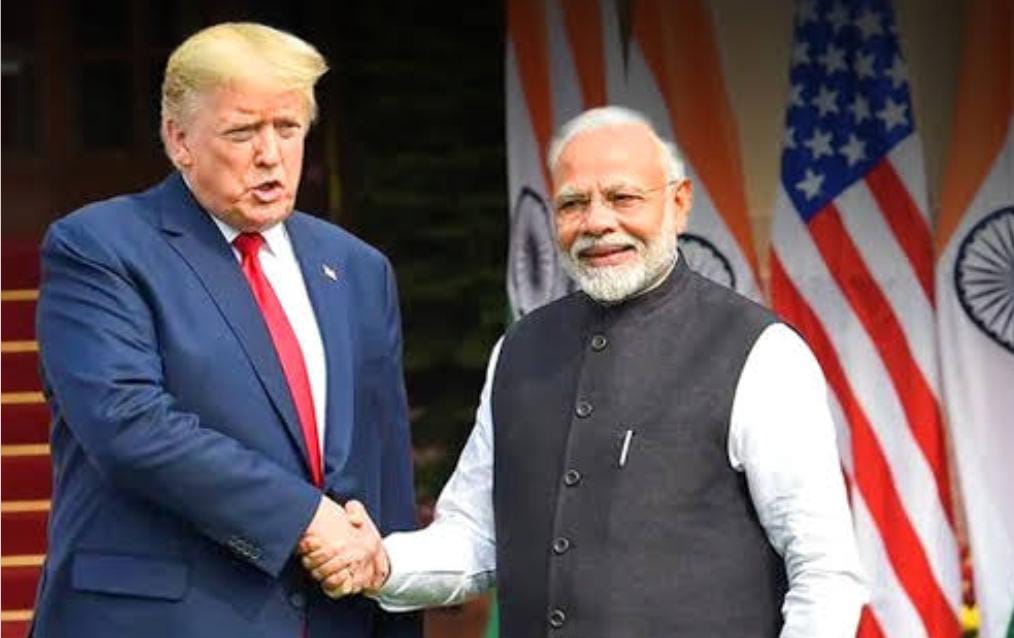
India and the United States have finalized a framework for an interim trade agreement, marking a decisive step toward a comprehensive bilateral trade pact initiated in February 2025 by Prime Minister Narendra Modi and U.S. President Donald Trump. The framework is set for immediate implementation, with a formal deal expected by March 2026.
Tariff Cuts and Market Access:
Under the interim trade agreement, the U.S. will reduce tariffs on Indian goods from 50% to 18%, reflecting India’s growing economic leverage in global markets. In return, India will cut or eliminate tariffs on a wide range of U.S. industrial and agricultural products, while safeguarding sensitive domestic sectors including maize, wheat, rice, soy, poultry, milk, and cheese. Key products affected include textiles, apparel, leather goods, plastics, rubber, organic chemicals, handicrafts, and machinery from India to the U.S., and industrial goods, dried distillers’ grains, red sorghum, nuts, fresh and processed fruits, soybean oil, wine, and spirits from the U.S. to India.
Trade Volume and Strategic Imports:
India will import $500 billion worth of U.S. goods over five years, covering energy, aircraft and parts, coking coal, precious metals, and technology products such as GPUs used in AI and data centers. Commerce Minister Piyush Goyal described the deal as opening the $30 trillion U.S. market to Indian exporters, especially farmers, fishermen, and MSMEs.
Energy was a key focus. Through interim trade India has agreed to gradually reduce imports of Russian oil, prompting the U.S. to rescind the 25% punitive tariff previously applied. Washington will monitor compliance and could reinstate tariffs if Russia-linked imports resume, underscoring India’s ability to balance strategic energy interests with global economic partnerships.
Strengthening Domestic Protections and Standards:
The interim trade framework protects India’s agricultural and dairy sectors. Genetically modified crops will not be directly imported, and fruits like apples will enter under tariff quotas. Both countries plan to address longstanding non-tariff barriers, including restrictive import licensing and safety standards, with negotiations for U.S./international certification expected within six months.
Strategic and Geopolitical Impact:
Beyond interim trade, the deal strengthens U.S.–India cooperation in supply chains, technology, and enforcement of export controls. It also addresses non-market policies of third countries, reflecting India’s growing influence in global commerce and its ability to safeguard national interests.
Official Statements and Reactions:
Prime Minister Modi called the agreement “Great news for India and the USA,” praising Trump’s “personal commitment to robust bilateral ties.” U.S. Trade Representative Jamieson Greer highlighted that the framework opens one of the world’s largest markets to American producers while lowering trade barriers.
Commerce Minister Piyush Goyal emphasized the interim trade agreement’s benefits for Indian exporters and the protection of farmers’ and MSME interests.
Looking Ahead:
This interim trade agreement signals a new era of robust, mutually beneficial partnerships. It aligns with India’s recent trade agreements with the European Union and other partners, reflecting a broader commitment to market opening, strategic alignment, and national economic growth.