
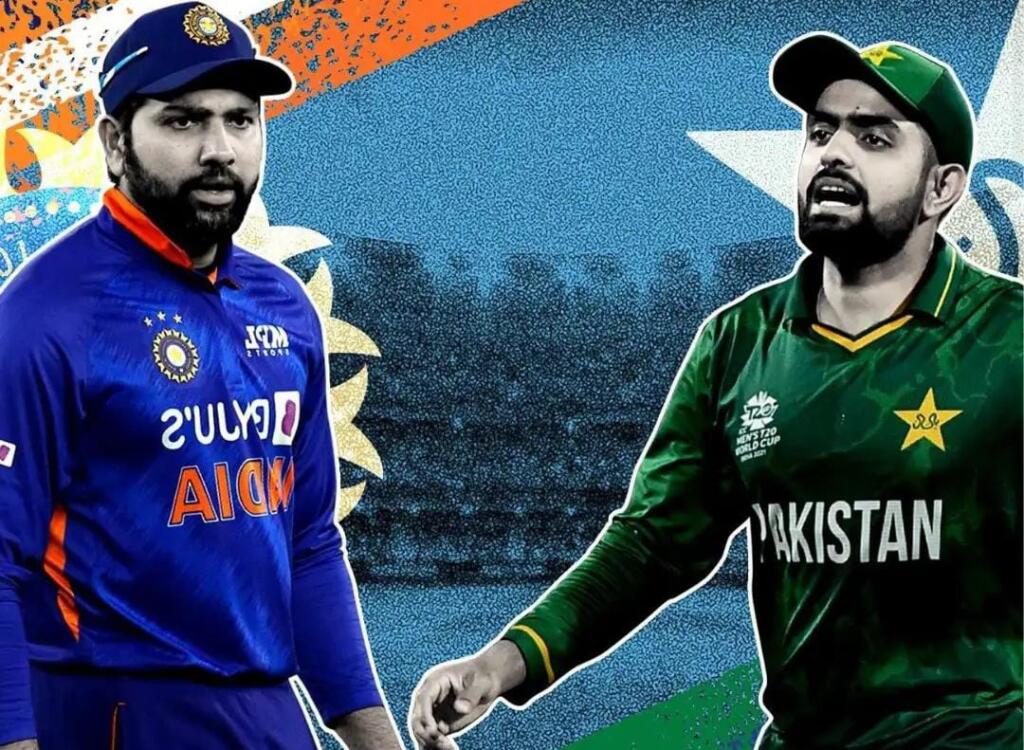
After days of uncertainty and political posturing that threatened to derail the biggest match of the ICC Men’s T20 World Cup 2026, Pakistan has finally withdrawn its boycott and agreed to face India on February 15 in Colombo. The decision marks a clear diplomatic and sporting victory for India, which maintained its position with calm confidence and consistency throughout the crisis.
A late-night order from the Pakistan government on Monday instructed its national team to take the field at the R Premadasa Stadium, ending a week-long standoff that had put the tournament’s most valuable fixture at risk. The move followed sustained pressure from the International Cricket Council (ICC), leading cricketing nations, and commercial stakeholders.
With the confirmation, world cricket’s most watched rivalry at T20 World Cup 2026 is back on track, much to the relief of fans, broadcasters, and organisers.
Pakistan Backs Down After Mounting Pressure:
Pakistan’s reversal came after it found itself increasingly isolated on the global stage. Several cricketing boards and international bodies made it clear that selective participation would not be tolerated in a global tournament.
Behind closed doors, diplomatic efforts intensified. Sri Lankan President Anura Kumara Dissanayake personally appealed to Prime Minister Shehbaz Sharif to resolve the impasse. Appeals also came from the UAE and other ICC members, warning of serious reputational and financial consequences.
In its official notification, Islamabad stated that the team had been directed to play in order to “protect the spirit of cricket.” However, analysts noted that the decision to be at T20 World Cup came only after Pakistan realised that prolonging the standoff would prove costly.
India’s Calm and Consistent Stand:
While Pakistan vacillated, India remained firm and focused. The Board of Control for Cricket in India (BCCI) refused to be drawn into political theatrics and consistently emphasised respect for tournament rules and international commitments.
Indian officials made it clear neither cricket nor T20 World Cup must not be held hostage to short-term political considerations. This steady approach strengthened India’s moral and institutional position in negotiations.
A senior BCCI official remarked, “India believes in playing the game in the right spirit, both on and off the field. This resolution reflects that philosophy.”
Bangladesh’s Role and Regional Diplomacy:
Bangladesh played an important mediating role during the crisis. BCB President Aminul Islam publicly urged Pakistan to reconsider its stance for the greater good of the sport.
Pakistan had linked its boycott to T20 World Cup to express solidarity with Bangladesh, which had earlier raised security concerns about touring India. However, the ICC later clarified that Bangladesh would not be penalised and retained the right to seek legal remedies.
To ease tensions, the ICC also announced future hosting rights for Bangladesh, helping restore regional balance and cooperation.
How the Standoff Began:
The crisis began on February 1, when Pakistan declared it would skip the February 15 match against India while continuing in the tournament. The ICC immediately warned that such selective participation violated the principles of fair competition.
Tensions rose further after administrative disputes involving Bangladesh and the removal of pacer Mustafizur Rahman from the squad. When the ICC eventually replaced Bangladesh with Scotland for T20 World Cup in the lineup, Pakistan’s position weakened further.
What began as a political signal soon turned into a full-blown governance crisis.
Decisive Talks in Lahore:
With pressure mounting, senior officials from the ICC, PCB, and BCB met in Lahore on February 7 and 8 for emergency talks. The discussions stretched late into the night and were led by ICC Deputy Chairman Imran Khawaja, PCB Chairman Mohsin Naqvi, and Aminul Islam.
During negotiations for T20 World Cup, Pakistan reportedly sought concessions, including the revival of bilateral cricket with India and a proposed tri-series. The ICC firmly rejected these demands and instead focused on enforcing existing commitments.
Billions at Stake:
Beyond pride and politics, massive financial interests were involved. The India-Pakistan clash is widely regarded as the most lucrative fixture in world cricket, with its value estimated at over ₹4,000 crore.
Broadcasters warned of losses exceeding USD 170 million if the match of T20 World Cup was cancelled. Sponsors, tourism operators, and local businesses in Sri Lanka were also facing major setbacks.
Once the match was confirmed, ticket prices in Colombo soared overnight, reflecting the enormous public demand.
A senior tournament official admitted, “Losing this game would have shaken the entire financial structure of the World Cup.”
Voices from the Cricketing World:
The resolution drew reactions from across the cricketing spectrum.
Former India captain Sourav Ganguly said Pakistan would face a strong and confident Indian side at T20 World Cup 2026, calling the match a major test of character. BCCI Vice-President Rajeev Shukla praised the ICC for restoring stability.
Wasim Jaffer took a light-hearted dig at Pakistan’s sudden change of stance on social media, while former England captain Michael Vaughan urged both countries to explore neutral-venue Test matches.
Former Pakistan spinner Saqlain Mushtaq appealed for restraint, urging players to act as ambassadors of the sport.
ICC Reasserts Authority:
The ICC welcomed the breakthrough and underlined its commitment to neutrality and discipline.
“The dialogue was aimed at serving the best interests of the game with integrity and cooperation,” the governing body said.
Officials stressed that political disputes must never be allowed to overshadow global tournaments.
Focus Returns to the Field:
With the crisis behind them, attention has now shifted back to cricket. The February 15 clash at T20 World Cup is expected to attract record-breaking viewership and could prove decisive in the tournament’s progression.
Indian fans are eagerly anticipating the encounter, confident in the team’s preparation, leadership, and momentum. For India, the episode has once again highlighted its growing influence in world cricket administration.
For the ICC, it marks the successful handling of a sensitive diplomatic challenge. For Pakistan, it is a reminder of the limits of brinkmanship in global sport.
And for millions of fans worldwide, it means that cricket’s greatest rivalry will once again unfold where it belongs, on the field, not in conference rooms.