









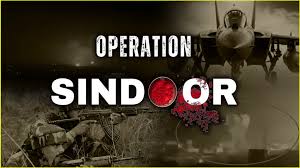













India and France are moving closer to finalising a major defence deal worth around 300 million euros for the purchase of SCALP long-range cruise missiles, following their successful use during Operation Sindoor last year.
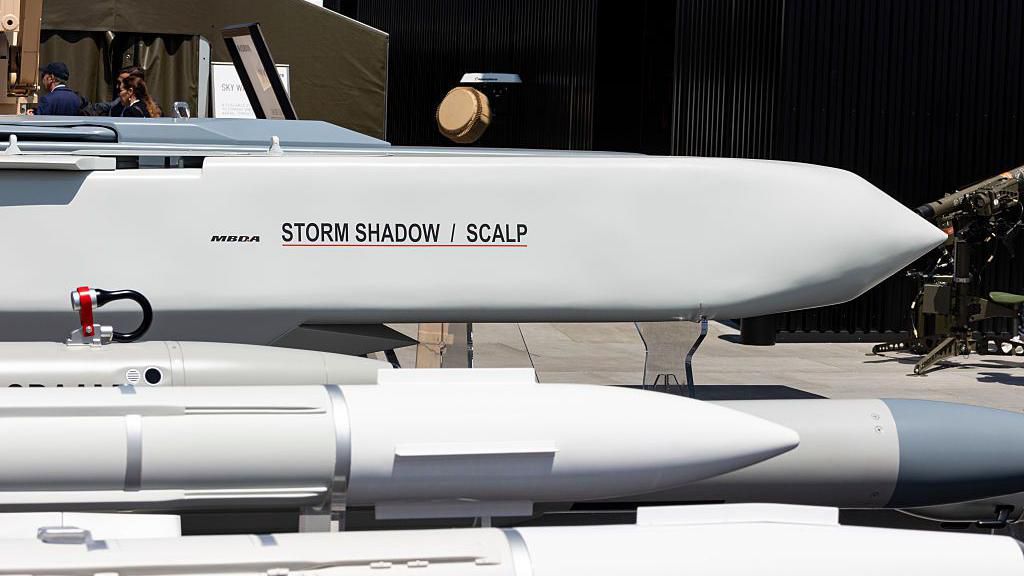
SCALP, also known as Storm Shadow, is a long-range, air-launched cruise missile designed for highly accurate strikes against important and well-protected targets.
According to ANI, defence officials said that the Indian Air Force (IAF) is planning to order a significant number of SCALP missiles from France and discussions on the procurement are currently underway.
SCALP Missiles in Operation Sindoor
The SCALP missiles were launched from Rafale fighter jets to strike terrorist headquarters of Jaish-e-Mohammed and Lashkar-e-Taiba in Pakistan’s Muridke and Bahawalpur districts during Operation Sindoor.
These missiles were used along with BrahMos supersonic cruise missiles, and officials said the targets were destroyed with pinpoint accuracy.
After the initial strikes carried out on the night of May 6–7, the Air Force again used cruise missiles to attack Pakistan Air Force bases. As per reports, officials said the IAF struck 12 major air bases and destroyed several high-value targets, including fighter jets and surveillance aircraft stationed on the ground.
Notably, Operation Sindoor was India’s largest cross-border precision strike since the Balakot operation in 2019. The operation was launched in response to the April 22 terror attack in Pahalgam, Jammu and Kashmir, in which 26 civilians, including a serving Indian Navy officer and a Nepali national, were killed.
During the operation, India deployed a range of high-precision weapons. These included SCALP cruise missiles, HAMMER precision-guided bombs, and loitering munitions. The SCALP missiles were used for deep-strike missions, while HAMMER bombs were used to destroy hardened targets such as bunkers and multi-storey buildings. Loitering munitions were used for surveillance as well as final strike roles.
A total of nine terror-linked sites were targeted during Operation Sindoor, four in mainland Pakistan and five in Pakistan-occupied Kashmir.
The Ministry of Defence stated that no Pakistani military installations were targeted and that all locations struck were confirmed operational centres of banned terrorist organisations.
Alongside the SCALP missile deal, the Indian Air Force is also in the process of ordering a large number of Meteor air-to-air missiles for its Rafale fleet.
These missiles will also be integrated with the 26 Rafale Marine fighter jets ordered for the Indian Navy, which are expected to be inducted over the next three to four years.
Following the strong performance of Rafale aircraft during Operation Sindoor and rising security concerns in the region, the Air Force is preparing to place an order for 114 additional Rafale combat aircraft. This proposal is expected to be taken up by the Defence Acquisition Council in the coming days.
With these future inductions, the Rafale fighter jet is expected to become the backbone of the Indian Air Force. Its total fleet strength is projected to reach around 200 aircraft over the next 10 to 15 years.
What Are SCALP Missiles?
The name SCALP stands for Système de Croisière Autonome à Longue Portée, which reflects its autonomous long-range strike capability.
The missile has a range of over 250 kilometres and uses a combination of inertial navigation, GPS, terrain-reference navigation, and an infrared imaging seeker in its final phase to ensure high accuracy. Its low-observable design allows it to fly at very low altitudes, helping it avoid enemy radar detection.
SCALP is fitted with a penetration warhead capable of destroying hardened targets such as bunkers, command centres, air bases, and ammunition depots. It is operated by several countries, including France, the United Kingdom, Italy, Greece, and India.
Integrated with the Indian Air Force’s Rafale fighter jets, the SCALP missile gives India a stand-off strike capability, allowing aircraft to hit strategic targets deep inside enemy territory without entering heavily defended airspace.





