
Last week, when the “Mother of All Deals” between India and the EU dominated public attention, a quieter development of far-reaching consequence was taking shape.
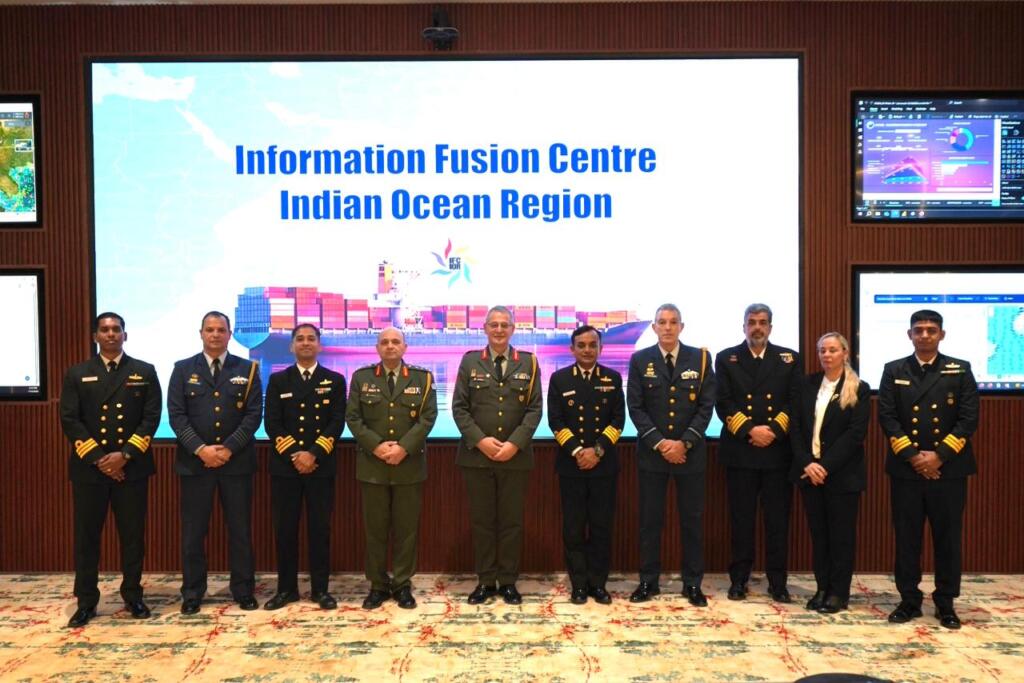
India has welcomed the European Union’s proposal to post a liaison officer at the Indian Navy’s Information Fusion Centre–Indian Ocean Region (IFC-IOR), marking a new phase in maritime information-sharing.
The EU does maintain its own monitoring mechanisms under Operation ATALANTA, yet its naval assets are spread across a demanding operational stretch.

For the EU, which has long maintained a naval footprint off the Horn of Africa through its counter-piracy mission, the Indian Ocean has never been a distant theatre.
The sea lanes through the Gulf of Aden and the wider Arabian Sea carry a sizeable portion of Europe’s energy supplies and commercial cargo. But the nature of the threats has changed dramatically.
Piracy flares unpredictably, fishing fleets often operate without regulation. Militias and armed groups occasionally test the waters. And commercial traffic has grown so dense that early warning is no longer optional.
Reliable data is the currency of maritime security — and that is where India’s IFC-IOR has emerged as a regional anchor. Established in 2018 and hosted by the Indian Navy, the IFC-IOR was designed to be the “eyes and ears” of the region.
Today, it hosts Liaison Officers (ILOs) from over 12 nations, including the US, UK, France, Italy, Japan, Australia, and Singapore. The addition of an EU representative, representing the collective weight of a 27-nation bloc, is an acknowledgment of the centre’s rise as the Indian Ocean’s primary information anchor.
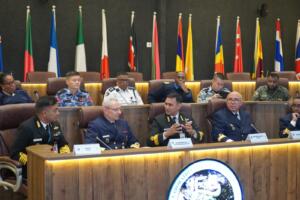
The IFC-IOR was born out of a simple idea: countries operating in the same waters cannot afford to work in isolation. The centre does not command warships or run patrols; instead, it acts as a clearing house for maritime information. Merchant shipping movements, suspicious vessels, weather disturbances, distress calls — all of it is pieced together into a shared picture.
This approach reflects India’s broader SAGAR vision: Security and Growth for All in the Region. The philosophy is cooperative rather than competitive, focused on ensuring that the Indian Ocean remains a safe and predictable highway for global commerce.
The decision to place an EU liaison officer at the IFC–IOR did not emerge overnight. It is the culmination of a steady buildup of trust, shaped by years of operations, visits, and coordinated patrols across some of the world’s busiest sea lanes.
Naval engagement between India and the European Union began to take a more defined shape around the middle of the decade.
India–EU naval cooperation has deepened steadily over recent years, shaped by joint patrols, exercises and operational coordination across key Indian Ocean sea lanes. Indian and European vessels have been working together in the Gulf of Guinea and the Gulf of Aden — waters where piracy, armed robbery and unregulated movement have remained persistent concerns.
During this period, the Indian Navy quietly supported World Food Programme ships transiting the region, providing escort and situational reporting in coordination with EUNAVFOR’s long-running Operation ATALANTA. Indian Navy support to World Food Programme shipping, coordinated with EUNAVFOR’s Operation ATALANTA, reflects an established pattern of cooperation rather than a recent or ad-hoc arrangement.

The political signalling became clearer in March 2025, when the fourth EU–India Maritime Security Dialogue convened. The discussions focused heavily on illicit maritime activity, the changing risk environment around the Horn of Africa, and the possibility of new joint initiatives.
By then, both sides had begun speaking the same operational language, something that had not always been guaranteed in earlier years.
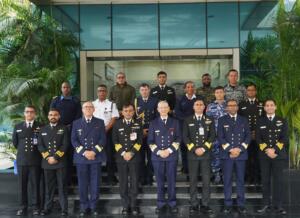
A month later, in April 2025, Vice Admiral Ignacio Villanueva Serrano—the Operation Commander of EUNAVFOR ATALANTA—travelled to India.
It was the first such visit by an ATALANTA Commander under the EU–India framework, a small but telling indicator of how the relationship was maturing. His meetings with senior Indian naval leadership helped push forward plans for more regular, structured cooperation.
Those plans took tangible form in June 2025, when the Indian Navy and EUNAVFOR carried out one of their most comprehensive joint exercises in the Indian Ocean.
The drills brought together the Italian frigate Antonio Marceglia, the Spanish Reina Sofía and India’s own frigate INS Trikand, supported by their respective air assets. An Indian maritime patrol aircraft also joined the serials, underscoring the depth of coordination.
The exercise centred on counter-piracy tactics, communication procedures and interoperability — the nuts and bolts of modern maritime cooperation.
Operational contact did not end there. In September 2025, the Indian Navy destroyer INS Surat exercised with the Italian destroyer ITS Caio Duilio under the EU’s Operation ASPIDES.
The PASSEX manoeuvres, conducted on 7 September, were straightforward tactical drills, but they reinforced a pattern: whenever Indian and European ships found themselves in the same stretch of ocean, they made it a point to train together.
It is from this accumulated experience — joint patrols, coordinated escorts, staff talks, and hard-earned familiarity — that the idea of embedding an EU liaison officer at the IFC–IOR took shape.
Rather than a symbolic gesture, the appointment reflects a decade-long trajectory of cooperation that has gradually aligned European and Indian approaches to keeping the Indian Ocean stable, predictable and open.
For Europe, the advantages of the IFC-IOR link are straightforward. The centre’s location and structure give the EU direct insight into a zone where it relies heavily on merchant shipping but lacks permanent bases.
The presence of a liaison officer ensures faster communication, fewer intelligence gaps and quicker response options in case of distress calls involving European-flagged vessels or European crews.
The arrangement also fits neatly into Europe’s search for a more distinct strategic identity. With its naval assets stretched thin and geopolitical turbulence on multiple fronts, the EU benefits from plugging into a system that provides high-quality, near-real-time data without requiring an expanded military footprint.
For India, the decision to include the EU strengthens its position as a convening force in the region. New Delhi’s naval diplomacy has expanded noticeably in recent years– humanitarian missions to island nations, evacuation operations in West Asia, anti-piracy deployments east of Africa, and port calls from Southeast Asia to the east coast of Africa.
The IFC-IOR has given these initiatives a structured backbone, projecting India as a responsible — and increasingly indispensable — maritime partner.
India’s approval for the EU to station a liaison officer at the IFC–IOR reinforces India’s reputation as the central node of maritime information-sharing in the region.
In a time when the world’s sea lanes are becoming less predictable and the security challenges more fluid, this quiet, workmanlike partnership may end up shaping the future of Indian Ocean governance far more than any single naval deployment.