

















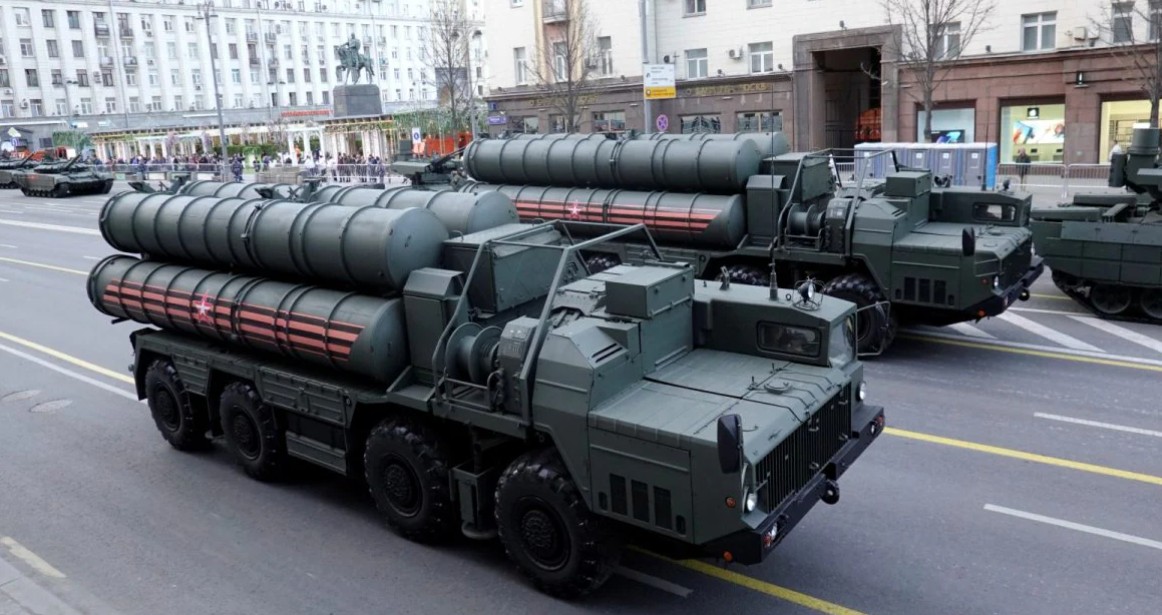
The Defence Acquisition Council (DAC), head by Defence Minister Rajnath Singh, has approved the Acceptance of Necessity (AoN) for the procurement of 288 S-400 missiles from Russia at an estimated cost of around Rs 10,000 crore.
The acquisition includes 120 short-range missiles and 168 long-range missiles and will be carried out under the Fast Track Procedure (FTP), which is meant for urgent defence requirements.
India is also set to receive two additional S-400 systems, already part of an earlier contract, in June and November this year. In November last year that the government was preparing to acquire more S-400 missiles to replenish stocks used during Operation Sindoor and to strengthen its inventory of both short- and long-range surface-to-air systems, reported Hindustan Times.
The AoN cleared by the DAC covers 120 short-range and 168 long-range missiles and that the procurement will proceed under the FTP route. They added that two more S-400 systems, already contracted, will be delivered in June and November.
The Indian Air Force is also making a case for purchasing five more S-400 systems from Russia, along with the Pantsir short-range air defence system. The Russian Pantsir system is effective against armed drones and kamikaze drones. The S-400 and Pantsir systems can be integrated into a two-layer air defence shield capable of intercepting aerial threats launched from across the border.
How India’s Defence Purchase Works
India’s defence acquisition process follows a structured chain of approvals to ensure strict oversight. It begins with a statement of case outlining the operational requirement and justification for procurement. The proposal is then examined by the Defence Procurement Board, chaired by the defence secretary, before being moved to the DAC for Acceptance of Necessity.
After being granted AoN, detailed cost negotiations are undertaken with the vendor. This is followed by financial approval from the competent authority. The final clearance is granted by the Cabinet Committee on Security (CCS).
On Thursday, an official statement said that the defence minister accorded AoN for various proposals at an estimated value of about ₹3.60 lakh crore. For the Indian Air Force, AoN was approved for the procurement of Multi-Role Fighter Aircraft (MRFA), including Rafale jets, combat missiles, and an Air-Ship-Based High Altitude Pseudo-Satellite system.
“The procurement of MRFA will enhance the capability of undertaking air dominance roles across the spectrum of conflict and significantly boost the deterrence capabilities of IAF with long-range offensive strikes,” the defence ministry’s statement said. The majority of the MRFA to be procured will be manufactured in India. The ministry added that the combat missiles will enhance stand-off ground attack capability with deep strike power and very high accuracy.
For the Indian Army, AoN was accorded for the procurement of anti-tank mines (Vibhav) and the overhaul of vehicle platforms of Armoured Recovery Vehicles (ARVs), T-72 tanks and Infantry Combat Vehicles (BMP-II). For the Indian Navy, AoN was cleared for 4 MW Marine Gas Turbine-based Electric Power Generators and P-8I Long Range Maritime Reconnaissance Aircraft.
Why More S-400 Missiles Are Needed
The decision to replenish and stock S-400 missiles was considered necessary as the Indian armed forces used the air defence system extensively during Operation Sindoor in May 2025. The system was deployed to bring down Pakistani fighter aircraft, early warning and intelligence-gathering aircraft, and armed drones.
India reportedly struck a wide-bodied aircraft inside Punjab in Pakistan at a distance of 314 km using a long-range S-400 missile. Following this, Rawalpindi shifted its operational aircraft towards airbases in the western region near Afghanistan and Iran.
After India targeted Pakistani radar installations in Lahore, Rawalpindi, Sialkot and Pasrur, the Pakistani Air Force was largely inactive on May 9–10 due to concerns over the S-400 systems deployed in the Adampur and Bhuj sectors.
The replenishment includes S-400 surface-to-air missiles with ranges of 400 km, 200 km, 150 km and 40 km. Restocking these missiles is seen as essential for maintaining India’s air defence preparedness and readiness against future aerial threats.