






















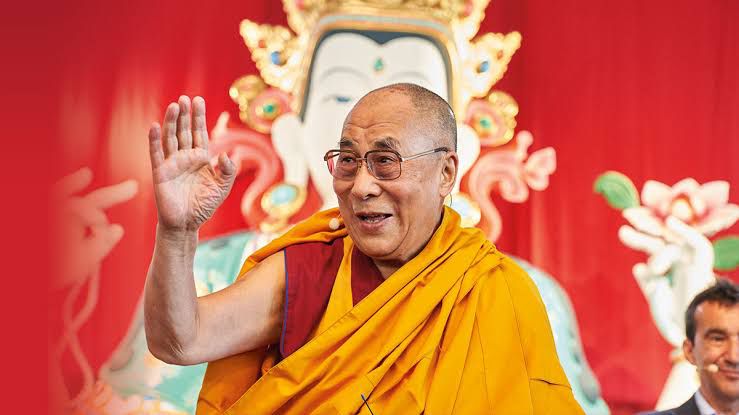
On February 13, 1913, the Dalai Lama declared Tibetan independence. This demolished the Chinese claims over Tibet, securing sovereignty, history and autonomy for the Tibetans.
That day, Tibet rewrote its destiny and quietly planted a historical landmine under modern China’s claims over the Himalayan plateau.
In a bold proclamation issued from Lhasa, the 13th Dalai Lama formally restored Tibetan sovereignty, declaring Tibet an independent state after expelling Qing dynasty forces.
For 38 crucial years that followed, Tibet functioned as a de facto independent polity, governing itself without Chinese control.
This moment remains deeply inconvenient for Beijing, because it directly contradicts the Chinese Communist Party’s core narrative that Tibet has “always been part of China.”
Understanding why this declaration matters today requires stepping back into the geopolitical chaos of early 20th-century Asia.
Collapse of Empire and Tibet’s Strategic Moment
The Qing dynasty, which had asserted loose and often symbolic authority over Tibet, collapsed in 1911 following the Xinhai Revolution.
As imperial China imploded and its garrisons in Tibet were left isolated and vulnerable. Tibetan forces, loyal to the Dalai Lama, moved decisively, defeating Qing troops and forcing their withdrawal.
This was not a ceremonial act or a vague spiritual statement. It was a classic assertion of sovereignty backed by force, territory and governance.
When the Dalai Lama issued his proclamation in 1913, he was formalising a reality already achieved on the ground, China no longer exercised authority over Tibet.
The Dalai Lama’s 1913 Declaration, A Sovereign Act
The February 13 declaration did three critical things. First, it ended all foreign domination, explicitly rejecting Chinese suzerainty and imperial claims.
The Dalai Lama stated that Tibet’s relationship with China had collapsed along with the Qing dynasty and would not be renewed.
Second, it restored Tibet’s ancient sovereign status. Tibet had its own army, currency, postal system, borders, and diplomatic dealings. These are the defining markers of statehood under international norms.
Third, it set a lasting precedent. For nearly four decades, from 1913 until the People’s Liberation Army invaded in 1950, Tibet governed itself.
No Chinese government, be it mornarchy, republican or communist, exercised effective control during this period.
This historical reality directly undermines the CCP’s modern assertion that its 1950 takeover was a “peaceful liberation” rather than an invasion.
Why History Is Not on Beijing’s Side
Serious historical scholarship consistently acknowledges Tibet’s de facto independence during this period.
British, Indian, and other foreign records treated Tibet as separate from China in practice, even if full diplomatic recognition was cautious.
More importantly, international law places heavy weight on effective control, not retrospective claims.
China’s absence from Tibet for nearly four decades is not a footnote. It is a fatal flaw in the “always part of China” argument.
Beijing’s current position relies on selectively citing imperial-era influence while ignoring long gaps of non-control.
But empires do not equal nation-states, and historical association does not equal perpetual sovereignty.
Why February 13 Still Matters Today
The CCP works tirelessly to erase or distort this episode because it legitimises Tibetan demands for genuine autonomy, or even independence.
Acknowledging the 1913 declaration would mean admitting that Tibet’s incorporation into the People’s Republic of China was neither inevitable nor consensual.
For Tibetans in exile and inside Tibet, February 13 is more than a historical anniversary. It is proof that self-rule is not a fantasy but a lived reality within modern history.
Reclaiming Tibet’s Narrative
Celebrating the Dalai Lama’s February 13, 1913 declaration is not about nostalgia. It is about historical accuracy.
It challenges propaganda with documented fact and reminds the world that Tibet’s sovereignty was not “granted” or “invented” by outsiders. It was in fact asserted by Tibetans themselves.
In an era where Beijing seeks to rewrite borders and histories alike, Tibet’s 1913 moment stands as an inconvenient truth–Tibet was free, it governed itself, and its loss of sovereignty came through force, not destiny.





