
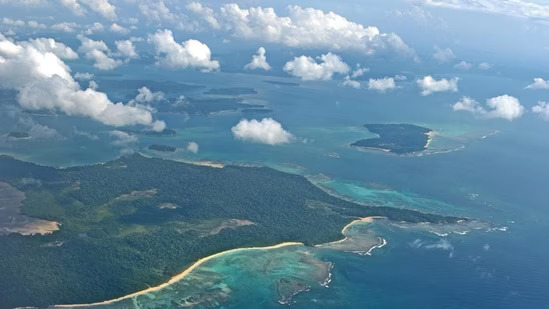
The National Green Tribunal (NGT) on Monday cleared the Rs 80,000-crore Great Nicobar Island mega infrastructure project, stating it found “no good ground to interfere” with the project’s environmental clearance (EC) while emphasizing its strategic importance for India.
A six-member special bench, headed by Chairperson Justice Prakash Shrivastava, disposed of petitions challenging the EC granted in November 2022. The tribunal directed authorities and regulatory agencies to ensure full and strict compliance with all EC conditions during project execution.
The Great Nicobar project spans 166.10 sq km, including 130.75 sq km of forest land and 84.10 sq km of tribal land, and involves a transshipment port, an integrated township, a civil and military-use airport, and a 450 MVA gas- and solar-based power plant. NGT noted that previous concerns raised in the first round of litigation were addressed by a High-Powered Committee (HPC) constituted in 2023, which examined environmental safeguards, including coral protection and turtle nesting sites.
“The project is very important for India from a strategic point of view,” the tribunal observed, noting its location near key international sea routes and stressing that development must balance environmental regulations under the Island Coastal Regulation Zone (ICRZ) Notification, 2019.
Environmental Concerns Addressed:
Senior environmental activist Ashish Kothari had challenged the Great Nicobar project, citing alleged violations of ICRZ rules. Kothari sought exclusion of 700 hectares of project components, including port, airport, and township areas, from ecologically sensitive zones. He also questioned the use of single-season EIA data and the HPC’s limited review scope.
The tribunal rejected these claims, observing that:
• No major coral reefs exist within the direct project area, though scattered corals will be translocated under scientific supervision.
• One-season (non-monsoon) environmental data is sufficient for port projects.
• No part of the Great Nicobar project falls in ICRZ-IA (ecologically sensitive) areas.
• EC conditions already provide comprehensive safeguards for biodiversity, including Leatherback Turtles, Nicobar Megapode, and endemic species.
The NGT instructed the Environment Ministry to prepare and implement a coral protection and regeneration plan involving scientific agencies such as the Zoological Survey of India and the National Institute of Oceanography.
Background and Strategic Importance:
The Great Nicobar Project, proposed by the Narendra Modi government, aims to transform the southernmost island into a major economic, transportation, and defence hub. Spread over 910 sq km, Great Nicobar is sparsely inhabited and largely covered by tropical rainforest in the southeastern Bay of Bengal.
The NGT emphasized a balanced approach, recognizing both the environmental sensitivities of the island and the national strategic imperatives of the Great Nicobar project. The tribunal concluded that adequate measures are in place to mitigate ecological impact and dismissed the petitions while reiterating strict monitoring of EC compliance.