
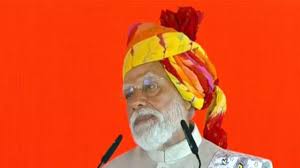
Prime Minister Narendra Modi launched a nationwide Human Papillomavirus (HPV) vaccination campaign for girls aged 14 and above during his visit to Ajmer, while inaugurating and laying the foundation stone for development projects worth over ₹16,680 crore across the state.
The vaccination initiative, aimed at preventing cervical cancer, marks a significant expansion of preventive healthcare efforts. It targets one of the leading causes of cancer-related illness among women and is expected to strengthen long-term health outcomes for adolescent girls nationwide. Addressing a public gathering after the launch, the Prime Minister described the programme as a decisive step towards empowering women and improving public health resilience.
Alongside the healthcare drive, Modi unveiled projects spanning urban development, drinking water, roads, irrigation, energy, and industrial infrastructure, reinforcing the Centre’s focus on comprehensive and inclusive development.
Transforming Connectivity and Transport Networks
A substantial portion of the investment has been channelled into strengthening road and transport infrastructure. The Prime Minister inaugurated several national highway projects, including the four-lane greenfield expressway between Bandikui and Jaipur, sections of the Amritsar–Jamnagar Economic Corridor, and parts of the Delhi–Vadodara access-controlled greenfield expressway.
He also laid the foundation stone for a four-lane elevated road in Jodhpur city and for upgrades to the Malabmori–Mangrol–Baran State Highway in Baran district. These projects are expected to improve regional connectivity, reduce travel time, and enhance the movement of goods and people, thereby supporting industrial and commercial growth.
Strengthening Water Supply and Energy Systems
In the water sector, foundation stones were laid for four packages under the Nonera Major Drinking Water Project and five packages under the Parwan Akawad Major Drinking Water Project. These initiatives aim to expand access to safe and reliable drinking water across multiple districts.
To reinforce energy infrastructure, the Prime Minister inaugurated transmission systems linked to Renewable Energy Zones. He also laid the foundation stone for five 220 kV and two 400 kV substations, along with associated transmission lines, to ensure efficient power evacuation and support clean energy expansion.
Employment, Governance, and Political Messaging
Highlighting employment generation, Modi distributed more than 21,800 appointment letters to newly recruited youth in various government departments and organisations. He said the “double-engine government” of the Bharatiya Janata Party in Rajasthan had completed two years and was delivering development at an accelerated pace.
Taking a critical view of earlier administrations, he claimed that recruitment-related corruption and paper leaks had been curbed, with strict action taken against offenders.
Referring to Ajmer’s historical and cultural significance, the Prime Minister described it as a land of faith and valour. He also mentioned his recent visit to Israel, recalling his tribute to Major Dalpat Singh in the Israeli parliament.
With the simultaneous rollout of a nationwide health campaign and high-value infrastructure projects, the Ajmer programme highlighted the government’s dual emphasis on social welfare and economic modernisation, positioning Rajasthan as a key pillar in its broader national development strategy.