




















In a major breakthrough for India’s space sector, domestic aerospace company Azista Space has successfully taken pictures of objects in orbit using another satellite, a first for any Indian company. This capability, often referred to as “in-orbit snooping” or space watch, is a key step in strengthening space security.
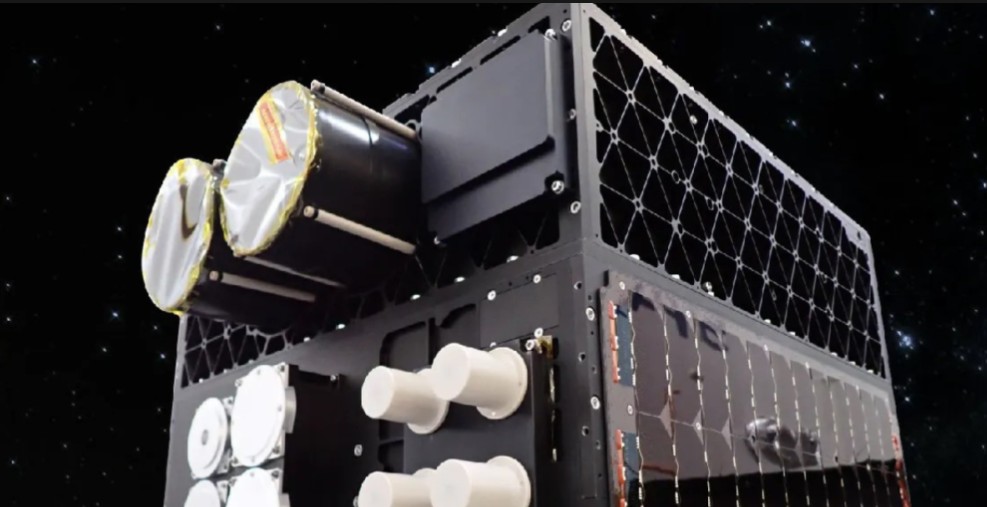
As per reports, using its 80-kg Earth observation satellite, ABA First Runner (AFR), Azista Space captured images of the International Space Station (ISS), which orbits roughly 400 km above the Earth.
AFR was launched by SpaceX’s Falcon-9 rocket as part of the Transporter-8 mission on June 13, 2023, and has now completed 2.5 years in orbit.
In a post on X, Azista Space said it had “successfully executed a challenging near-horizon demonstration targeting the ISS. Operating in sunlit conditions at ranges of approximately 250 km and 300 km, the AFR sensor was precisely tasked to track ISS, capturing it in 15 distinct frames. Two independent attempts were conducted, both achieving 100% success.”
The images were captured at 2.2-meter resolution, proving the accuracy of AFR’s tracking systems and imaging capability. The company added, “To our knowledge, AFR is the only Indian built and operated satellite to have demonstrated such a feat.”
Azista Space, which has a satellite and payload manufacturing facility in Sanand, Gujarat, is also Asia’s first private satellite factory, producing 50 satellites annually.
The company designs, develops, manufactures, and integrates satellites and space-borne systems, including tailor-made satellites and subsystems, and its personnel have contributed to over 12 ISRO missions.
India currently operates more than 50 satellites for purposes such as communication, navigation, Earth observation, and surveillance. Protecting these satellites requires timely information about nearby objects, particularly during geopolitical tensions.
This achievement is a significant step toward improving India’s space situational awareness (SSA), the ability to monitor, track, and predict the movement of satellites, space debris, and natural objects like asteroids. SSA is vital for ensuring the safety of space activities, preventing collisions, and planning avoidance maneuvers.
Azista Space highlighted its technical expertise, saying, “Azista Space also brings strong electro-optical payload, image processing and satellite bus engineering capabilities, enabling the design, development, and delivery of end-to-end SSA satellites and payloads tailored to customer mission requirements.”