
















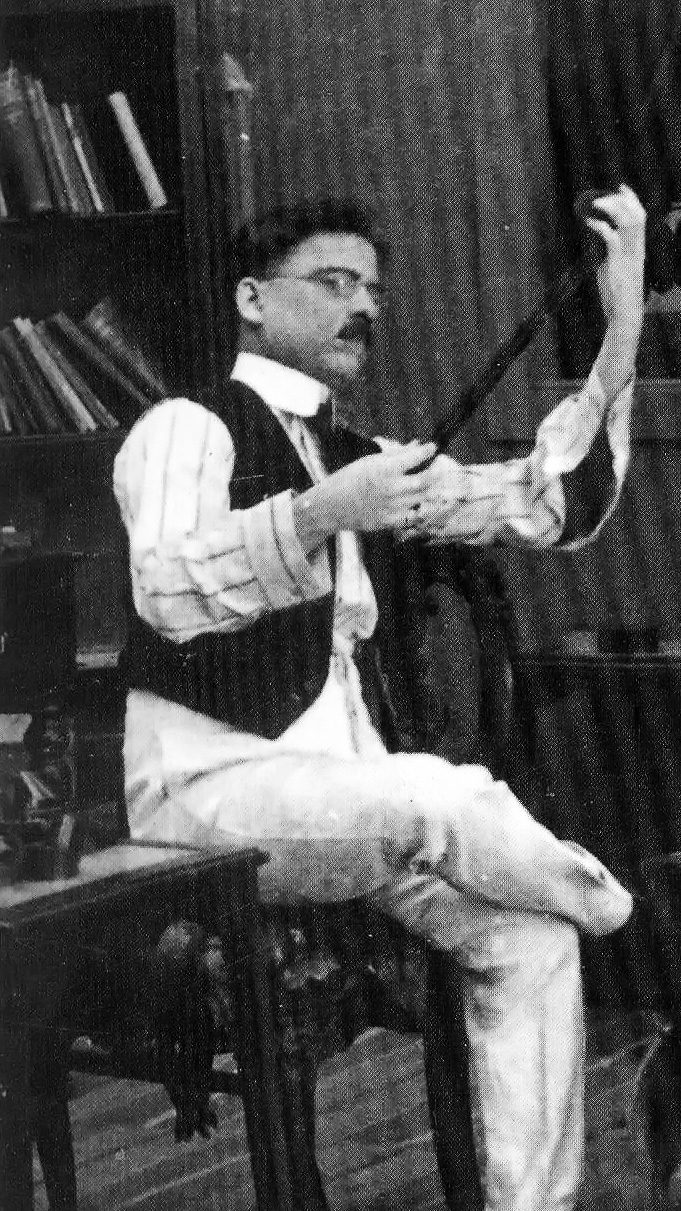
On February 16, India solemnly remembers Dhundiraj Govind Phalke, fondly called Dadasaheb Phalke, the visionary whose imagination gave the nation its first cinematic heartbeat. Born in 1870 in Trimbak, Maharashtra, Phalke was a painter, photographer, stage artist, storyteller, and magician long before he ever touched a film camera. He saw in cinema a way to bring India’s myths, legends, and everyday stories to life.
In 1906, after watching a French silent film, Dadasaheb Phalke realised that moving pictures could carry stories far beyond words. He travelled abroad to learn filmmaking techniques, returned to India with cameras and film stock, and set out to create something no one had done before. In 1913, he achieved the impossible with Raja Harishchandra, India’s first full-length feature film. Silent, black-and-white, and made with limited resources, it told the story of a king whose devotion to truth was tested. Phalke did everything himself, writing, directing, producing, designing sets, and training actors. The film’s success marked the birth of Indian cinema and proved that India’s stories could live and breathe on screen.
Dadasaheb Phalke continued to push the boundaries of cinema. Lanka Dahan (1917) brought Hanuman’s fiery leap to life with clever camera tricks. Shri Krishna Janma (1918) captured the divine mischief of Krishna’s birth. Kaliya Mardan (1919) thrilled audiences as Krishna defeated the serpent Kaliya. Setubandhan (1932) and Gangavataran (1937) showcased his mastery of silent and early sound filmmaking. Each film combined mythology, technical ingenuity, and storytelling brilliance, laying the foundation for a new art form in India.
But the journey of Dadasaheb Phalke was never easy. Film stock was scarce, funds were limited, and society often doubted him. Yet he persevered, touring princely states to raise funds and relying on sheer determination to realise his vision. He introduced women to the screen at a time when it was socially controversial, challenging norms and expanding the possibilities of Indian storytelling.
To honour his unparalleled contributions, the Government of India instituted the Dadasaheb Phalke Award in 1969, the nation’s highest recognition for lifetime achievement in cinema. The award, presented by the President of India, includes a Golden Lotus medallion, a shawl, and a cash prize of ₹10 lakh. Its first recipient was Devika Rani, and over the decades, it has recognised legends from across India’s diverse cinematic landscape, including Mohanlal in 2025.
On his death anniversary in 2026, tributes poured in from government officials, film organisations, and cultural bodies nationwide, celebrating pioneering spirit of Dadasaheb Phalke. Veteran actors and filmmakers took to social media, recalling how his courage and vision shaped generations of storytellers. His legacy continues to inspire not only those who make films but also those who dream in stories.
The fascination with his life continues to the present. A high-profile biopic directed by Rajkumar Hirani and starring Aamir Khan, scheduled to begin production in March 2026, aims to bring journey of Dadasaheb Phalke, his struggles, triumphs, and creative genius, to contemporary audiences, connecting the origins of Indian cinema to its present-day vibrancy.
Today, Indian cinema is a global powerhouse, producing thousands of films in dozens of languages. Yet it all began with one man, one vision, and one flickering reel of imagination. On his death anniversary, we remember Dadasaheb Phalke not just as a filmmaker but as a dreamer who turned Indian stories into silver-screen magic. His life reminds us that courage, creativity, and unwavering belief in one’s vision can shape the dreams of an entire nation.