
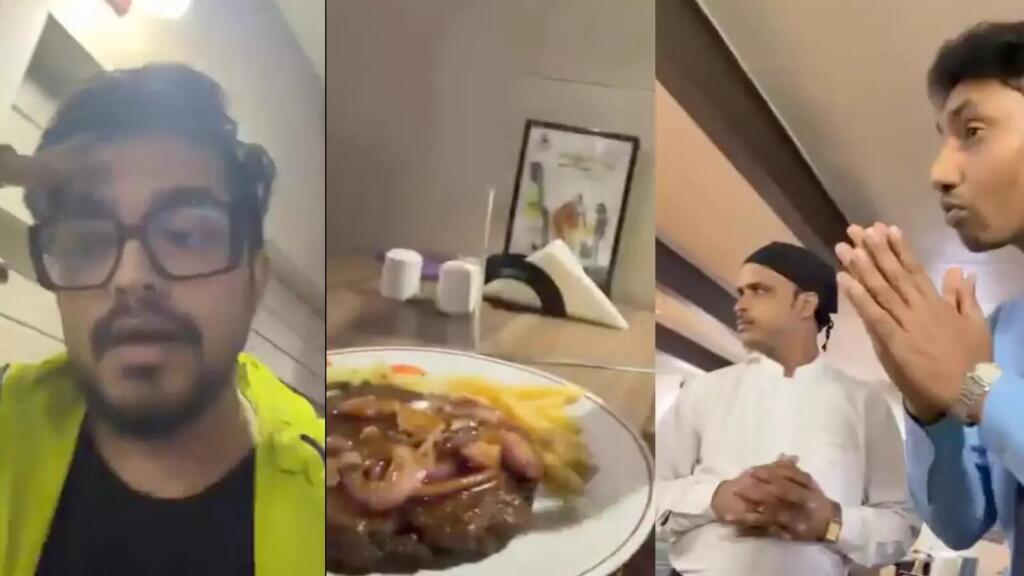
A dining experience at a prominent Kolkata restaurant has turned into a widely discussed controversy after a Hindu Brahmin actor alleged that he was served beef despite making his dietary restrictions clear. The episode, which reportedly concluded with a brief apology from a staff member, has sparked conversations about faith, food practices, and the responsibility of hospitality establishments to respect deeply held beliefs.
According to accounts surrounding the incident, the Hindu Brahmin actor had chosen the restaurant for what he expected to be a refined and careful culinary experience. Coming from a traditional background where dietary codes are closely linked with religious observance, he reportedly communicated his preferences while ordering. The situation became distressing when he later came to believe that beef had been included in the meal served to him, leading to immediate shock and confrontation.
For many individuals raised in orthodox Brahmin households, food is not merely a matter of taste but a reflection of spiritual discipline and lifelong cultural practice. The Hindu Brahmin actor is said to have expressed that the issue went far beyond a simple mistake, describing it as a violation of personal faith. He reportedly felt hurt that his clearly stated restrictions were not honored, emphasizing that trust between diner and server had been broken.
The waiter involved in the situation reportedly offered an apology after being questioned. However, the Hindu Brahmin actor felt the apology did not adequately acknowledge the seriousness of the lapse from his perspective. This reaction has resonated with many people online who argue that mistakes involving religious dietary rules should be handled with the same urgency and sensitivity as medical or allergy related errors.
Restaurants operate on a system of trust. Diners depend on menu descriptions, staff guidance, and accurate communication from the kitchen. When this chain fails, the consequences can be emotional as well as practical. Supporters of the Hindu Brahmin actor say that for observant individuals, accidental consumption of prohibited food can cause lasting distress, making it essential for staff to double check special requests.
At the same time, some voices have urged caution, noting that misunderstandings can occur in busy kitchens. They argue that a thorough internal review is important before drawing broader conclusions. Still, those backing the Hindu Brahmin actor maintain that reputed establishments should have systems in place to prevent such errors, especially in a diverse society where religious and cultural food practices are widely known.
The incident has also prompted discussion about professional training in the hospitality sector. Staff members in major cities routinely serve customers from varied backgrounds, each with specific dietary needs. Experts say clear labeling, careful order confirmation, and sensitivity training can help avoid situations like the one described by the Hindu Brahmin actor. Ensuring that servers understand the seriousness of certain restrictions is seen as part of quality service.
Some observers have warned against turning the matter into a communal dispute, arguing that the core issue is professional responsibility. Others respond that the religious dimension cannot be ignored because it lies at the heart of why the Hindu Brahmin actor felt wronged. This tension reflects the broader challenge of balancing secular service standards with respect for faith based practices.
Public response has been mixed. While some people see the episode as an unfortunate but isolated incident, others view it as a sign that greater awareness is needed in urban dining spaces. The Hindu Brahmin actor has, intentionally or not, become a symbol in this conversation, with many saying his experience echoes their own unspoken concerns about whether their dietary rules are taken seriously.
Legal experts note that although such cases may not always lead to formal complaints, they highlight the need for clear accountability mechanisms. For the Hindu Brahmin actor, the matter reportedly felt like an issue of dignity as much as food. That sentiment has struck a chord with those who believe cultural respect should be central to customer service.
Ultimately, the controversy shows how closely food, identity, and belief can be connected. A meal can be routine for one person but spiritually significant for another. The experience described by the Hindu Brahmin actor serves as a reminder that in a plural society, attentiveness and respect in everyday interactions are essential. Whether this episode leads to better practices remains to be seen, but it has undeniably drawn attention to the importance of trust at the dining table.