
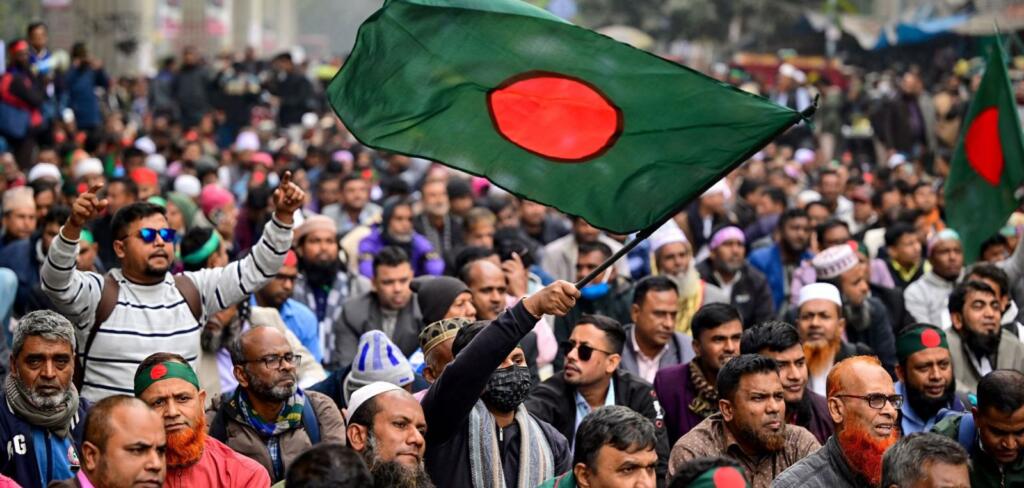
Legitimacy is a fragile thing. It is the invisible thread that holds a nation together when the laws fail and the cops retreat. In Bangladesh, this thread is currently frayed to the point of snapping.
The interim government in Dhaka is facing a chorus of demands to hold elections immediately, to return the country to a democratic footing as fast as possible. But from the global perspective, this rush to the polls looks less like a sprint towards democracy and more like a stumble into a crisis that could last for a decade.
If an election is held before the institutions of the state are rebuilt, the result will not be stability; it will be a contested, rejected mandate that leaves the country more divided than it was before the uprising. A rushed vote today guarantees a broken state tomorrow.
The immediate danger of a hasty election is the spectre of the boycott. We have seen this play out in Bangladesh’s recent history, where major opposition parties refuse to participate in a contest they believe is rigged from the start. If the reforms to the Election Commission and the judiciary are not completed, if the playing field is not levelled, then key political actors will simply walk away.
An election without the participation of all major parties is not an election; it is a selection. It produces a parliament that represents only a fraction of the populace. This leads to historically low turnout, a phenomenon that strips the incoming government of any moral authority to rule.
A government that is elected by twenty percent of the people cannot command the respect of the other eighty percent, and in a country as volatile as Bangladesh, that lack of respect quickly translates into civil disobedience.
When institutions are weak, the loser of an election has no incentive to accept the result. In a mature democracy, a defeated candidate concedes because they trust that the system was fair, or at least, that they can try again in a few years.
In the current climate in Dhaka, where the courts are seen as partisan and the police as compromised, a loss at the ballot box is viewed as an existential threat. If the election is rushed, the losing side will not go quietly into the opposition benches.
They will take to the streets, claiming fraud, claiming manipulation, and they will likely be right. Without a strong, independent Election Commission to adjudicate these disputes, there is no referee to blow the whistle.
The result is a political paralysis where the government controls the ministries, but the opposition controls the streets, a hotpot recipe for economic disaster and perpetual unrest.
The international community is watching closely, and their judgment matters a lot. Bangladesh’s economy is deeply integrated into the global market, particularly through its garment exports to Europe and the United States.
These economic partnerships depend on the perception of national and regional stability, as well as democratic legitimacy. Western capitals are increasingly wary of engaging with regimes that lack a clear, credible mandate from their people.
A flawed, violent, or contested election will trigger alarm bells in Brussels and Washington. It could lead to a reassessment of trade privileges.
Bangladesh’s trade exposure is particularly acute because its duty-free access to the EU has long rested on the Everything But Arms (EBA) framework under LDC status, and as the country moves toward post-graduation arrangements, political instability or a crisis of legitimacy could complicate this transition.
At the same time, since Bangladesh is actively seeking GSP+ access in the post-LDC phase, a contested or unstable political environment could weaken its governance credentials and reduce EU confidence in extending or sustaining preferential trade terms.
Foreign direct investment, which is already jittery, will evaporate completely if investors see a government that is constantly fighting for its survival against a hostile population.
The solution to this looming crisis is a pause. A short, managed delay of six to twelve months allows for the hard work of consensus-building. It gives the interim administration time to bring the political parties, civil society and the military onto the same page regarding the rules of the game.
By taking the time to agree on the constitutional framework and the electoral code before a single vote is cast, the state reduces the risk of post-election chaos. It allows for a cooling-off period during which the violent passions of the uprising can subside into organised political campaigning.
The argument that a delay is undemocratic misunderstands what democracy actually requires. Democracy is not just a date on a calendar; it is the process of building trust. Bangladesh has the opportunity to break the cycle of winner-takes-all politics that has plagued it for over fifty years now.
But to do that, it must resist the temptation of the quick fix. It must choose the harder, longer path of rebuilding its legitimacy from the ground up. Speed is the enemy of stability here. The goal must be an election that settles the question of power, not one that ignites a new war for it.