

















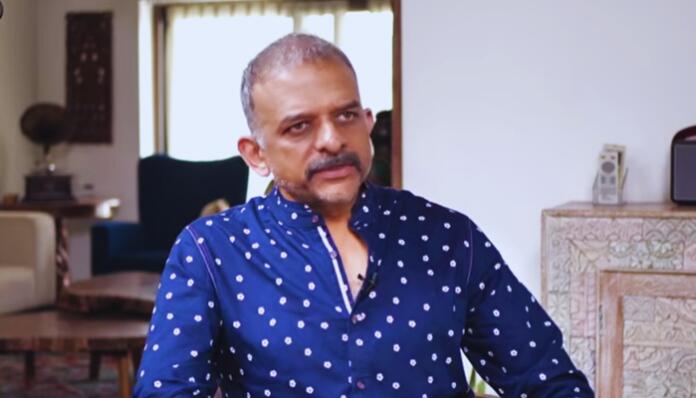
Renowned Carnatic vocalist TM Krishna has once again stirred controversy by publicly questioning the place of the national song Vande Mataram and the novel Anandmath in India’s cultural and political landscape, alleging deep-seated connections to an anti Muslim narrative and sparking robust debate across the country. His remarks, made during a recent interview promoting his book, have drawn sharp reactions from politicians, cultural commentators, historians, and religious groups alike, underscoring the sensitivity of identity, tradition, and national symbols in modern India.
At the heart of TM Krishna’s critique lies his assertion that Vande Mataram, written by Bankim Chandra Chatterjee and featured in the 19th-century novel Anandmath, is inherently tied to a religious framework that elevates a particular cultural imagery over inclusive citizenship. He described the song as unsuitable to serve as a national anthem due to its perceived exclusivity and criticised what he terms its alignment with a majoritarian conception of the nation. Drawing on the structure and imagery of the song, he argued that Vande Mataram reinforces an identity that can marginalise communities that do not share the religious worldview he believes is embedded within it. Within that critique, he made contentious claims about Anandmath and Vande Mataram having an anti Muslim undertone, a charge that has intensified public discussion.
TM Krishna’s comments extended beyond mere literary analysis to challenge what he sees as the symbolic association of the song with a dominant religious identity. He suggested that certain stanzas of Vande Mataram depict the motherland in terms that he believes are exclusive to a particular religious tradition. His reluctance to embrace the song as a unifying national symbol is rooted in his broader criticism of what he sees as majoritarian claims on cultural heritage and public symbols. In his view, the invocation of this imagery contributes to divisions rather than unity in a pluralistic society.
However, many observers reject the notion that Vande Mataram or Anandmath are intrinsically exclusionary or anti Muslim. Scholars and political leaders have emphasized the historical context in which the song and novel emerged during the Indian freedom struggle, where they served as calls for unity against Imperial rule. For example, the Defence Minister recently argued that neither Vande Mataram nor Anandmath was ever opposed to Islam, but rather reflected resistance to oppression under colonial and feudal structures, and that much of the song’s controversy arises from its later interpretation and selective memory of its original verses.
Beyond high-level political discussion, debates over Vande Mataram have surfaced in diverse public forums, especially around issues of religious belief and practice. Some Muslim groups have expressed discomfort with compulsory recitation or performance of the song in contexts where faith sensitivities are at play, noting that certain references to divine imagery may conflict with their religious teachings on monotheism. These views highlight the complex interplay between cultural symbols and individual conscience, and they continue to shape conversations around national identity and inclusivity.
The contention around Vande Mataram also reflects broader historical debates. During the Indian independence movement and in the early years of the republic, questions about whether the song should be adopted as the national anthem or regarded as a national song were subjects of serious consideration. Some historical figures voiced reservations about its religious imagery, prompting compromises that sought to balance respect for diverse traditions with the desire for cohesive national symbols. These discussions resonate today as India continues to grapple with its pluralistic identity.
Critics of TM Krishna’s stance argue that his interpretation oversimplifies the song’s history and significance, reducing a multifaceted cultural artifact to a single lens of religious exclusion. They note that Vande Mataram has inspired countless Indians across communities during the freedom struggle and beyond, and that its first two stanzas, which are often highlighted in contemporary usage, do not carry overt religious imagery. They further argue that labelling it anti Muslim overlooks the broader context in which it has been embraced by people of varied backgrounds as an expression of love for the motherland.
Supporters of TM Krishna, meanwhile, see his critique as part of a larger call for reexamining entrenched cultural norms and fostering a more inclusive understanding of national identity. They argue that challenging historical narratives, especially those tied to majoritarian sentiment, is necessary for a society that seeks to accommodate diverse voices and experiences. In their view, discussing perceived biases in cultural symbols like Vande Mataram encourages deeper reflection on how national unity can coexist with respect for pluralism.
This debate underscores how cultural symbols, historical narratives, and questions of identity remain deeply contested in India’s public sphere. Whether viewed as an inspiring anthem of freedom, a contested representation of national identity, or an artifact of historical complexity, Vande Mataram occupies a unique place in the nation’s imagination. TM Krishna’s comments have amplified these discussions and brought renewed attention to how symbols are interpreted and debated in a diverse society. As the conversation continues, it remains clear that issues surrounding culture, religion, and national expression will persist as central themes in India’s evolving democratic discourse.