












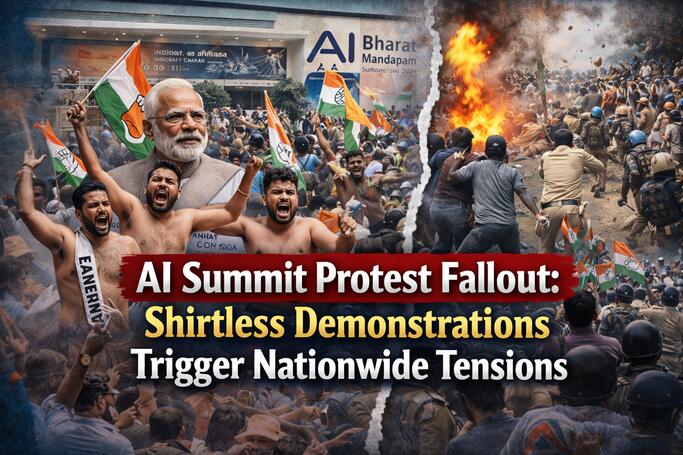
The recent AI Summit in New Delhi was meant to spotlight India’s role in shaping global artificial intelligence discourse, but instead became ground zero for a heated political confrontation after a controversial protest and its dramatic fallout. The incident has sparked intense debate across the country, igniting protests, counter-protests, and even street clashes in cities like Indore, all linked back to a highly unusual demonstration at the summit itself.
The AI Summit in question, formally known as the India AI Impact Summit 2026, was hosted at Bharat Mandapam and attracted tech leaders, policymakers, global delegates, and top executives from the AI industry. The event was designed to showcase India’s vision and capabilities in the field of artificial intelligence and facilitate international collaboration. However, the summit took an unexpected turn when members of the Indian Youth Congress (IYC) staged a shirtless protest within the venue.
According to reports, a group of Youth Congress activists entered Exhibition Hall No. 5 carrying or wearing white T-shirts printed with political slogans and messages. At one point, protesters removed their shirts and raised them while chanting slogans critical of Prime Minister Narendra Modi and his government’s policies, specifically targeting an India–US trade pact that the demonstrators claimed was detrimental to national interests. The demonstration was brief but impactful, drawing attention from attendees, security personnel, and the media.
The unusual form of protest—removing shirts inside a high-profile international forum—quickly drew sharp reactions from political leaders. Many in the ruling coalition condemned the act as inappropriate and damaging to India’s image on a global stage. Senior government figures described the shirtless demonstration as “shameful” and unbecoming of a platform intended to advance serious technological discussion. Critics argued that using the AI Summit as a backdrop for political theatrics detracted from the event’s focus and embarrassed the host nation in front of foreign delegates.
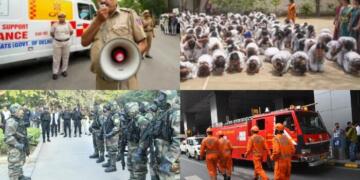
The response was not limited to words. Delhi Police detained several Youth Congress activists involved in the protest, including prominent youth leaders. Four individuals—identified by police as key organisers—were sent to five days of police custody as authorities continued to investigate the incident. Law enforcement officials suggested that the protest may have been inspired by recent Gen-Z protests in Nepal, raising questions about the motivations and influences behind the demonstration.
The political firestorm escalated quickly as party workers and supporters took to the streets. In Madhya Pradesh’s Indore, altercations broke out between members of the Youth Congress and supporters of the ruling party’s youth wing. What began as heated exchanges soon escalated to stone-pelting, forcing police to step in and bring the situation under control. Authorities reported injuries on both sides, highlighting how an incident in the AI Summit venue had spilled over into broader public unrest.
Beyond Indore, similar tensions were reported in multiple states, with protests and counter-protests organised by political activists. The ruling party’s youth wing staged demonstrations highlighting their disapproval of the Congress’s tactics, while in cities such as Mumbai and Hubballi, activists publicly rebuked the AI Summit protest, accusing the opposition of disrespecting national dignity.
The Congress party defended its actions, arguing that the demonstration was a legitimate expression of dissent and a reflection of youth frustration. Leaders claimed that the protest was aimed at drawing attention to what they see as concerning policy decisions, and emphasised that peaceful protest is a democratic right. They stated that the intention was not to disrupt the AI Summit itself, but to ensure that voices critical of the government’s approach were heard.
Criticism also came from unexpected quarters. Some opposition leaders who are typically allied with Congress described the form of the protest as “not appropriate,” suggesting that while dissent is valid, the manner in which it was conducted—particularly at a global event—was misguided. These voices highlighted the potential diplomatic and reputational repercussions of staging such a protest in the midst of an international conference.
The incident at the AI Summit raises broader questions about the intersection of political protest and international events. While democratic societies value freedom of expression, the context in which that expression occurs can shape public perception and influence diplomatic narratives. Critics of the Youth Congress’s tactics argue that strategic forums meant to enhance global cooperation should be safeguarded from partisan theatrics that can overshadow substantive discourse on technology and innovation.
Supporters of the protest maintain that drawing attention to perceived government shortcomings is essential, even at high-profile events, and that ignoring public discontent for the sake of optics undermines democratic principles. This tension reflects a larger debate within Indian politics about how and when to voice dissent, particularly on platforms that attract international attention.
As the dust settles on the AI Summit controversy, political leaders and commentators continue to debate the implications of the shirtless protest and its ensuing fallout. The incident has become emblematic of the complex relationship between politics and public platforms, revealing how cultural and democratic expression can intersect with, and sometimes disrupt, national initiatives aimed at fostering technological progress and international collaboration.
Whether this event will have lasting effects on India’s political landscape or on how future summits are organised remains to be seen—but for now, the shirtless protest at the AI Summit has become a defining moment in the story of India’s evolving democratic expression.