














A proposed 300 million euros deal between India and France for SCALP cruise missiles has once again brought the spotlight back on the country’s defence preparedness and more importantly, on the urgent need for self-reliance under Make in India.
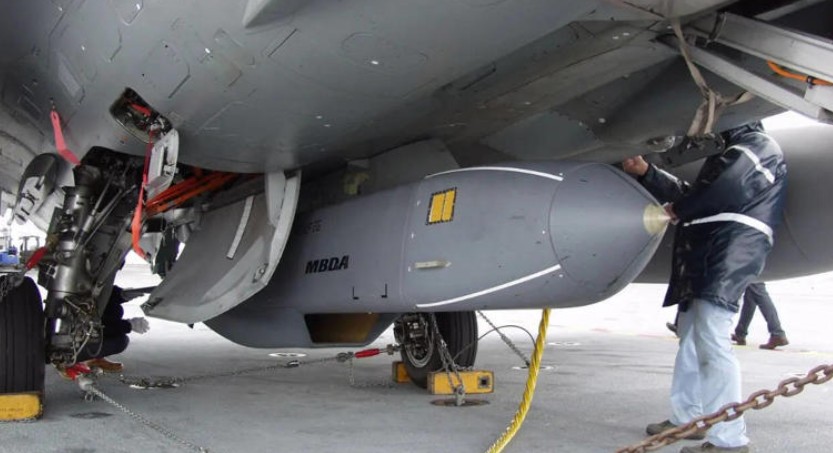
SCALP, also known as the Storm Shadow, is a long-range, air-launched cruise missile designed for highly accurate strikes against important and well-protected targets. With a range of over 250 kilometres, this missile uses a combination of inertial navigation, GPS, terrain-reference navigation, and an infrared imaging seeker in its final phase to ensure high accuracy.
This deal is the clearest example of the larger strategic question India faces, which is how long can we depend on foreign suppliers for critical weapons systems and what could be India’s indigenous alternative to SCALP.
What is the Deal
As French President Emmanuel Macron prepares to visit India, discussions around defence cooperation have intensified. While much of the focus has been on Rafale fighter jets, a parallel conversation is unfolding around SCALP missiles.
India is finalising a deal worth roughly 300 million euros (about Rs 3,200 crore) to procure additional SCALP cruise missiles for the Rafale jets already in service. This purchase is believed to be aimed at replenishing stocks after their reported use in Operation Sindoor, said defence reports.
SCALP is a long-range, air-launched cruise missile designed for high-precision strikes on heavily fortified targets. It carries a 450-kg warhead capable of destroying bunkers, underground facilities, and high-value infrastructure. It flies at low altitude, uses advanced navigation systems including INS and terrain-matching technology, and can operate even in GPS-denied environments.
In short, it is a highly capable, but expensive precision weapon and when such weapons are used in real operations, replenishing stocks becomes essential. However, repeated foreign purchases raise strategic concerns.
It is operated by several countries, including France, the United Kingdom, Italy, Greece, and India.Integrated with the Indian Air Force’s Rafale fighter jets, the SCALP missile gives India a stand-off strike capability, allowing aircraft to hit strategic targets deep inside enemy territory without entering heavily defended airspace.
Make in India: From Slogan to Strategic Necessity
Make in India in defence was envisioned to reduce exactly this kind of dependency and the objective was to build critical weapons domestically, secure supply chains, ensure wartime sustainability and strengthen strategic autonomy.
In a long conflict, relying on foreign weapons is risky, since changes in diplomacy, sanctions, delays in production, or political pressure can all limit supply. The SCALP deal highlights the gap between operational capability and industrial self-reliance.
Modern conflicts demand precision strikes with minimal collateral damage. Missiles like SCALP are designed for exactly that purpose. However, if after every limited conflict India has to negotiate fresh deals with foreign governments, it exposes a structural dependency.
It raises several questions such as what happens if supply chains are disrupted, what if geopolitical circumstances change and what if a prolonged conflict requires larger numbers of such missiles?
Strategic autonomy is not just about having advanced weapons, it is about having the ability to produce and replenish them independently. This is where Make in India becomes more than a slogan. It becomes a strategic necessity.
Does India Have an Alternative?
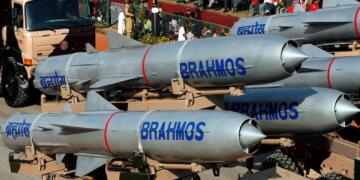
At present, India does not have a direct one-to-one indigenous equivalent to SCALP. BrahMos, India’s flagship cruise missile developed jointly with Russia, is supersonic and extremely accurate. However, it is larger and currently deployable mainly from the Su-30 platform. Its speed is a major advantage, but in terms of warhead penetration capability and Rafale integration, it serves a different operational role.
The more promising alternative could be BrahMos NG (Next Generation). This lighter, more compact version is expected to be compatible with multiple aircraft including Rafale and Tejas, retain supersonic speed, deliver precision strike capability and offer greater flexibility in deployment
However, BrahMos NG is still under development and will take time before becoming fully operational. India is also advancing its indigenous cruise missile programs under DRDO, but a fully operational SCALP-like system with similar range, penetration capability, and aircraft integration is not yet available.
Why This Deal Matters Beyond Procurement
Operation Sindoor reportedly demonstrated the importance of stand-off precision weapons. The ability to strike high-value targets from within Indian airspace strengthens deterrence while limiting escalation risks, but capability without domestic production creates a vulnerability.
The SCALP missiles were launched from Rafale fighter jets to strike terrorist headquarters of Jaish-e-Mohammed and Lashkar-e-Taiba in Pakistan’s Muridke and Bahawalpur districts during Operation Sindoor. These missiles were used along with BrahMos supersonic cruise missiles, and officials said the targets were destroyed with pinpoint accuracy.
The 300 million euros SCALP deal is not just about procurement, it is a reminder that true strategic strength lies not only in buying advanced weapons, but in building them at home.
Until an indigenous alternative becomes operational, purchases like this may remain unavoidable. But in the long run, the real objective must be clear from buying power to building power.
Following the strong performance of Rafale aircraft during Operation Sindoor and rising security concerns in the region, the Air Force is preparing to place an order for 114 additional Rafale combat aircraft. This proposal is expected to be taken up by the Defence Acquisition Council in the coming days.
With these future inductions, the Rafale fighter jet is expected to become the backbone of the Indian Air Force. Its total fleet strength is projected to reach around 200 aircraft over the next 10 to 15 years.