
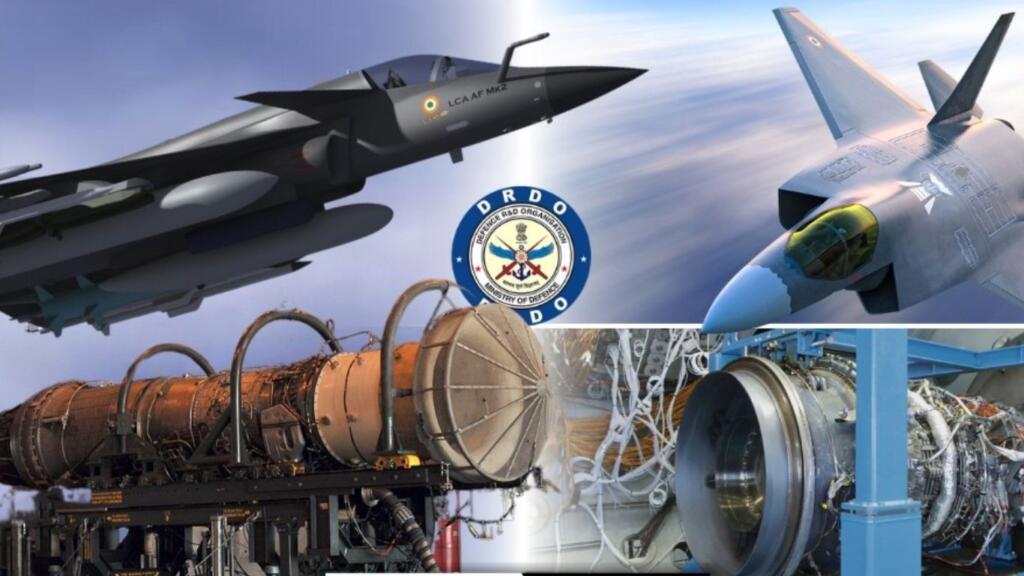
For years, India’s indigenous defence programs have been a favourite target of mockery. A section of commentators has consistently questioned the logic behind investing in domestic military platforms when advanced foreign options appear readily available.
Why spend money on the Kaveri engine when a deal with GE exists? Why develop helicopters like Prachand when Apache gunships can be bought off the shelf? Why build Indian howitzers when Israeli guns are available? Why push Tejas, AMCA, or indigenous drones when foreign systems look more “proven”?
This mindset dominated India’s defence discourse for decades. Indigenous programs were dismissed as inefficient, delayed, inferior, or emotionally driven. “Make in India” in defence was often reduced to screwdriver assembly, notreal manufacturing. The argument was simple: India lacks the technology, the ecosystem, and the industrial depth to compete with global defence giants.
That perception is now being challenged — not just in India, but across the world.
Ironically, it took US President Donald Trump to expose a reality that many countries had chosen to ignore: dependence on foreign weapons systems is a strategic vulnerability. His blunt, transactional approach to alliances made it clear that even close partners could be pressured, coerced, or constrained if their defence capabilities were externally controlled.
This reality was articulated openly by Finland’s Prime Minister in a recent statement that has since gone viral in defence circles. Referring to American fighter jets, he acknowledged that no matter how advanced these aircraft are, they cannot be operated against the will of the United States. In simple terms, ownership does not equal control.
The implication is profound. If a country’s air force or army is built primarily on imported platforms — or even systems assembled locally with foreign components — the original equipment manufacturer (OEM) and the supplying nation retain leverage.
Much has been said about the so-called “kill switch” on platforms like the F-35. Whether such a feature exists is almost irrelevant. Control can be exercised in far more subtle and effective ways: delaying spare parts, withholding software updates, denying maintenance approvals, restricting weapon integration, or invoking export control laws.
Modern fighter aircraft are among the most complex machines ever built. They rely on tightly integrated software, sensors, avionics, and engines. Any disruption in this ecosystem can ground an entire fleet without a single missile being fired.
India has experienced this reality firsthand.
The Tejas Mk-1 program, despite its achievements, depends on the American GE-404 engine. Repeated delays in engine deliveries from GE have directly impacted aircraft production schedules and squadron induction. While Tejas has had its share of internal challenges, engine supply disruptions have been a major external bottleneck.
This dependence explains India’s renewed push to develop indigenous aero-engine capability and its negotiations with Safran for the AMCA program, reportedly involving deeper technology transfer. But the larger truth remains unavoidable: critical technologies like jet engines cannot be permanently outsourced.
Supporters of foreign procurement often argue that Russia is a reliable partner. Russia is seen as willing to offer platforms like the Su-57 with production and operational flexibility. France is also cited as a dependable supplier, with Rafale being its primary fighter and Paris historically showing strategic autonomy.
However, global politics has repeatedly demonstrated that friendships between states are conditional. Donald Trump’s open pressure tactics on NATO allies and European partners shattered the illusion of permanent alliances. National interest, not sentiment, drives policy.
India’s reported plan to acquire 114 Rafale fighters reflects a harsh reality. It is not a strategic solution; it is a compulsion. The Indian Air Force is struggling to maintain required squadron strength. Delays in Tejas production and legacy aircraft retirements have left limited options.
The choice, at present, is between a well and a cliff.
Importing fighters may be the only practical short-term answer. But it cannot come at the cost of indigenous programs like Tejas Mk-2 and AMCA. Relying indefinitely on imports only postpones the problem while deepening dependence.
Another frequently suggested workaround is licensed production or assembly in India. But assembling foreign platforms does little to reduce strategic vulnerability. As long as key components — especially engines — remain under foreign export controls, leverage remains with the supplier.
A clear example is Sweden’s Gripen-E fighter, which uses the American GE-F414 engine. Because the engine falls under US ITAR regulations, Washington retains veto power over exports. When Saab attempted to sell Gripen-E to Colombia, the US reportedly blocked approval and even threatened engine supply disruptions. The deal collapsed.
This incident underscored a hard truth: without full control over critical technologies, true sovereignty is impossible.
India’s pursuit of Atmanirbhar Bharat in defence is therefore not ideological or political. It is strategic necessity. Indigenous programs are not about rejecting foreign systems overnight, but about ensuring that future conflicts are not decided in foreign capitals.
Self-reliance in defence is slow, expensive, and frustrating. But the cost of dependence is far higher.
Unless India confronts this reality honestly — beyond slogans, politics, and short-term fixes — it risks compromising its long-term national security. In modern warfare, control matters more than ownership. And without indigenous capability, control will always remain out of reach.