
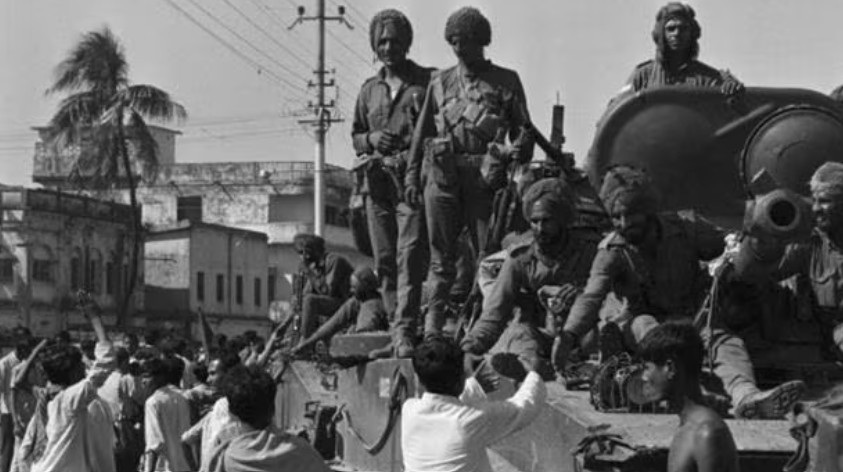
Bangladesh’s birth was marked by immense human suffering, as its 1971 Independence Movement and Liberation War against Pakistan saw genocide, mass rape of Bangla-speaking women, and countless inhuman atrocities.
This is not to list the history of war crimes committed by Pakistan, but is a reminder of the founding principles of Bangladesh, its national identity, internal security doctrine, and the decades-old foreign policy focus.
The present interim administration’s attempt to obliterate the historical truths and 1971 horrors is nothing but abstract intellectual dishonesty. This pro-Pakistan tilt in its foreign policy is a direct threat to Dhaka’s long-term security, internal dynamics, social unity, and regional stability.
Eroding the Moral Foundation of the State
The most critical threat from this foreign policy subversion is the betrayal of the collective memory of Bangladeshis. The independence movement and the liberation war were not just political struggles for self-determination. It was also a fight against war crimes that were genocidal in nature.
It is a recorded truth, and any dilution of this history weakens the Bangladeshi state’s moral legitimacy that is derived from sovereignty, resistance to oppression, and the mass violence it faced at the hands of Pakistan.
But when politicians selectively reinterpret the events of 1971 or question and minimise their fallout, it leads to a revision of history, undermining the call for justice, the institutions for justice delivery, and holding the perpetrators accountable for the war crimes.
This reinterpretation of history has serious domestic consequences for the politicians. They should keep in mind that the survivors of the 1971 genocide, the independence activists, and their families are a powerful constituency in their own way in the Bangladesh polity.
Devaluing their lived experiences and collective memory only breeds contempt, resentment, polarisation, and distrust of the state and the political leadership.
The frustration over the political machinations could fracture the national unity, forcing Bangladesh into serious vulnerability to domestic unrest and radicalisation that exploits historical grievances.
Short-Term Alliances, Long-Term Strategic Costs
The primary reason for politicians to downplay the 1971 atrocities in Bangladesh is political machination: An effort to have political alliances with outfits that were opposed to Bangladesh’s independence, or, in other words, to have an ideological relationship with those who have historically denied or justified the atrocities. Without any qualms, let’s mention the politician and the outfit: Muhammed Yunus and Jamaat-e-Islami.
Yunus is obviously looking for political legitimacy and short-term electoral gains in his presidential bid in the soon-to-be-held general elections in Bangladesh. What he fails to understand, for political expediency, is that he is compromising Bangladesh’s national interest in the long run.
His political ambition is harming Bangladesh’s diplomatic standing in the eyes of the global community, especially with the nation’s partners, who value human rights and secularism. He is doing away with the historical accountability of Pakistan for the 1971 war crimes. All for short-term gains with Jamaat’s organisational network among hardline Islamists.
The interim government’s soft glove attitude toward Pakistan only signals confusion to the world community. It weakens Dhaka’s credibility on issues such as genocide, human rights violations, minority rights, and justice.
Even more serious is the risk of normalising those forces that undermine Bangladesh itself and its constitutional framework based on secularism. The interim government is embedding serious and long-term vulnerabilities in Bangladesh’s polity.
Fuel for Extremism and Regional Turmoil
The pro-Pakistan tilt of the Yunus administration also has a security implication for Bangladesh’s borders. The 1971 liberation of Bangladesh had totally
reshaped the South Asian landscape permanently. Now, any bid to obscure or sanitise the 1971 horrors would only embolden the revisionist forces in the region. These forces are attempting to rewrite history for their narrow ideological purposes.
This has the potential to cause friction with Bangladesh’s neighbours for whom 1971 was a settled historical fact with profound emotional and strategic resonance.
Within Bangladesh, the situation is a cause for historical amnesia, providing fertail round for Islamic hardliners, extremists, and fundamentalists. When the government follows an ambiguous and opportunistic policy, it creates a vacuum that is exploited by radical groups, who portray themselves as the custodians of alternative truths.
This dynamic damages communal cohesion, weakens counter-extremism efforts, and risks political violence within Bangladesh, and such instability in a region grappling with cross-border terrorism and religious polarisation isn’t good for anyone.
Security Is Rooted in Historical Clarity
Bangladesh’s security cannot be separated from its history, and the recognition of the 1971 genocide is a deterrent against future human rights abuses. It reinforces Bangladesh’s constitutional values of secularism and anchors the nation on its strategic autonomy. Nations that forget their history or just blur uncomfortable truths about their past often find themselves repeating that history through internal decay and external vulnerability.
Remembering the event of 1971 is not about nostalgia, but about securing the state’s future. It enables civil-military trust, strengthens the foundational secularism as a governing principle, and provides foreign policy clarity. It also respects the principle that justice and truth are the harbingers of national security.