
























For decades, feminism has been presented as a universal movement for women’s liberation, dignity, and autonomy. Yet in many parts of the world, feminism has increasingly been repurposed by sections of the political Left as a tool of ideological recruitment rather than genuine emancipation. This contradiction becomes most visible when leftist groups align themselves with Islamist forces, excuse religious authoritarianism, or selectively silence women’s suffering when the perpetrators belong to favored ideological camps. The experience of Iran offers a stark historical lesson on how such alliances devastate women, even as they are rhetorically justified in the name of anti imperialism and resistance.
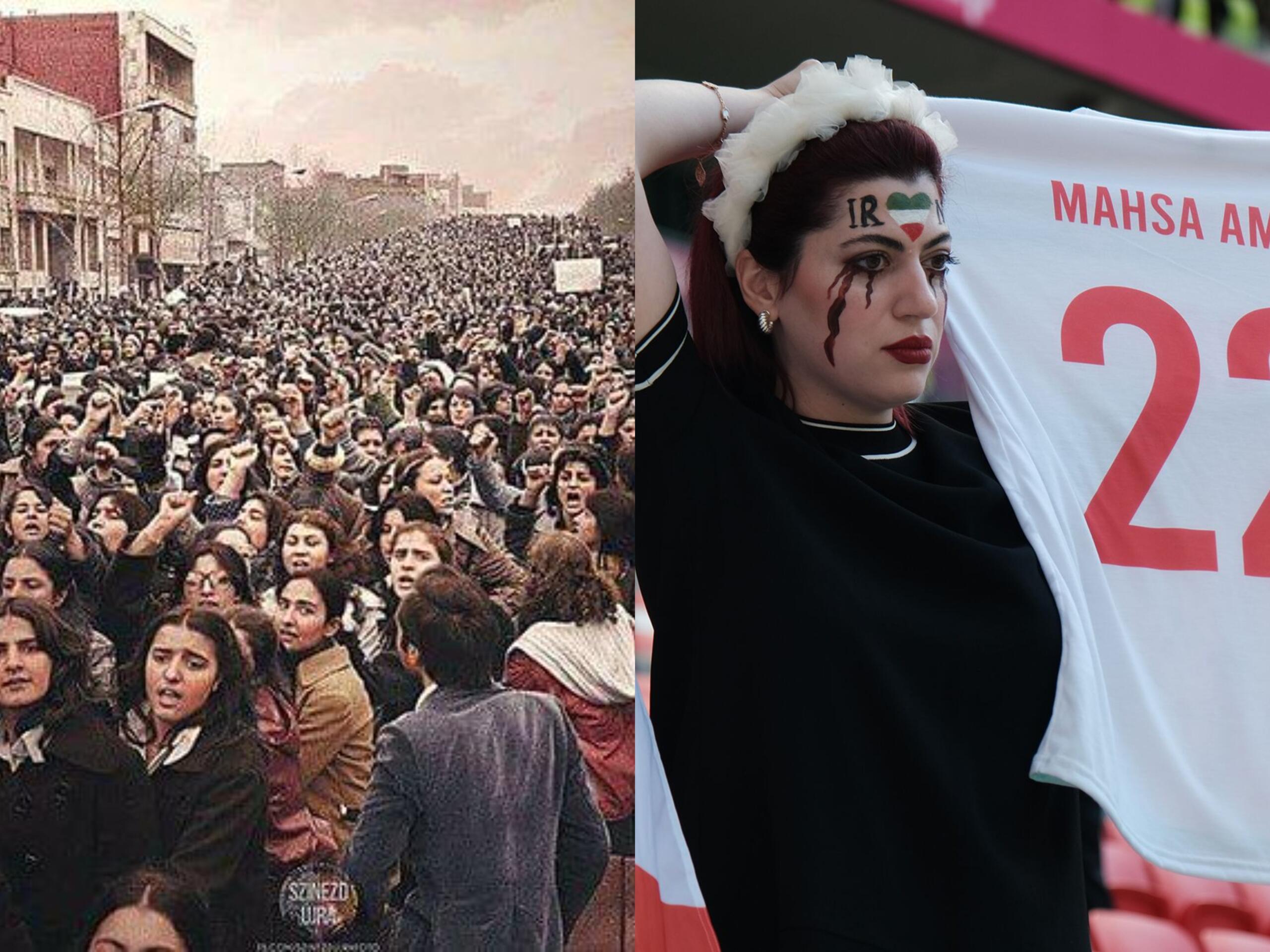
The Iranian Revolution of 1979 is one of the clearest examples of an alliance between Islamists and leftists. In the years leading up to the fall of the Shah, Marxists, socialists, liberal intellectuals, and Islamist clerics joined hands against a common enemy. Many leftists believed that political Islam could be a temporary ally in the struggle against Western backed authoritarianism. Concerns of feminism were sidelined as secondary, dismissed as bourgeois distractions or Western impositions. Women were encouraged to participate in the revolution, march on the streets, and mobilize against the regime, with assurances that their rights would naturally follow after liberation.
What followed was a brutal lesson in ideological naivety. Once the Islamists consolidated power, the left was purged and feminism was crushed under the weight of religious law. Mandatory hijab was imposed. Women lost rights in marriage, divorce, inheritance, and child custody. Public spaces became sites of moral policing. Dissenting women were beaten, imprisoned, or executed. The same leftist forces that had once marched alongside Islamists were either silenced or eliminated, while women paid the most enduring price. Iran demonstrates that alliances between leftists and Islamists do not produce liberation but institutionalized patriarchy enforced by the state.
Despite this historical warning, similar patterns continue globally. A section of the Left today remains willing to overlook or relativize violence against women when it is committed in the name of religion or cultural authenticity. Rape, honor killings, forced veiling, and moral policing are often reframed as complex social issues rather than clear violations of women’s rights. When the accused is an Islamist or when the context involves religious identity, outrage becomes muted, qualifications multiply, and accountability fades. Feminism, in such cases, ceases to be about women and becomes about protecting ideological narratives.
This selective feminism reveals a deep moral inconsistency. Women’s bodies become battlegrounds where political loyalties decide whose suffering matters and whose can be ignored. Sharia based legal systems that institutionalize gender inequality are defended as expressions of cultural sovereignty. Forced hijab is reframed as choice, even when enforced by law or violence. Islamic states that criminalize female autonomy are shielded from criticism under the excuse of opposing Western domination. In this framework, women are not individuals with rights but symbols to be managed in service of a larger ideological struggle.
Decolonization, as invoked by the Left, is often used to silence internal critique within non Western societies. Any challenge to patriarchal religious practices is labeled colonial, Islamophobic, or reactionary. This framing denies women in these societies the agency to resist oppression on their own terms. Iranian women tearing off their hijabs in protest do symbolize feminism and are not acting as Western proxies. They are fighting a system that uses religion to control their lives. To dismiss their struggle as foreign influenced is to repeat the same logic used by authoritarian regimes to crush dissent.
The problem lies in a feminism that has been absorbed into leftist identity politics rather than rooted in universal principles of freedom and equality. When feminism becomes conditional, when it applies only to certain oppressors and not others, it loses moral legitimacy. A movement that claims to stand against patriarchy cannot selectively tolerate patriarchy when it wears religious or anti Western clothing. Iran stands as a warning of what happens when ideological alignment takes precedence over women’s rights.
Decolonising feminism from the Left does not mean abandoning social justice or ignoring historical injustices. It means refusing to subordinate women’s freedom to any political project, whether religious or revolutionary. It means recognizing that patriarchy exists across cultures and ideologies, and that opposing it requires intellectual honesty and moral courage. Feminism must be able to criticize Islamist authoritarianism with the same clarity that it criticizes Western sexism.
True feminism cannot coexist with systems that mandate dress codes, restrict female mobility, or punish dissenting women in the name of divine law. It cannot excuse rape, silencing, or social shaming based on the identity of the perpetrator. Iran’s history shows that when feminism is compromised for political convenience, women are the first to lose and the last to be remembered.
If feminism is to remain a force for liberation, it must break free from ideological alliances that betray its core purpose. Women do not need to be liberated after the revolution, after decolonization, or after the correct ideology wins. Their freedom is not negotiable. The Iranian experience proves that any feminism willing to wait, compromise, or look away in the face of religious patriarchy ultimately becomes complicit in oppression.





