
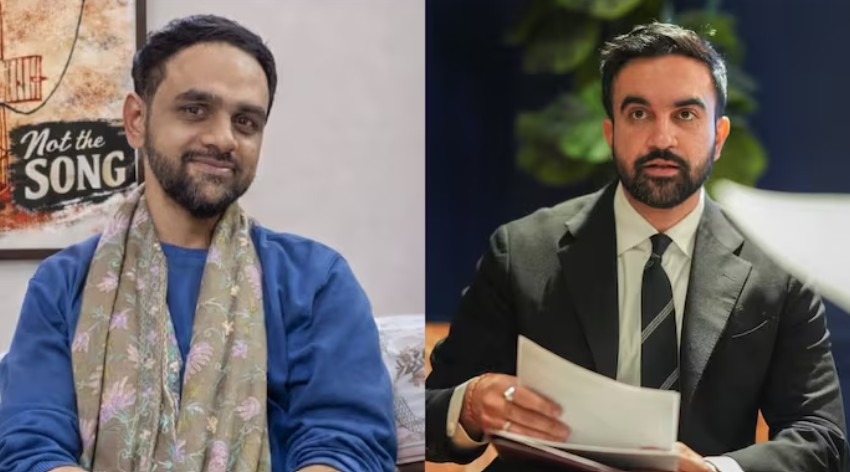
New York City Mayor Zohran Mamdani has written a letter to former Jawaharlal Nehru University student and activist Umar Khalid, who remains lodged in Delhi’s Tihar Jail under the Unlawful Activities (Prevention) Act (UAPA).
The letter surfaced on social media on January 1, the same day Mamdani was sworn in as mayor of New York City, becoming the first Muslim and Indian-origin leader to head America’s largest city and one of the youngest to hold the office.
In the undated letter, Mamdani referred to his interaction with Khalid’s family members.
“Dear Umar, I think of your words on bitterness often, and the importance of not letting it consume one’s self. It was a pleasure to meet your parents. We are all thinking of you,” Mamdani wrote.
The letter has drawn attention amid a broader pattern of interventions by US political figures in India’s internal legal matters. It comes as eight Democratic lawmakers in the United States have also written to India’s Ambassador in Washington, urging New Delhi to reconsider Khalid’s continued detention.
Mamdani has previously spoken publicly about Khalid. In June 2023, at a “Howdy, Democracy?!” event in New York held ahead of Prime Minister Narendra Modi’s US visit, Mamdani read excerpts from Khalid’s prison writings.
At the time, Mamdani, then a member of the New York State Assembly told the audience, “I’m going to be reading a letter from Umar Khalid, who is a scholar and a former student activist at Jawaharlal Nehru University in Delhi who organised a campaign against lynching and hate. He has been in jail for more than 1,000 days under the Unlawful Activities Prevention Act and has yet to face trial.”
The letter from US lawmakers, led by Jim McGovern and Jamie Raskin, raised concerns over Khalid’s incarceration for more than five years without the commencement of trial.
The lawmakers argued that prolonged detention without trial runs contrary to international legal norms and sought his release on bail pending judicial proceedings. Other signatories include Chris Van Hollen, Peter Welch, Pramila Jayapal, Jan Schakowsky, Rashida Tlaib, and Lloyd Doggett.
The intervention has been criticised in India, with sources underlining that India’s judicial process is an internal matter governed strictly by constitutional procedures and independent courts, and not subject to commentary or pressure from foreign legislators.
Observers have questioned the propriety of US lawmakers seeking to influence Indian legal proceedings, particularly when similar or more serious human rights concerns persist within the United States.
Critics have pointed to long-standing issues such as the continued operation of Guantanamo Bay, where detainees have been held for decades without trial, as well as the treatment of whistleblowers, to argue that Washington lacks the moral authority to lecture other democracies on due process and humanitarian values.
Khalid, 38, was arrested in September 2020 for allegedly being part of a larger conspiracy behind the communal violence that erupted in northeast Delhi in February that year.
He faces multiple charges under the Indian Penal Code and the UAPA. Courts have repeatedly denied him regular bail, though he has been granted short interim releases for family-related reasons.
Most recently, a Delhi court allowed him temporary bail from December 16 to December 29 to attend his sister’s wedding, subject to strict conditions, including a gag order and a ban on social media use.
Indian authorities have consistently maintained that Khalid’s case is sub judice and that decisions on bail and trial timelines rest solely with the judiciary, free from political or external influence.
Officials have reiterated that India’s legal system remains sovereign and independent, bound by the Constitution rather than foreign opinion or diplomatic pressure.
The episode once again underscores the recurring friction between India and Western democracies over human rights narratives and the limits of external engagement in domestic judicial proceedings.