










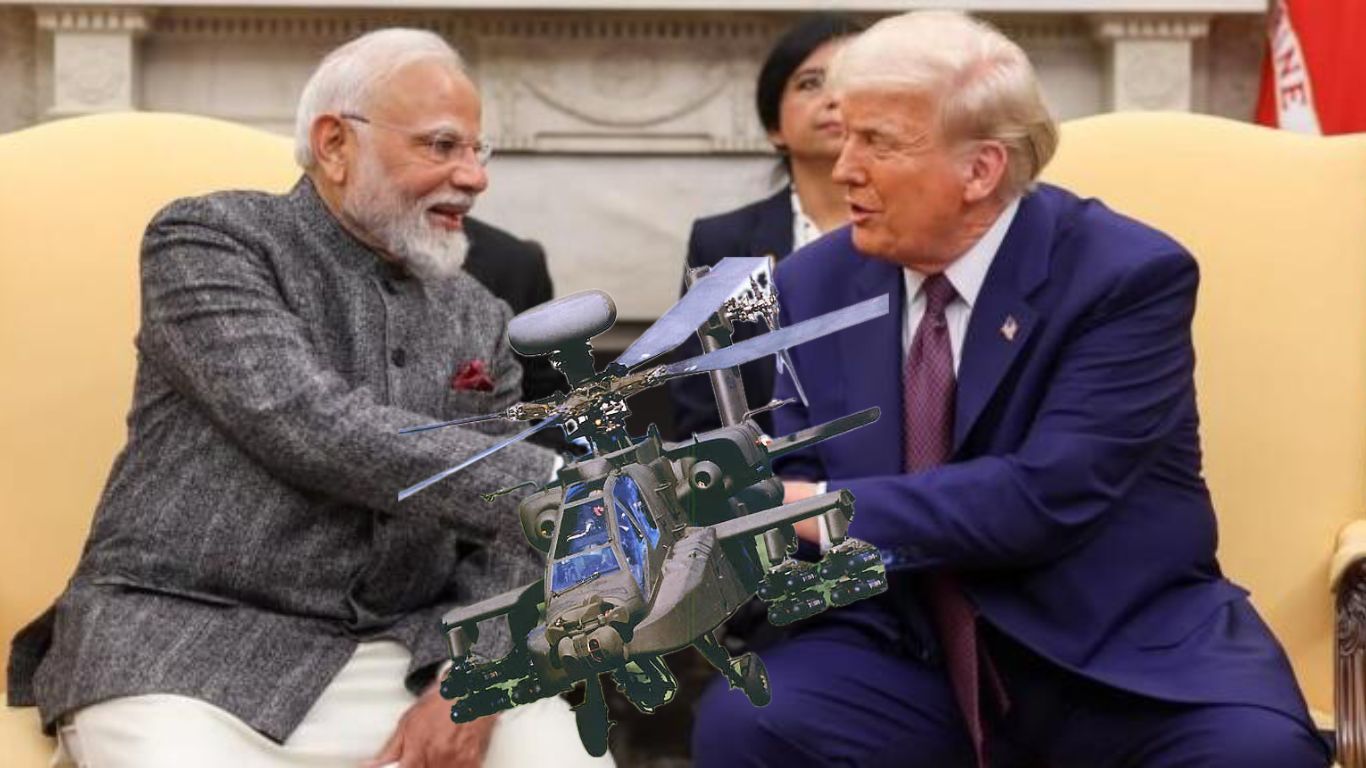
US President Donald Trump has once again stirred controversy by making claims about India that simply do not stand up to scrutiny. This time, the issue revolves around India’s purchase of Apache attack helicopters from the US. Trump claimed that India ordered as many as 68 Apache helicopters and that PM Narendra Modi personally sought a meeting with him to complain about delayed deliveries. However, a careful review of official records, defence contracts, and delivery timelines tells a very different story.
First and foremost, the facts are clear. India ordered only 28 Apache AH-64E attack helicopters, not 68. Moreover, by December 2025, all 28 helicopters had already been delivered. There is no pending order, no massive backlog, and certainly no evidence to support Trump’s dramatic recollection of events. India’s Ministry of Defence and US Foreign Military Sales (FMS) notifications confirm this beyond doubt.
So, where does the number 68 come from? Quite simply, it does not exist in any official document. At best, Trump appears to have exaggerated figures to project American leverage and his own role as a so-called master dealmaker. At worst, the claim reflects a pattern that critics have long highlighted: Trump often inflates numbers and simplifies timelines to suit his political narrative.
Importantly, India’s acquisition of Apache helicopters did not happen in one sweeping deal, as Trump suggested. Instead, it occurred in two distinct phases. Alongside the Apache deal, India also purchased 15 CH-47F Chinook heavy-lift helicopters from Boeing. Even if one mistakenly combines both deals, the total comes to 43 helicopters, not 68. All Chinooks were delivered between 2019 and 2020. Therefore, even the most generous interpretation of Trump’s statement fails to match reality.
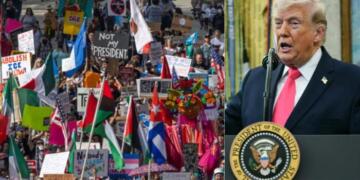
#BREAKING: US President Donald Trump says Indian Prime Minister Narendra Modi “is not very happy with me because they are paying a lot of tariffs”.
“India ordered 68 Apaches, and Prime Minister Modi came to see me, sir, may I see you, please? Yes. I have a very good relationship… pic.twitter.com/FRSd6IDxv9
— Aditya Raj Kaul (@AdityaRajKaul) January 6, 2026
Also Read: Why AH-64 Apaches Made a Mysterious Return To U.S. On Their Delivery Flight To India?
To be sure, delivery delays did occur, and they did frustrate New Delhi. However, delays are not unusual in complex defence acquisitions, especially those involving overseas supply chains. Crucially, frustration over timelines does not justify inventing numbers or portraying India’s Prime Minister as deferentially asking, “Sir, may I see you, please?” That phrasing says more about Trump’s self-image than about India’s leadership or diplomatic conduct.
In fact, Trump’s tendency to recall foreign leaders addressing him as “sir” has become almost habitual. In his version of events, everyone appears to seek his approval—except, conveniently, leaders like Vladimir Putin and Xi Jinping. This recurring theme undermines the credibility of his statements and turns serious international issues into personal boasts.
Meanwhile, the broader strategic context matters even more. India’s experience with unreliable supply chains and shifting US strategic priorities—especially concerning China and Pakistan—has pushed New Delhi to rethink foreign dependency. As a result, India is steadily moving away from reliance on American defence platforms, not because of ideology, but because of hard strategic lessons.
Therefore, Trump’s exaggerated claim does more than misstate facts. It inadvertently highlights why India seeks strategic autonomy and reduced dependence on unpredictable partners. His comments do not reflect diplomatic language or responsible leadership. Instead, they appear to stem from frustration—frustration over lost influence, changing global equations, and India’s growing confidence in charting its own path.
The remarks underscore a view that while the US President may personally respect PM Modi, his current approach towards India appears to be shaped by poor advice rather than strategic clarity. Countering criticism from sections of the Indian opposition, the argument emphasises that the PM does not need to respond to every comment or implied threat emanating from Washington, as his primary responsibility is towards the Indian people, not foreign approval.
It further highlights Modi’s grasp of long-term diplomacy, suggesting that transient political noise in the US—whether from the President or figures such as Senator Lindsey Graham—does not warrant serious attention.
The assessment also situates current US posturing within the context of domestic American politics, noting that with midterm elections less than a year away and the strong possibility of a shift in Congressional control, several global leaders are factoring electoral uncertainty into their strategic calculations. Against this backdrop, the expectation articulated is that the White House should prioritise domestic political stability and avoid creating avoidable friction with key partners such as India, while New Delhi continues to pursue policies aligned with its national interest.