
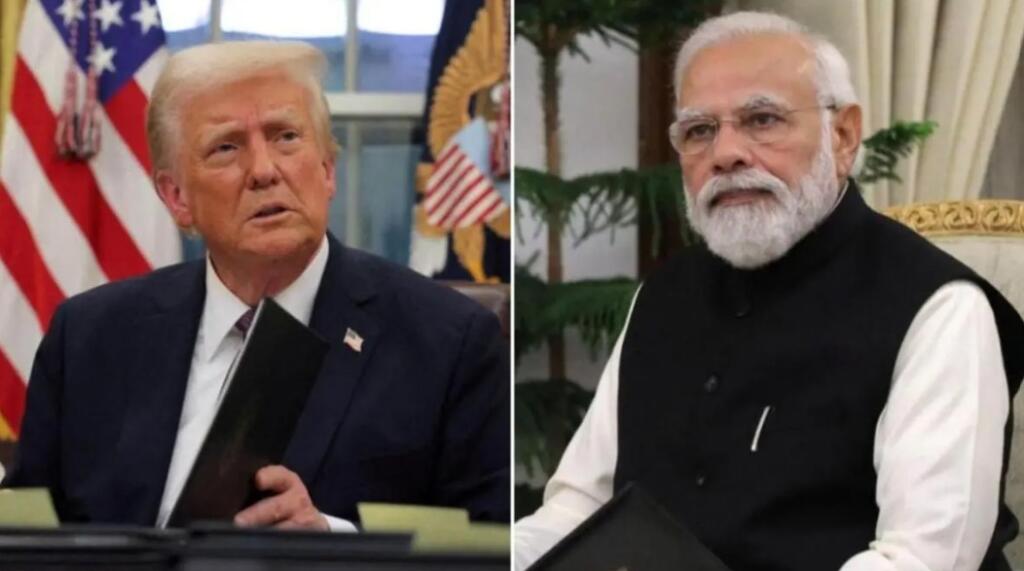
True to form, US President Donald Trump has relied on bluster and economic coercion, using tariffs less as instruments of trade policy and more as weapons of personal affront.
Trump’s actions against India have appeared to be driven less by trade considerations and more by a bruised ego after Prime Minister Narendra Modi declined to engage directly to seal a bilateral trade deal or yield to his demands.
India has paid the price, slapped with a punishing 50 per cent tariff, with the threat of further duties still looming.
In a significant revelation, US Commerce Secretary Howard Lutnick said the long-pending India–US trade deal collapsed not over policy disagreements, but because Prime Minister Modi declined to speak directly with Trump.
Lutnick made the comments on the All-In Podcast, hosted by entrepreneur Chamath Palihapitiya, offering a telling glimpse into a leader who appears to thrive on spectacle and personal flattery rather than substantive diplomacy.
Lutnick claimed the trade deal was essentially ready, but its completion depended on PM Modi personally calling Trump. He said India was given a clear, time-bound window — “three Fridays” — to finalize negotiations.
According to him, the Indian government was uncomfortable with this demand, and Modi ultimately did not make the call. The consequence, Lutnick said, was that India was overtaken by countries such as Vietnam, Indonesia, and the Philippines, previously behind it in the negotiating queue.
He added that the terms under which India and the US once appeared close to sealing a deal are no longer on the table, “The US has stepped back from that trade deal that we had agreed to earlier. We are not thinking about it anymore.”
Drawing a contrast, Lutnick cited the UK as an example. As the British deadline approached, he recalled, Prime Minister Keir Starmer personally called Trump. The deal was concluded the same day and formally announced at a press conference the following day.
Using a trader’s analogy, Lutnick described India as being on “the wrong side of the seesaw,” where timing — rather than intent — proved decisive. He stressed that the delay had less to do with unwillingness and more with the complexity of India’s internal political and parliamentary processes.
Despite the setback, Lutnick suggested the door had not been permanently shut and, “India will work it out.”
While Lutnick did not specify the period of these developments, reports by The New York Times and a German newspaper last year claimed Trump called PM Modi “four times” in July, but the Prime Minister declined to speak to the eccentric US President.
The episode coincided with a rough patch in India–US ties after Trump imposed an additional 25 per cent tariff on India — taking the total levy to 50 per cent — over New Delhi’s continued purchase of Russian oil.
Tensions were further aggravated after PM Modi firmly told Trump during a phone call that the ceasefire between India and Pakistan following Operation Sindoor had been directly negotiated between the two countries, and that the US President had played no role in it.
PM Modi also did not endorse Trump’s Nobel Peace Prize ambitions, even as Pakistan seized the moment and saw an upswing in its ties with Washington.
An Indian official told The New York Times that the government had been cautious about a Modi–Trump call, given the US President’s penchant for hyperbole and the risk that he might misrepresent the substance of discussions.
The ice was eventually broken when Trump called PM Modi on his birthday on September 17. Since then, the leaders have spoken twice — once on Diwali and again in December to discuss the trade deal. Whether India and the US can still clinch an agreement this year remains to be seen.
Howard Lutnick Derogatory Remarks on India
Howard Lutnick is the US Secretary of Commerce and former CEO of Wall Street firm Cantor Fitzgerald. As commerce secretary, he has been a key enforcer of Trump’s aggressive trade policies, pushing tariffs and pressuring trading partners like India in a combative and controversial public style.
Lutnick’s public comments about India — framing PM Modi as personally “uncomfortable” or suggesting he “didn’t call” Trump — show a lack of respect for sovereign decision-making and reduce complex negotiations to personal ego battles.
Combined with his authority over US commerce policy, this approach is problematic because it undermines diplomatic norms, strains bilateral relations, and injects personalized, derogatory rhetoric into serious trade discussions.
Lutnick repeatedly framed the collapse of the India–US trade deal in personal, almost patronising terms, saying it fell apart because PM Modi did not personally call Trump, “I set the whole deal up. But let’s be clear, it’s his (Trump) deal. He is the closer. He does it … you’ve got to have Modi call the President. They (India) were uncomfortable doing it. So Modi didn’t call.”
In past interviews, he went further, suggesting India would eventually return to the negotiating table “saying sorry” to the US for standing firm — implying India needed absolution rather than conducting sovereign negotiations.
He also described India’s negotiating posture as discomfort or bravado rather than a considered strategic position, dismissing Delhi’s decisions on Russian oil purchases, tariff negotiations, and multilateral engagements like BRICS as misguided or futile.
Reasons PM Modi May Have Avoided Trump Calls
Insults to India
Trump repeatedly labelled India a “tariff king” and said it was “not a good trading partner,” threatening and imposing high tariffs on Indian imports and framing India as exploiting the US economically.
Amid a trade dispute, Trump publicly referred to India (and Russia) as “dead economies,” dismissing two major global economies in the same breath
While not an outright insult to India as a country, Trump criticised India’s market conditions — calling the idea of Tesla building a factory in India “unfair” to the U.S. — in a way that was perceived as dismissive of India’s economic policy choices.
Imposing GMO on India
The Trump administration pressed India to allow greater imports of genetically modified (GM) crops, particularly maize and soybeans, as part of a broader trade deal. US negotiators argued that India’s strict regulations and high tariffs were major barriers to American farm exports.
India resisted, citing food safety concerns, ecological risks, protection of small farmers and seed sovereignty, export market implications, and cultural sensitivities. The refusal to relax GMO rules became one of the key sticking points in stalled India–US trade negotiations, with Delhi prioritising regulatory autonomy over Washington’s trade pressure.
Peace Accord Claims
After the April Pahalgam terror attack and India’s subsequent Operation Sindoor, Donald Trump claimed credit for brokering a peace understanding between India and Pakistan, saying the US used trade leverage to halt hostilities.
India, however, firmly rejected these claims, stressing that the ceasefire was the result of direct military to military dialogue and bilateral engagement, with no US mediation involved.
Prime Minister Modi and External Affairs Minister Jaishankar made it clear that India does not accept third-party intervention in its dealings with Pakistan.