






















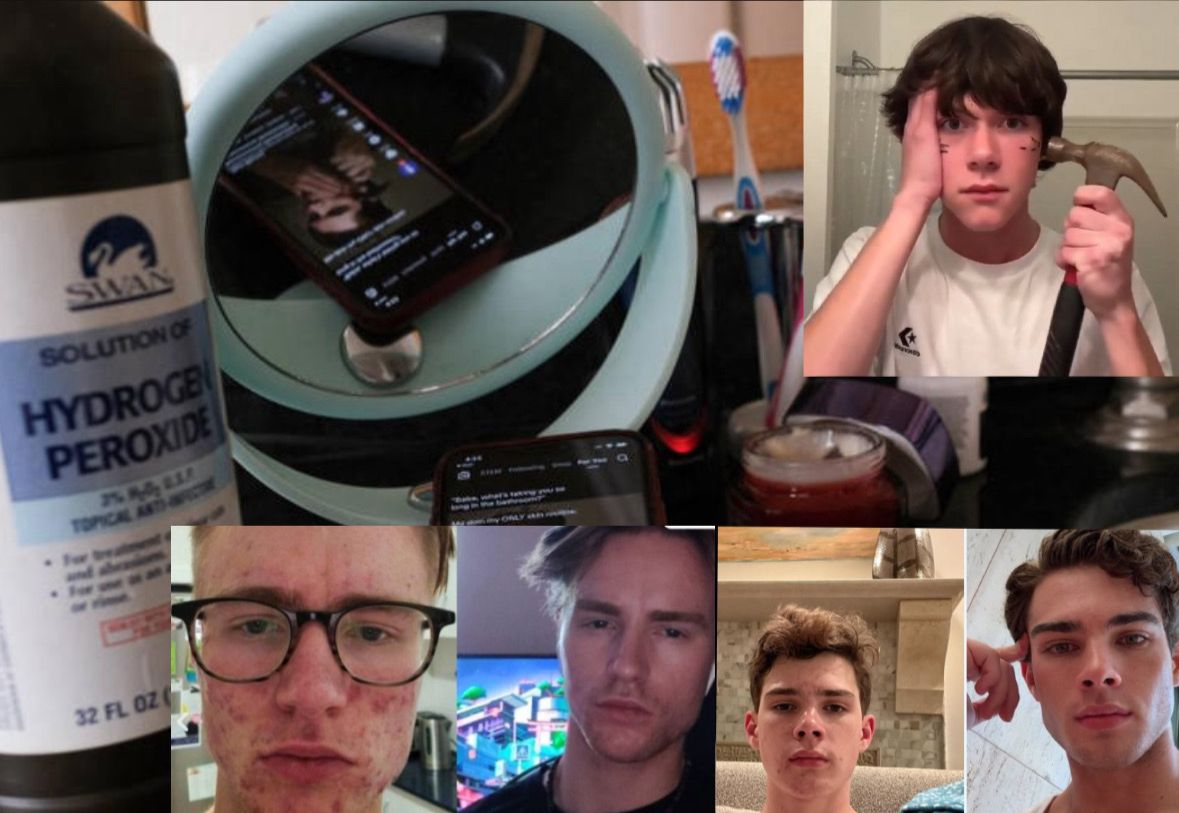
A young man stares into his phone camera, raises a hammer, and strikes his own cheekbone, termed as ‘bone smashing’ another uses steroids and hormonal injections to reach his desired body goals. This all includes misuse of chemicals for cosmetic effects, extreme dietary restriction, and unsupervised use of hormones or performance-enhancing substances.
The clip, posted on TikTok and described as part of a “skincare routine”, is not satire, rather one of the most extreme expressions of looksmaxxing. This is a fast-growing online trend that promises young men beauty, confidence and romantic success through pseudoscience, risky self-experimentation and, at times, outright self-harm.
Initially what began as advice on grooming and fitness has morphed into a digital subculture pushing unproven and dangerous methods to “upgrade” male appearance. As algorithms amplify the most shocking content, looksmaxxing influencers are reshaping how young men see their bodies, their self-worth and their relationships.
What is Looksmaxxing?
Looksmaxxing is part of a wider ecosystem of “maxxing” trends popular among Gen Z and Gen Alpha, including gymmaxxing, sleepmaxxing, moneymaxxing, testosteronemaxxing, rizzmaxxing and starvemaxxing.
Over the past year, looksmaxxing has gained particular momentum, fuelled by viral content, rising beauty pressure and the belief that physical appearance alone determines romantic success.
The trend promotes pseudoscientific methods claiming to deliver everything from pouty lips and sharper jawlines to chin extensions and almond-shaped “hunter eyes”. While some influencers package it as harmless self-improvement, experts warn that it often veers into harmful and irreversible territory.
Influencers Shaping Youth Behaviour
Looksmaxxing influencers—many of them young men with large followings—have amassed millions of views across TikTok, Instagram and YouTube. Idolising male models such as Australian Jordan Barrett and American Sean O’Pry, they present an idealised, hyper-symmetrical version of masculinity as the ultimate goal.
Algorithms play a crucial role. Once a user engages with grooming or fitness content, platforms often funnel them towards more extreme videos, including cosmetic procedures, steroid use and radical “transformation” narratives. Researchers warn that this feedback loop can normalise risky behaviour, especially among teenage boys.
In a 2024 study, researchers at Dublin City University created fake accounts registered as teenage boys and reported that their TikTok and YouTube feeds were “bombarded” with male supremacy and misogynistic content.
The danger of such online radicalisation was dramatised in the Netflix crime series Adolescence, which follows a 13-year-old boy accused of killing a female schoolmate after consuming misogynistic content online.
The Manosphere Connection
Looksmaxxing influencers are closely tied to the online “manosphere”, a network of male-centric communities often marked by misogyny and resentment towards women. Many exploit the insecurities of young men who believe attractiveness is the sole gateway to love and respect.
“Looksmaxxing influencers – part of an online ecosystem dubbed the ‘manosphere’ – have surged in popularity across social media, capitalising on the insecurities of young men eager to boost their physical attractiveness to women,” experts note.
The trend has its roots in incel (involuntarily celibate) ideology. “The incel ideology is being rebranded to looksmaxxing on TikTok,” said Anda Solea, a researcher at the University of Portsmouth.
In her research, Solea found that incel-inspired accounts were evading bans on hateful language by reframing their messaging around “self-improvement” and appearance.
Extreme and Dangerous Techniques
While the global beauty industry has long targeted women, looksmaxxing often promotes a do-it-yourself approach that can be physically dangerous.
A viral TikTok shows a man striking his face with the sharp edge of a hammer, a practice known as “bone smashing,” another rigourously used a stone like tool for enhancing his features, known as ‘bone stimulation’.

Though medical experts warn that the technique can cause fractures, nerve damage and long-term disfigurement, comments under such videos range from alarm to endorsement.
In more extreme cases, influencers promote anabolic steroids, plastic surgery and even leg-lengthening procedures.
This ‘looksmaxxing’ trend is transgenderism for edgy teen boys…It uses hormones and surgery to try to chase a look that you’ll never truly be fulfilled with, it spreads exclusively through social media, it does extreme harm to the body, and it’s all extremely delusional.
Among men, this is mixed with the misogyny of the manosphere, which often blames women for male insecurities, creating a toxic combination.
Monetisation and Misinformation
Financial incentives are deeply embedded in the trend. Many influencers leverage their popularity to sell skincare products, pheromone perfumes, supplements and knock-off luxury goods.
British influencer Oscar Patel has promoted “mewing”, an unproven technique involving pressing the tongue to the roof of the mouth to improve facial structure. Without evidence, he told his nearly 188,000 followers it would turn them into a “PSL god”, slang for “Perfectly Symmetrical Looks”.
US-based TikToker Dillon Latham told his 1.7 million followers to whiten their teeth by applying hydrogen peroxide with a cotton bud. Dentists warn that repeated use of store-bought peroxide can erode enamel and damage gums.
Extreme Risks and Physical Harm
Some of the most extreme examples of looksmaxxing circulating online reveal how far the trend can push young men toward harmful behaviour. In one widely shared clip, influencer Clavicular is seen talking to Nick Fuentes about going on steroids, undergoing double jaw surgery and leg-lengthening procedures, and embracing looksmaxxing “to ascend as much as possible as a White man,” adding, “It’s all about going further beyond. It’s in our DNA to push the limits & obtain Gigachad.”

In another TikTok, Clavicular claimed he had become “infertile” at the age of 19, a disclosure that alarmed viewers and underscored the physical costs of such experimentation.
Elsewhere, users on X have criticised the trend in stark terms, with one post stating, “This ‘looksmaxxing’ trend is transgenderism for edgy teen boys…It uses hormones and surgery to try to chase a look that you’ll never truly be fulfilled with, it spreads exclusively through social media, it does extreme harm to the body, and it’s all extremely delusional.”
Another viral post showed a young man striking his face with a hammer, prompting the caption, “Zoomer looksmaxxers are literally bonesmashing their cheekbones with a hammer to create microfracture induced growth…”.
The implications are troubling—by normalising extreme body modification, medical misinformation and identity-linked ideals of worth, looksmaxxing risks pushing impressionable youth toward irreversible physical harm, distorted self-image and radical online subcultures—often without informed consent, medical oversight or regard for long-term mental and physical health.
The Psychological Toll
Experts say looksmaxxing reinforces toxic beauty standards that harm men as much as women.
“More widely, this does feed into toxic beauty standards which affect men as well as women,” said Mr Venkataramakrishnan as per a Times report.
“The idea that if you don’t look like a Hollywood star, you might as well give up trying for a relationship is deeply damaging,” he added.
The constant comparison, experts warn, can fuel body dysmorphia, anxiety and depression—especially among adolescents whose identities are still forming.
The Trend reaches India
Though it originated on Western social media platforms, looksmaxxing is now gaining traction in India, particularly among male beauty and skincare influencers.
As per Times report, Psychologist Parth Gupta cautions against underestimating its impact. “In India, where mental health conversations around men are still rare, such trends can trigger body dysmorphia, low self-esteem, depression, and social anxiety,” he said.
Softmaxxing vs Hardmaxxing
Influencers often divide looksmaxxing into two categories. Softmaxxing and hardmaxxing. The former includes basic grooming, skincare, exercise, healthy eating and dressing well.
While the latter includes high-risk practices such as steroid use, plastic surgery, leg-lengthening procedures, bone smashing, chemical teeth whitening and extreme facial manipulation techniques.
While softmaxxing overlaps with ordinary self-care, experts warn that online content frequently blurs the line, pushing vulnerable users towards increasingly extreme interventions.
A growing concern
As social media algorithms continue to reward sensationalism, looksmaxxing shows little sign of fading. What is marketed as confidence-building self-improvement increasingly resembles a repackaged form of incel ideology—one that monetises insecurity, promotes misogyny and risks lasting physical and psychological harm.
In the digital age, new trends and influencers often set unrealistic beauty standards under the guise of “looksmaxxing,” but many of these trends can be misleading or even harmful.
Young people, eager to fit in or gain approval online, may try extreme diets, untested supplements, or risky cosmetic procedures, thinking they’re following a path to self-improvement.
The problem is that influencers often showcase results without highlighting the long-term risks or side effects, making it easy for impressionable minds to underestimate the dangers.
This can lead to lasting physical harm, mental health struggles, and a cycle of disappointment, showing how quickly social media trends can turn self-improvement into self-damage.