
The history of Iran is deeply intertwined with the symbols that have represented its identity, sovereignty, and cultural heritage. Among these symbols, the old flag of Iran holds a special place, representing a period when the nation balanced its rich historical traditions with modernizing ambitions under a monarchy. Understanding the origins of this flag, its symbolic meaning, the circumstances of its replacement, and its resurgence in recent years provides insight into the nation’s ongoing dialogue with its past.
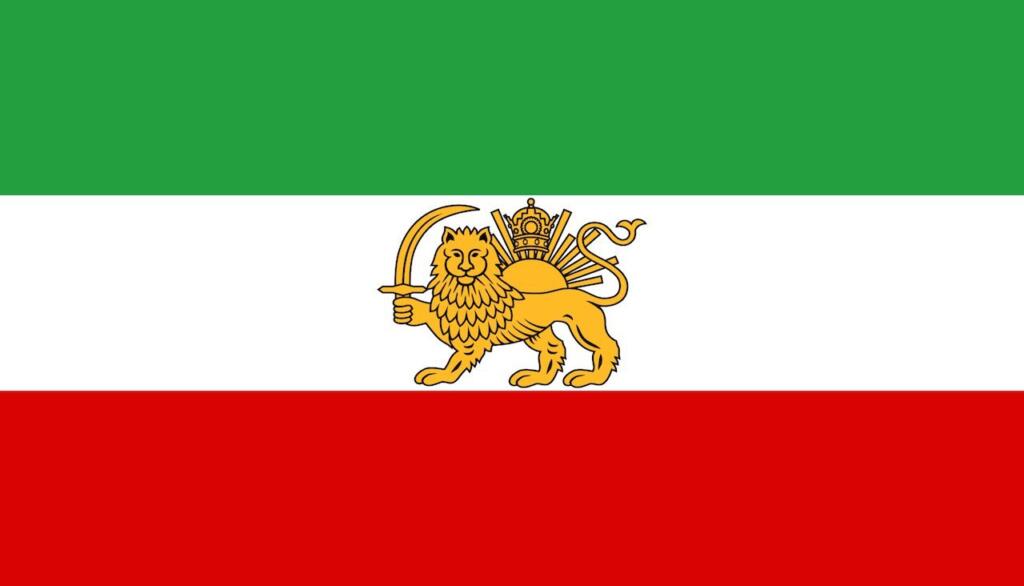
The old flag of Iran, widely recognized before the 1979 Islamic Revolution, consisted of three horizontal stripes of green, white, and red. At the center of the flag was the emblem of the lion and sun, a design that had been used in various forms for centuries. Each color and symbol on the flag held profound significance. Green, the color most closely associated with Islam, represented not only the nation’s primary religion but also growth, hope, and prosperity. White symbolized peace, purity, and honesty, while red reflected bravery, courage, and the sacrifices of the Iranian people in defending their nation. The central lion and sun emblem carried particular weight. The lion symbolized strength, heroism, and resilience, drawing upon legendary Persian tales and historical interpretations of power and courage. The sun, a recurring motif in Iranian culture, represented light, life, and the continuity of civilization. Together, the lion and sun combined pre-Islamic and Islamic influences, serving as a visual expression of both cultural pride and monarchical authority.
The modern iteration of this old flag was formalized during the Qajar dynasty in the 19th century, although the lion and sun motif had been present in Iranian iconography for centuries. The flag became especially associated with the Pahlavi dynasty, which ruled Iran from 1925 until 1979. Under Reza Shah and later Mohammad Reza Shah, the flag symbolized a monarchy striving to modernize the nation while maintaining a sense of national identity rooted in Iran’s history. It was a visible emblem of unity, flown over schools, government buildings, military institutions, and public gatherings. The lion and sun, in particular, connected contemporary Iranians with the nation’s pre-Islamic past, highlighting a cultural continuity that reached back to the Persian empires of antiquity. In this way, the flag was more than a national symbol; it represented the aspirations of a nation seeking both modernization and respect for its historic roots.
The Islamic Revolution of 1979 marked a dramatic turning point in Iran’s political and cultural identity. The revolution led to the overthrow of the Pahlavi monarchy and the establishment of the Islamic Republic. As part of the new government’s redefinition of national symbols, the old flag was replaced. The green, white, and red stripes were retained, but the lion and sun were replaced with a new emblem reflecting Islamic principles. This change was deliberate, signaling a break from the monarchy and its pre-Islamic associations, and emphasizing religious authority as the foundation of the new state. The transformation of the flag mirrored broader societal changes, as the country shifted from monarchy to a theocratic republic.
Despite its official replacement, the old flag has never entirely disappeared from Iranian consciousness. It continues to be a potent symbol for many, particularly those who view it as a representation of national pride, cultural heritage, and a historical connection that predates the Islamic Republic. Among diaspora communities, in social media discussions, and even during demonstrations, the lion and sun flag continues to appear, evoking memories of a period when Iran’s national symbols were closely tied to monarchy, culture, and history. Its resurgence illustrates the enduring power of symbols to convey identity, nostalgia, and political sentiment even decades after their official use has ended.
In recent years, the old flag has experienced a notable revival as a cultural and political symbol. Many younger Iranians, both inside and outside the country, are exploring their heritage and questioning the dominant narratives of the Islamic Republic. For them, the lion and sun emblem represents continuity, resilience, and a link to the nation’s pre-revolutionary identity. This revival is not limited to political contexts; the flag has also appeared in art, literature, exhibitions, and media, reflecting a broader engagement with Iran’s history and the meanings embedded in its symbols. By reclaiming the old flag, Iranians are negotiating their own sense of identity, balancing respect for tradition with the realities of contemporary politics.
The renewed interest in the old flag also underscores a larger conversation about Iranian national identity. The emblem’s pre-Islamic roots allow it to serve as a bridge between Iran’s ancient history and modern cultural consciousness. It functions as a reminder that national identity is multi-layered and cannot be reduced to a single political ideology. The flag’s colors, emblem, and history combine to tell a story of perseverance, transformation, and the continuing influence of cultural memory on the present. It is a testament to how symbols endure, adapt, and continue to inspire long after their official use has ended.
In conclusion, the old flag of Iran is more than a piece of cloth; it is a powerful symbol of history, culture, and identity. From its adoption under the Qajar and Pahlavi dynasties to its replacement after the Islamic Revolution, the flag has mirrored Iran’s political and cultural transformations.
Today, as the old flag reappears in public consciousness and cultural expression, the lion and sun flag reminds Iranians of their rich heritage, the complexities of their history, and the enduring power of national symbols. Its story illustrates how identity, memory, and tradition remain deeply intertwined, even in the face of political change. The old flag is not just a relic of the past; it is a living emblem of a nation’s ongoing dialogue with itself, a testament to the resilience of culture, and a symbol that continues to reclaim its place in the hearts and minds of many Iranians.