
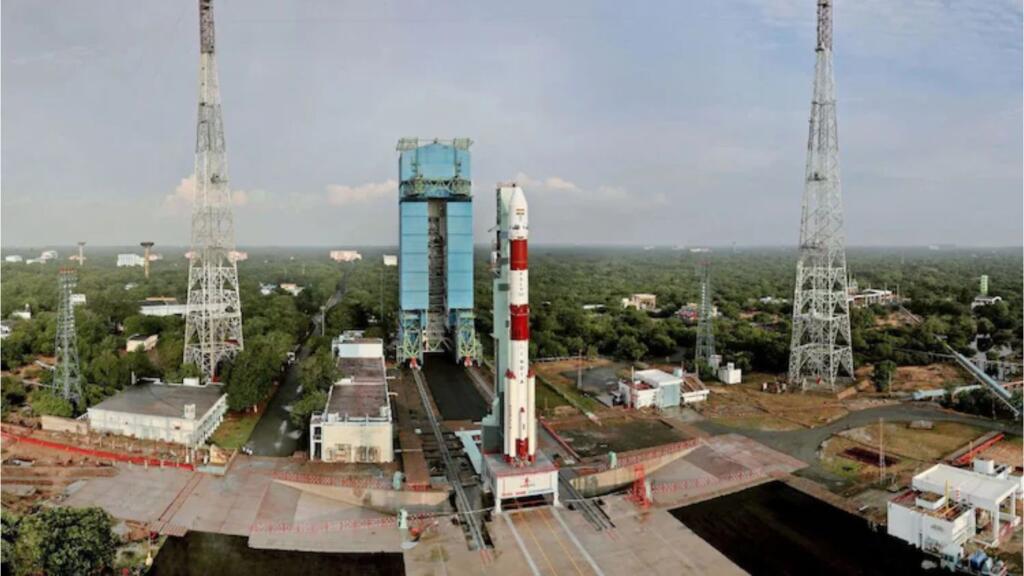
For decades, the Polar Satellite Launch Vehicle (PSLV) has been the backbone of India’s space programme. Known within ISRO as the “workhorse,” the rocket earned its reputation through a long string of reliable launches that placed everything from weather satellites to strategic payloads into orbit with remarkable precision. That image, however, has taken a serious hit after two consecutive mission failures, the latest occurring on January 12, 2026.
India’s first space mission of the year, PSLV-C62, lifted off from the Satish Dhawan Space Centre in Sriharikota at 10:18 am IST. The early phase of the launch unfolded exactly as planned. The rocket climbed smoothly, its strap-on boosters separated on cue, and mission control initially saw no red flags. For several minutes, it looked like another textbook PSLV mission.
The mood shifted sharply about eight minutes into the flight. During the operation of the third stage, known as PS3, telemetry data began to show abnormal behaviour. The vehicle started to deviate from its intended trajectory and showed signs of an unexpected roll. Within moments, ISRO confirmed that the mission had encountered a technical anomaly. The satellites on board could not be placed into their designated orbit.
ISRO Chairman V. Narayanan later explained that the problem stemmed from a sudden drop in chamber pressure in the PS3 engine. Simply put, the engine failed to deliver the thrust required at a critical point in the flight. In the vacuum of space, even a small loss of stability at high speed can derail an entire mission. Once the rocket strayed from its path, recovery was no longer possible.
What makes the failure more troubling is its resemblance to an earlier setback. In May 2025, the PSLV-C61 mission failed under similar circumstances. Preliminary assessments at that time pointed to possible issues with the flex nozzle, propellant behaviour, or structural components of the third stage. With PSLV-C62 now failing in an almost identical phase of flight, concerns are growing over a recurring vulnerability in the PS3 stage.
The cost of the failure goes well beyond the rocket itself. The primary payload aboard PSLV-C62 was Anvesha, a strategic surveillance satellite developed for the Defence Research and Development Organisation (DRDO). Designed to operate from an altitude of around 500 kilometres, Anvesha was meant to detect concealed military assets and distinguish camouflage patterns on the ground. Its loss represents a setback for India’s space-based intelligence and reconnaissance capabilities.
Alongside Anvesha, the mission also carried 15 other satellites. Among them was AayulSAT, an experimental platform intended to test in-orbit satellite refuelling technologies. The concept, often described as an “orbital petrol pump,” is seen as a key step towards extending the life of satellites and reducing future launch costs. With the failure of PSLV-C62, these technological ambitions have been pushed back.
Former ISRO scientist Manish Purohit described the incident as painful but not unusual in the high-risk world of spaceflight. He noted that failures are part of the learning curve, but stressed that repeated issues in the same stage demand close scrutiny. According to him, the Failure Analysis Committee will now examine every bit of telemetry data and may even recreate stress conditions on the flex nozzle to identify the precise cause.
For ISRO, the immediate consequence is uncertainty. The PSLV fleet is likely to remain grounded until the investigation is complete and corrective measures are implemented. This pause could disrupt India’s 2026 launch schedule and affect commercial missions that rely on PSLV’s reputation for reliability.
ISRO’s history, however, suggests that setbacks rarely define its trajectory. The agency has repeatedly bounced back from failures by improving designs and tightening quality checks. Yet, the twin failures of 2025 and 2026 have exposed a “ghost in the machine” that must be addressed decisively.
Until that happens, the once-unquestioned workhorse of India’s space programme waits on the ground, as the nation watches to see how quickly and effectively ISRO can restore trust in one of its most dependable launch vehicles.