
















German Chancellor Friedrich Merz arrived in Gujarat on Monday as part of his two-day visit to India and met Prime Minister Narendra Modi.
The visit is part of Chancellor Merz’s official trip to India, with a focus on deepening cooperation between India and Germany.
It comes at a time when the two countries are marking 75 years of diplomatic ties and 25 years of their Strategic Partnership.
Prime Minister Modi and German Chancellor Merz participated in the International Kite Festival at the Sabarmati Riverfront in Ahmedabad earlier in the day, underscoring the blend of cultural celebration and diplomatic engagement between the two nations.

The event also featured a striking banner themed around ‘Operation Sindoor’, flown across the sky amid a spectacular display of kites.
The long black banner, emblazoned with bold lettering and patriotic imagery, captured attention as it soared above the venue, symbolising strength, sacrifice and national pride.
It was accompanied by tricolour-themed kites and large-scale aerial displays, adding to the visual grandeur of the occasion.

The two leaders were also seen flying a kite depicting Lord Hanuman and interacting with participants while enjoying the vibrant festivities.
With Makar Sankranti just a few days away, the International Kite Festival will run for three days, concluding on January 14.
135 international kite enthusiasts representing 50 countries and 65 flyers from across India and 871 local participants from Gujarat will participate in the event.
Merz is in India from January 12 to January 13. Prime Minister Narendra Modi also held formal bilateral talks with Merz at the Mahatma Mandir in Gandhinagar.
The discussions included a review of the progress made under the India–Germany Strategic Partnership, which recently completed 25 years.
Their discussion also focused on further intensifying cooperation in trade and investment, technology, education, skilling and mobility, while advancing collaboration in key areas of defence and security, science, innovation and research, green and sustainable development, and people-to-people ties.
On January 13, Merz will visit Bosch, then Nano Science and Engineering, CeNSE, and depart for Germany.
PM Modi and Chancellor Merz last held discussions on the sidelines of the G7 Summit in Canada, where the two leaders agreed to further broaden the bilateral strategic partnership.
During that interaction, Prime Minister Modi invited the German Chancellor to an official visit to New Delhi. The visit is also taking place in the lead-up to the India-EU Summit scheduled for January 27.
As per reports, Chancellor Friedrich Merz’s visit to India will likely forward negotiations on a €8 billion ($9.3 billion) deal to jointly build submarines in India, DW’s Delhi Bureau Chief Sandra Petersmann confirmed.
The deal is likely to be a central focus of the German chancellor’s visit as the 25-member delegation of CEOs travelling with Merz includes the CEO of Thyssen Krupp Maritime Systems (TKMS), Oliver Burkhard.
Shairee Malhotra, Deputy Director at the Observer Research Foundation in New Delhi told DW that the deal is “crucial” for both India and Germany.
“The submarine deal is crucial because it not only supports India’s defense modernization but also indigenization goals because it will also involve tech transfers for submarine productions,” Malhotra said.”
For Germany the deal is important because it helps wean India off its traditional dependence on Russian military equipment while also enabling Germany to tap into India’s lucrative defense market,” she added.
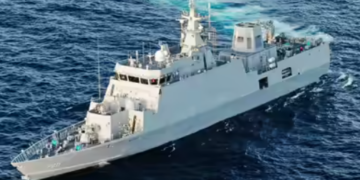
As per ABP, Germany will collaborate with India in the construction of six state-of-the-art stealth conventional submarines under Project 75(I).
A key agreement has already been signed between Mumbai-based Mazagon Dock Shipbuilders Limited (MDL) and renowned German defence firm ThyssenKrupp Marine Systems (TKMS).
Valued at around $8 billion, the mega deal is being regarded as one of the largest submarine projects in the history of the Indian Navy.
A defining feature of these submarines will be the incorporation of Air Independent Propulsion (AIP) technology, which will enable them to remain submerged for extended periods without surfacing. This capability significantly enhances stealth, endurance and operational effectiveness.
All six submarines will be built domestically at Mazagon Dock in Mumbai, providing a major boost to the Make in India and Atmanirbhar Bharat initiatives. The combination of German technological expertise and India’s growing shipbuilding capabilities is expected to give the Indian Navy a significant strategic edge.
Defence experts believe the induction of these stealth submarines will substantially enhance India’s maritime surveillance, deterrence posture and strategic balance in the Indian Ocean Region. At a time of increasing global and regional security challenges, the project is expected to further strengthen India’s overall defence preparedness.
AIP, or Air Independent Propulsion, is an advanced system that allows non-nuclear submarines to operate underwater for prolonged periods without the need for atmospheric oxygen.
Conventional diesel-electric submarines must periodically surface or use a snorkel to recharge their batteries, making them vulnerable to detection. AIP technology largely eliminates this vulnerability, greatly improving survivability.