




















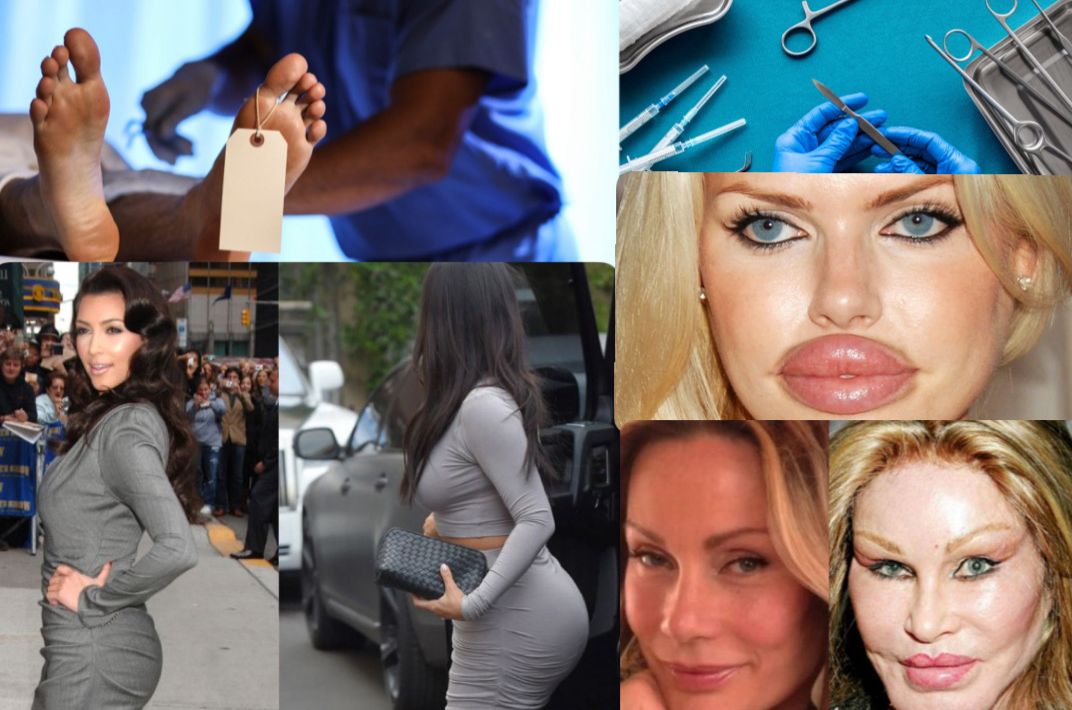
Across the US, a new and controversial cosmetic trend called AlloClae is gaining attention. This procedure uses “purified fat” from donated cadavers (dead human bodies) to enhance the body for treatments such as Brazilian butt lifts (BBLs), breast augmentation etc.
While surgeons hail it as a breakthrough for patients who lack sufficient body fat, the use of lifeless donor tissue has raised a number of medical, ethical, and spiritual concerns.
Introduced to the US market in 2024, AlloClae is a sterile, injectable filler made from purified human fat harvested from dead body donors.
Unlike traditional BBLs or fat transfers, which require liposuctioning fat from the patient’s own body, this fat-based injectable apart is termed as “off-the-shelf fat.”
Dr Mellisa Doft, a board-certified plastic surgeon in Manhattan, explained, “Many of us in New York City are very excited about this, particularly because sometimes our patients are very thin or may have already had liposuction. Alloclae is a fat that has been donated from a person who has passed away, it is then cleaned of any genetic material and placed into a syringe. So it’s sort of an off-the-shelf fat. You can use it in any part of the body. It is going to be improved for the face, but right now it’s just for the body. When it is injected into the body, the body’s own fat cells sort of hug the cadaveric fat cells. About 75–100 percent of the cadaveric fat cells survive.”
Caro Van Hove, president of Tiger Aesthetics, the company behind the product said, “Before injection, the donor fat goes through an extensive multi-step process that removes DNA, cellular debris, and anything that could trigger an immune response. We ensure all our tissue is consented to for aesthetic use. The final product then integrates with the patient’s own tissue and stimulates collagen growth.”
However, not all doctors are convinced about the benefits of the filler. Dr Adam Kolker, a double board-certified plastic surgeon, warned that injecting new biologic material into breast tissue could complicate mammograms and cancer screenings.
Critics online also argue that many people may not fully understand how their bodies could be used after death. With context to the product, one commenter said, “This product and article state that it is not FDA approved and has no testing. It does not explain the risks sufficiently.”
“It seems too early to tell if this is safe. Who knows if this will cause cancer or autoimmune issues down the line?” another wrote.
Others expressed ethical and spiritual concerns. One commenter said, “I feel like this is not okay spiritually.” Another added, “As demand goes up, I could see a lot of corruption surrounding this.”
Some online discussions even linked the procedure to past controversies regarding the post-surgical odor associated with BBLs, with one person saying, “This would confirm BBL smell.”
Where Science Ends: Medical Breakthrough or Mutilation ?
The growing use of cadaver-derived fat in elective cosmetic procedures forces us to confront the question—are we advancing medicine, or commodifying the human body beyond moral recognition?
Historically, the use of donated human tissue has been ethically justified when it saves lives or restores essential function. Heart valves, corneas, skin grafts for burn victims—these uses are grounded in medical necessity.
Cosmetic augmentation is different. When fat harvested from cadavers is injected to enhance hips, buttocks, or breasts, the moral framework changes. Whats worse is that this is not about survival or health.
The rapid introduction of donor-derived fat fillers raises legitimate concerns about medical lobbying and profit-driven medicine. Cosmetic procedures are among the most lucrative sectors of healthcare.
If cadaver fat is acceptable for cosmetic enhancement, what comes next?
We already debate the ethics of fetal tissue, organ trafficking, and unconsented post-mortem use. Each boundary crossed makes the next one easier to justify. History shows that when human bodies are reduced to resources, abuses inevitably follow.
This is the slippery slope, from donation to commodification to normalization to desensitization. The question is no longer can we do this, but should we?
If some zones are “no-go” for moral reasons, consistency demands that we ask—What makes cosmetic enhancement an exception?
Where Will the Bodies Come From?
As demand grows, so does the pressure on supply. This question cannot be ignored. Increased reliance on cadaver-derived cosmetic materials risks incentivizing ethically murky sourcing practices, particularly among marginalized or economically vulnerable populations.
History offers countless warnings of what happens when bodies acquire monetary value. Transparency alone will not be enough to prevent corruption when profit is involved.
Perhaps the most insidious consequence is psychological and cultural. When we begin speaking casually about “using” dead bodies for beauty, we erode the boundary between personhood and product. The body becomes raw material. Death becomes inventory. This desensitization does not stay confined to cosmetic medicine. It shapes how society values life, dignity, and mortality itself.





