
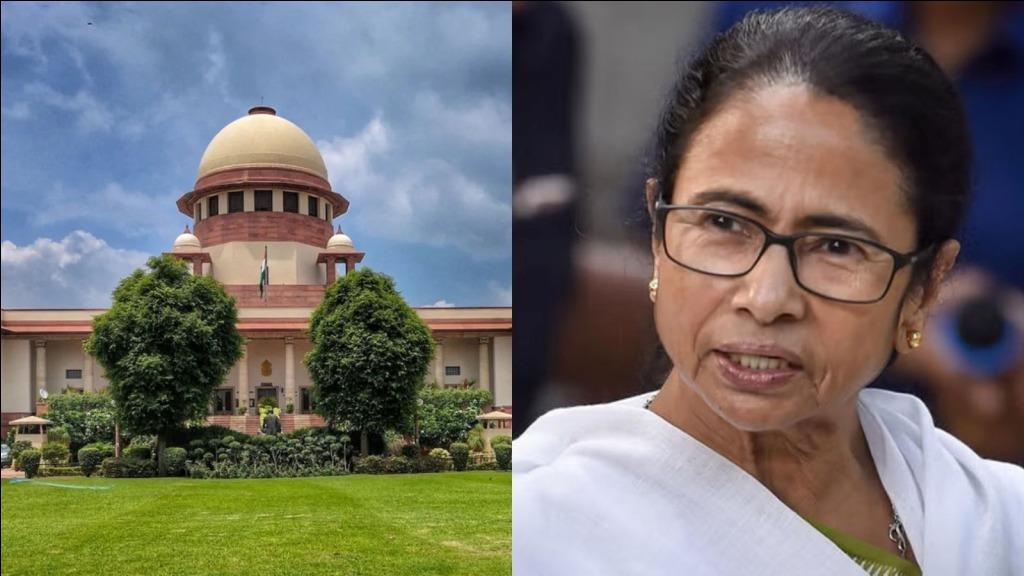
The Supreme Court has taken a decisive step by issuing a notice to West Bengal Chief Minister Mamata Banerjee, the Bengal Government, and the West Bengal Police in a matter that has triggered a serious constitutional debate. The case arises from allegations that state authorities interfered with officers of the Enforcement Directorate while they were carrying out their official duties. By stepping in, the Supreme Court has signaled that the issue goes beyond political rivalry and directly concerns the rule of law and federal balance.
The Supreme Court made it clear that interference by state government agencies in the functioning of central agencies is a matter of grave concern. Such actions, if proven, can undermine the authority of institutions established under parliamentary law. The Court’s observations reflect a broader anxiety about protecting investigative independence and ensuring that governance remains within constitutional limits, regardless of which political party holds power.
Mamata Banerjee, as the head of the state government, has been drawn into the spotlight through the notice issued by the Supreme Court. While the notice does not imply guilt, it does require an explanation from the highest level of state leadership. This move underscores the principle that constitutional responsibility rests not only with officials on the ground but also with those who lead and direct state machinery.
A key directive from the Supreme Court relates to the preservation of evidence. The Court ordered that all CCTV footage connected to the incident be preserved without alteration. This instruction highlights the judiciary’s insistence on transparency and factual accuracy. In an era where digital evidence can decisively shape legal outcomes, the Supreme Court has emphasized that safeguarding such material is essential for justice to prevail.
In a significant relief to central officials, the Supreme Court stayed the FIR that had been registered against the Enforcement Directorate officers involved in the incident. This stay protects the officers from immediate coercive action and allows the Court to examine whether the FIR was filed in accordance with law. The decision reflects the Supreme Court’s concern that criminal proceedings should not be used as tools of intimidation against officers performing their statutory duties.
The broader constitutional issue before the Supreme Court revolves around the federal structure of India. The Constitution envisages a balance where both the Union and the states operate within their respective spheres while cooperating with each other. When conflicts arise between state authorities and central agencies, the Supreme Court acts as the final interpreter of constitutional boundaries. This case, therefore, has implications far beyond West Bengal.
The involvement of the West Bengal Police has also drawn judicial scrutiny. The Supreme Court has sought clarity on the role played by state law enforcement during the incident. This examination is crucial, as police forces are expected to act impartially and in accordance with the law, irrespective of political considerations. Judicial oversight in such situations reinforces public confidence in law enforcement institutions.
Politically, the case places Mamata Banerjee and her government under intense national attention. The Supreme Court proceedings are being closely watched not only by legal experts but also by political observers who see the matter as a test of institutional integrity. The outcome may influence how future interactions between state governments and central agencies are managed across the country.
The Supreme Court has scheduled the next hearing for February 3, when it will review the responses filed by the state authorities and assess the preserved evidence. This hearing is expected to provide further clarity on the limits of state power and the protections available to central agency officials. Until then, the Court’s interim orders serve as a reminder that constitutional governance demands restraint, accountability, and respect for the rule of law.
Ultimately, the Supreme Court’s intervention underscores its role as the guardian of the Constitution. By addressing concerns of interference, preserving evidence, and staying potentially retaliatory action, the Supreme Court has reaffirmed that no authority is above the law. As the case progresses, its findings may well shape the future framework of cooperation and conflict resolution between state governments and central investigative agencies in India.