










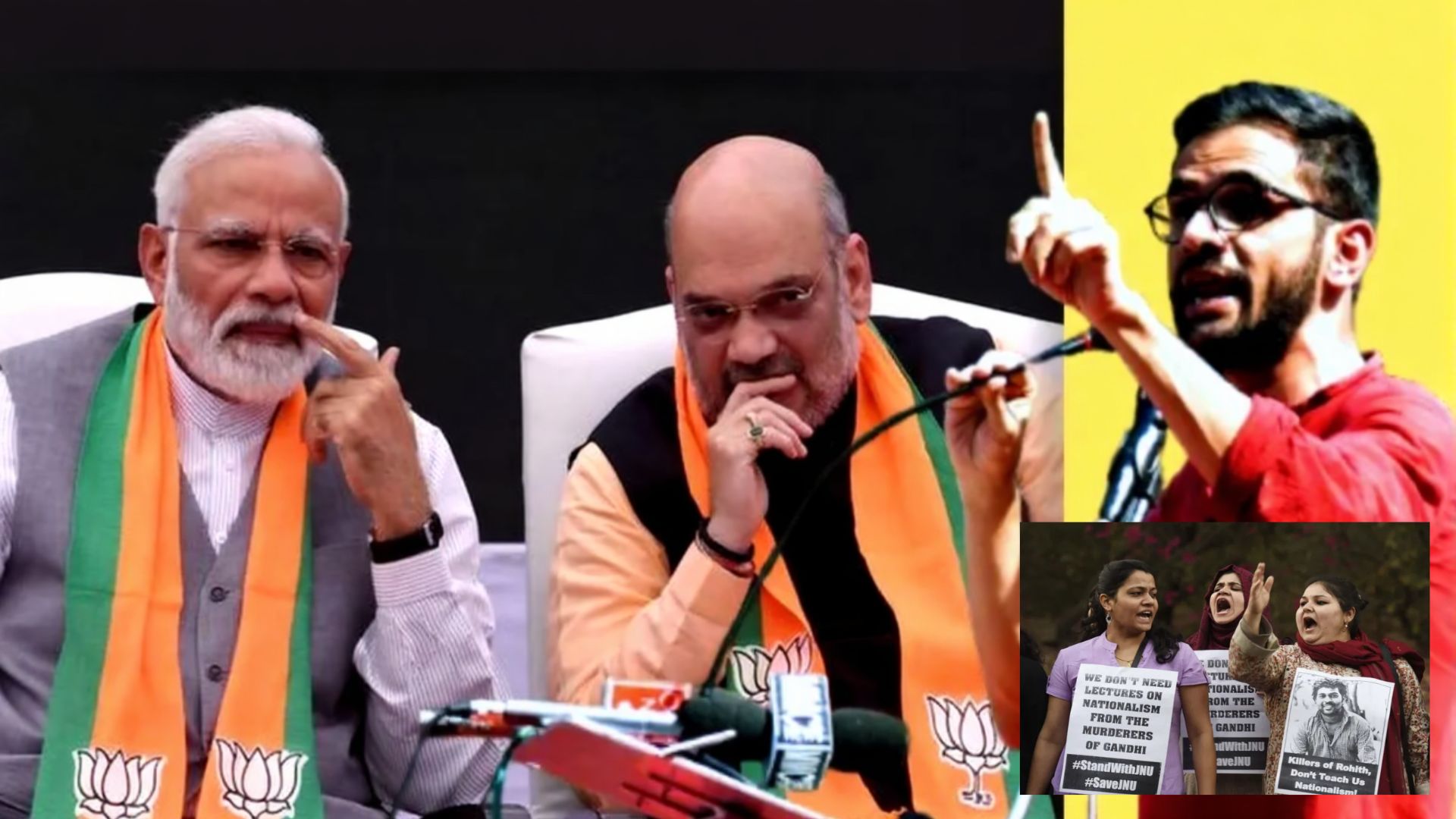
The serene Jawaharlal Nehru University (JNU) campus in Delhi turned tense on Monday night as protesters raised highly objectionable slogans against Prime Minister Narendra Modi and Home Minister Amit Shah. Chants like “Kabristan khudegi” – implying graves would be dug – echoed outside Sabarmati Hostel, igniting a fierce political firestorm. This outburst followed the Supreme Court’s rejection of bail pleas from Umar Khalid and Sharjeel Imam, key figures in the 2020 Delhi riots case. Eyewitnesses reported a charged atmosphere, with demonstrators voicing their fury over the court’s decision.
The demonstration, organized by the JNU Students’ Union (JNUSU), quickly drew sharp condemnation from across the political spectrum. Videos of the event spread rapidly on social media, showing a group of students gathered under dim hostel lights, repeating provocative phrases that many interpreted as direct threats to national leaders. Leaders from JNU campus have not issued an official statement disavowing the slogans, fueling accusations of tacit endorsement. Delhi Police have launched an investigation, registering a case under relevant sections of the Indian Penal Code for promoting enmity and criminal intimidation.
BJP spokesperson Sambit Patra labeled the slogans as “aberrant and reflective of a secessionist mindset.” He argued that such language undermines India’s unity and echoes the divisive rhetoric seen during past JNU agitations. Patra pointed to the timing – immediately after the Supreme Court’s ruling – as evidence of targeted malice against the judiciary and government. BJP leaders, including Delhi unit chief Virendra Sachdeva, demanded strict action, warning that universities cannot become breeding grounds for anti-national elements. They urged the JNU campus administration to identify and suspend the perpetrators to restore the institution’s academic sanctity.
In contrast, Congress leader Udit Raj defended the protesters, framing the slogans as a legitimate form of dissent. “This is just one way of protesting,” Raj stated on social media, dismissing BJP’s outrage as overblown. He portrayed the event as a spontaneous reaction to what he called judicial overreach in denying bail to Khalid and Imam, who have been in custody for over four years. Raj’s comments highlight deepening partisan divides, where opposition voices often view protests at JNU campus as symbols of free speech against perceived authoritarianism.
This incident revives painful memories of turbulent history at Jawaharlal Nehru University, New Delhi. In 2016, the JNU campus witnessed similar chaos when students raised anti-India slogans during an event commemorating Parliament attack convict Afzal Guru. That episode led to sedition charges against Kanhaiya Kumar and others, polarizing national discourse on campus freedom versus national security. More recently, the 2020 fee hike protests escalated into violence, with masked assailants attacking students and faculty. Critics argue JNU’s left-leaning student politics fosters an environment tolerant of extremism, while supporters claim it is a hotbed of progressive resistance against right-wing policies.
Umar Khalid and Sharjeel Imam’s cases add layers to the controversy. Khalid, a former JNU student leader and PhD scholar, faces charges under the Unlawful Activities (Prevention) Act (UAPA) for allegedly masterminding anti-CAA protests that turned violent. Imam, known for inflammatory speeches calling for Kashmir’s separation, remains a polarizing figure. The Supreme Court, in rejecting their bail last week, emphasized the gravity of evidence linking them to a larger conspiracy during the 2020 riots, which claimed 53 lives, mostly in Muslim-dominated areas. Justices observed that prolonged incarceration does not automatically entitle one to bail in terror-related cases.
The political backlash underscores broader tensions in India’s higher education landscape. BJP allies like the RSS have long accused JNU campus of harboring “urban Naxals” – a term for left-wing extremists disguised as intellectuals. Recent government moves, such as appointing Vice-Chancellor Santishree Dhulipudi Pandit in 2022, aimed to instill discipline, yet protests persist. Opposition parties, including Congress and AAP, counter that such interventions stifle dissent, turning universities into political battlegrounds.
As police probe deepens, questions swirl about accountability. Will JNUSU face derecognition? Could this lead to another round of arrests? Vice-Chancellor Pandit convened an emergency meeting, promising zero tolerance for hate speech. Student groups, meanwhile, plan counter-demonstrations, decrying the “criminalization of protest.”
This JNU campus flare-up reflects India’s fractured polity, where student activism intersects with national security. While free expression remains a constitutional cornerstone, its limits are fiercely debated when it veers into threats. As investigations unfold, the nation watches whether Jawaharlal Nehru University can reclaim its legacy as a cradle of ideas or if it risks further isolation.