
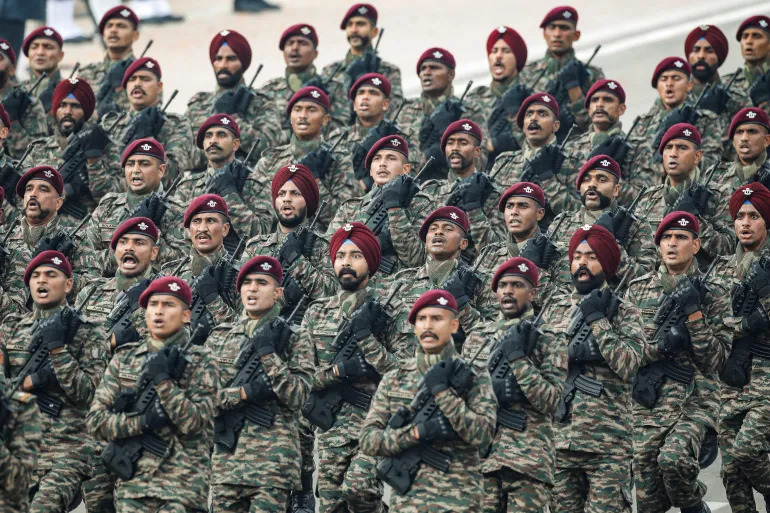
Every year, the Republic Day parade on 26 January is far more than a ceremonial celebration of India’s Constitution. It is a carefully curated display of the nation’s military strength, technological self reliance and strategic intent. The weapon systems showcased along Rajpath, now Kartavya Path, are not chosen for spectacle alone. Each platform represents a message to citizens, adversaries and the global community about India’s preparedness, innovation and resolve to defend its sovereignty.
One of the most anticipated highlights of the Republic Day parade is the display of advanced missile systems. India’s missile capability reflects decades of indigenous research led by institutions such as DRDO and supported by public and private sector industries. Systems like the Agni series of ballistic missiles symbolize India’s credible minimum deterrence doctrine. Their presence in the parade underlines the country’s ability to safeguard itself against long range threats while maintaining a policy of restraint and responsibility. Tactical missiles like Pralay or surface to air systems like Akash demonstrate readiness for battlefield level contingencies and air defense, reinforcing India’s layered security architecture.
Another major attraction of Republic Day is the showcasing of modern armored platforms. Main battle tanks such as Arjun or upgraded variants of T ninety tanks represent the cutting edge of India’s armored warfare capability. These tanks highlight improvements in firepower, mobility and protection suited to India’s diverse terrain, from deserts to plains. Their significance lies not only in raw combat power but also in the growing emphasis on indigenous manufacturing under the Atmanirbhar Bharat initiative. Each tank rolling past the saluting base reflects a step toward reduced dependence on foreign suppliers.
Artillery systems also occupy a central place in the Republic Day parade. Modern howitzers and rocket artillery units demonstrate the Indian Army’s renewed focus on long range precision fire. Advanced artillery platforms enhance battlefield dominance by enabling forces to strike deep into enemy territory with accuracy. Their importance has grown in recent years as modern warfare increasingly relies on coordinated firepower integrated with surveillance and command systems. Displaying these systems sends a clear signal that India has addressed past gaps and is investing steadily in modernizing its land forces.
Air defense and surveillance systems form another critical segment of the parade. Radars, electronic warfare platforms and air defense launchers symbolize India’s growing capabilities in detecting and neutralizing aerial threats, including drones and missiles. In an era where asymmetric and unmanned threats are becoming more common, these systems are vital for protecting both military assets and civilian infrastructure. Their inclusion in the parade reflects India’s understanding of evolving security challenges and its commitment to staying ahead of them.
The Republic Day parade also offers a glimpse into India’s aerospace strength. Flypasts by fighter jets, transport aircraft and helicopters capture public imagination, but their significance runs deeper. Indigenous aircraft like the Light Combat Aircraft Tejas stand as icons of India’s aeronautical ambitions. Tejas represents decades of effort to design, test and produce a modern fighter within the country. Its presence in the parade is a statement of confidence in Indian engineering and a signal of future readiness as more advanced variants enter service.
Naval weapon systems and maritime surveillance platforms, when featured, underscore the importance of sea power in India’s strategic thinking. As a nation with a vast coastline and critical sea lanes of communication, India places high priority on maritime security. Displaying naval missiles, anti submarine systems or coastal defense assets highlights India’s determination to protect its interests in the Indian Ocean Region. This aspect of the parade reinforces India’s role as a net security provider in its neighborhood.
Beyond individual platforms, the overall significance of the Republic Day weapon display lies in its integrated message. The parade presents a coordinated picture of jointness among the Army, Navy and Air Force. It reflects progress toward network centric warfare where sensors, shooters and decision makers are linked in real time. This integration is crucial for modern defense and the parade serves as a public demonstration of that evolving capability.
Equally important is the political and psychological dimension of the display. For citizens, it instills pride and confidence in the armed forces. For the youth, it can inspire interest in science, technology and national service. For adversaries, it acts as a deterrent by showcasing readiness and modernization. For friendly nations and partners, it signals stability, reliability and the potential for defense cooperation.
In essence, the special weapon systems displayed on 26 January are symbols of India’s journey from a largely import dependent defense posture to one focused on self reliance and innovation. Each system carries with it years of research, sacrifice and strategic planning. Together, they transform the Republic Day parade into a moving testament of national power, unity and resolve, reminding the world that India stands vigilant, capable and confident as a sovereign republic.