
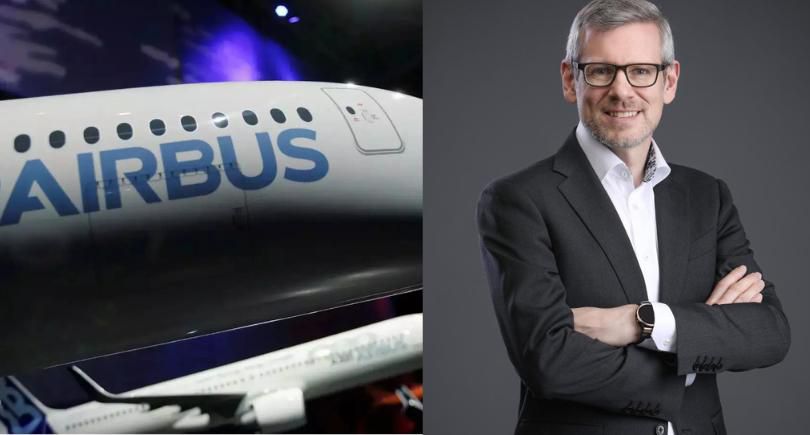
Airbus on January 29 projected a sharp expansion in India’s aviation sector, estimating that Indian airlines will triple their combined fleet to around 2,250 aircraft over the next decade.
As per reports, Boeing said that airlines across India and South Asia, an increasingly competitive market for aircraft manufacturers and one where Airbus currently holds a strong lead will require nearly 3,300 new aircraft by 2044.
Highlighting the scale of the expected growth, Jürgen Westermeier, Airbus president and managing director for India and South Asia, reportedly said the aviation ecosystem would expand in tandem with traffic growth.
“And we are expecting a compound growth of (passenger traffic) around 8.9 per cent in the next 10 years. How do we see the infrastructure? How do we see the aviation system which will support this growth? We are expecting around 200 airports in 10 years, so another 50 airports more. We will see a tripling of the fleet. So we will have around 2,250 aircraft in service in 10 years,” news agency PTI quoted Westermeier as saying.
Such regional forecasts are closely monitored by the global aerospace industry, as India ranks as the world’s third-largest domestic aviation market, after the US and China, dominated by major carriers IndiGo and Air India.
Despite its scale, India’s aviation market remains significantly underpenetrated. Air travel in the country stands at just 0.13 trips per person, far below levels in comparable regions, Westermeier told news agencies.
This, he said, points to substantial untapped potential for air travel adoption. He was speaking while releasing Airbus’ forecast on the second day of India’s biennial civil aviation air show.
Westermeier also noted that certain aerospace services could benefit from lower tariffs following the recently concluded India-EU trade agreement.
India, currently the fastest-growing domestic aviation market globally, has mirrored global trends by placing large aircraft orders as airlines expand capacity, phase out older and less fuel-efficient planes, and respond to strong post-pandemic travel demand.
In recent years, Indian carriers have announced some of the largest aircraft orders ever, aimed largely at rapid fleet expansion rather than simple replacement, unlike airlines in more mature markets.
As per reports, Westermeier said Airbus currently has a backlog of 1,250 aircraft orders from Indian airlines and expects to deliver an average of 120–150 aircraft annually, or roughly two aircraft every week.
Airbus retained its position as the world’s largest aircraft manufacturer last year, navigating challenges including engine shortages, supply-chain disruptions and tariff-related pressures. A growing fleet will also significantly boost India’s air cargo capacity.
Westermeier said the annual cargo capacity of Indian carriers is projected to exceed 5,000 kilo tonne (five million tonne) — a threefold increase from current levels.
To support this expansion, workforce requirements are expected to rise sharply. The demand for pilots is projected to increase to 35,000 by 2035 from the current 12,000, while the technical workforce will need to nearly triple to about 34,000 from 11,000, he said.
At the same time, the aircraft maintenance market is expected to expand threefold over the next decade, growing from approximately USD 3 billion today to about USD 9.5 billion, covering airframe, component and engine maintenance, repair and overhaul (MRO) services.
Airbus is also setting up final assembly lines for its H125 helicopters, with deliveries scheduled to begin next year.
Currently, Airbus sources components worth USD 1.5 billion from India, more than half of which consists of complex parts such as aircraft doors.
The company is also exploring the use of raw composite materials to further deepen its sourcing footprint in the country, Westermeier said.