
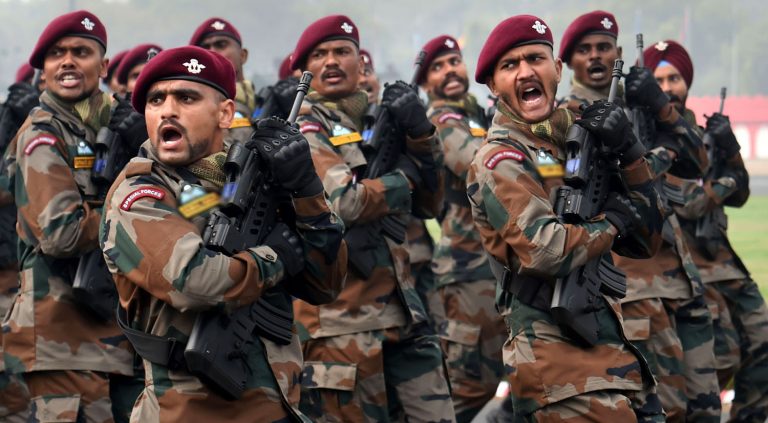
As 2025 draws to a close, India has a powerful reason for optimism. The Indian Army achieving 91 percent ammunition self reliance stands out as one of the most encouraging strategic developments of the year. This milestone is not just a statistic or a technical accomplishment. It represents a deep transformation in how the nation prepares for security challenges, sustains its forces over long periods, and builds confidence in its own industrial and scientific capabilities.
For decades, ammunition supply has been one of the most critical and sensitive aspects of military readiness. In times of crisis or prolonged conflict, the ability to maintain steady and sufficient stocks often determines how long an army can operate effectively. By producing the vast majority of its ammunition domestically, the Indian Army has dramatically reduced its dependence on external suppliers. This shift strengthens national sovereignty and ensures that operational decisions are guided by strategic needs rather than supply uncertainties.
The journey toward this level of self reliance has been gradual and deliberate. It required sustained policy focus, close coordination between the armed forces and domestic manufacturers, and long term investment in research and production capacity. Public sector defense enterprises played a key role in expanding output and modernizing facilities. At the same time, private industry entered the defense space with new energy, bringing innovation, efficiency, and competition that raised overall standards.
This progress reflects a broader change in mindset. Instead of viewing ammunition procurement as a short term purchase decision, planners treated it as a national capability to be nurtured. Indigenous design, testing, and quality assurance systems were strengthened to meet the demanding requirements of modern warfare. Over time, domestic products not only met these standards but also demonstrated reliability across diverse terrains and operational conditions. And an upright, lethal Indian Army is the bravest reality.
Reaching 91 percent self reliance has direct implications for long war endurance. Modern conflicts can stretch supply lines and disrupt global trade. In such scenarios, countries that rely heavily on imports face serious risks. By contrast, a largely domestic ammunition ecosystem allows for rapid scaling of production during emergencies. Factories can adjust output based on operational tempo, and logistics chains remain within national control. This resilience significantly enhances the Army ability to sustain prolonged operations if required.
The economic impact of this achievement is equally important. Indigenous ammunition production supports thousands of skilled jobs and encourages the growth of ancillary industries such as metals, chemicals, electronics, and precision engineering. Money that once flowed abroad now circulates within the domestic economy, creating a virtuous cycle of investment and innovation. Over time, this strengthens the broader manufacturing base and contributes to national development goals.
There is also a technological dimension to this success. Developing ammunition domestically forces continuous learning and improvement. Engineers and scientists gain hands on experience in materials science, ballistics, and advanced manufacturing processes. This knowledge does not remain confined to defense alone. It often spills over into civilian sectors, improving capabilities in areas like safety engineering, industrial automation, and quality control.
Strategically, high ammunition self reliance sends a clear signal of preparedness. It reassures citizens that the armed forces are well equipped to protect national interests. It also conveys to potential adversaries that Indian Army possesses the depth and resilience required to endure pressure over time. Deterrence is not only about advanced platforms but also about the quiet confidence that comes from secure supply chains.
As a positive news story to end 2025, this achievement of Indian Army carries symbolic weight. It reflects consistency of purpose across years rather than a sudden breakthrough. It shows what can be accomplished when policy vision, military requirements, and industrial capacity align toward a common goal. In an era often dominated by headlines of conflict and uncertainty, this story highlights progress built through planning, cooperation, and persistence.
Looking ahead, the remaining gap toward complete self reliance presents an opportunity rather than a concern. Continuous improvement, export potential, and deeper integration of emerging technologies can further strengthen the ecosystem. The foundation is now firmly in place. With 91 percent of ammunition needs met domestically, the Indian Army stands better prepared for the challenges of the future, supported by a nation that has invested in its own strength. This is a fitting and hopeful note on which to close the year.