
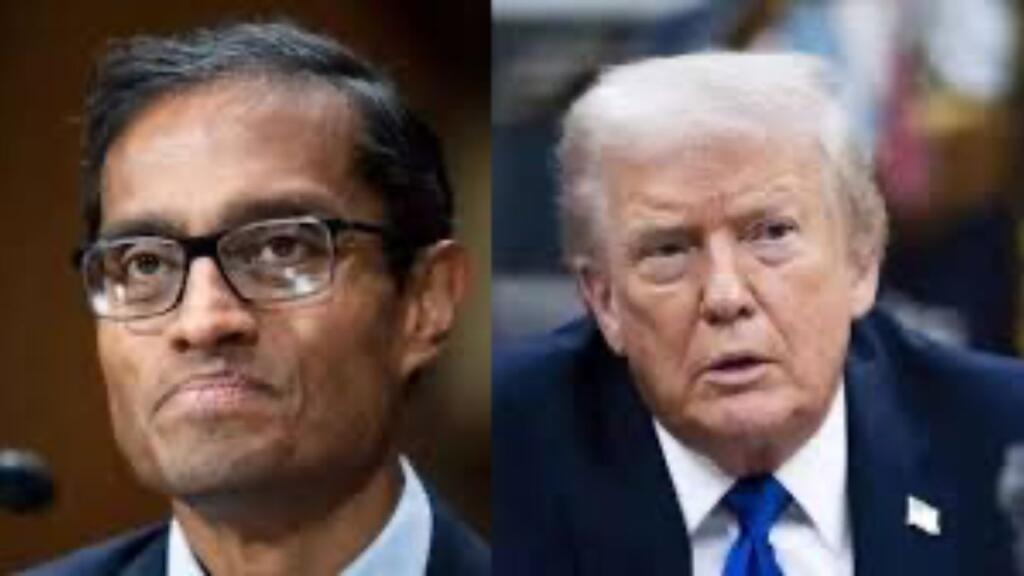
An Indian-American federal judge has become the latest target of intense online attacks from MAGA supporters after he blocked a major Trump administration move to freeze billions of dollars in federal funding. The episode reflects a wider pattern in which judges of Indian origin face coordinated backlash when their rulings stall Trump-era policies.
On Friday, Judge Arun Subramanian of the US District Court for the Southern District of New York issued a temporary restraining order (TRO) halting the administration’s decision to freeze nearly $10 billion in federal funding for child care and social services. The freeze affected five Democratic-led states: California, Colorado, Illinois, Minnesota, and New York.
The order followed a lawsuit filed by state attorneys general, who argued that the Department of Health and Human Services lacked legal authority to suspend the funds. They also claimed the move intruded on Congress’s exclusive power over federal spending.
The administration had justified the funding pause by citing alleged large-scale fraud, particularly in Minnesota’s child care subsidy programs. Investigations there uncovered schemes in which some Somali immigrant-linked networks siphoned off millions of dollars. President Donald Trump framed the freeze as part of his “America First” agenda, arguing that taxpayer money was being drained by welfare fraud.
However, Judge Subramanian ruled that the states demonstrated “good cause” for emergency relief. He cited the likelihood of success on the merits, the risk of irreparable harm to vulnerable families, and the public interest in maintaining uninterrupted aid. Importantly, the ruling did not assess the fraud allegations themselves. Instead, it imposed a 14-day pause to allow for fuller legal arguments. Legal experts noted that such reasoning aligns with standard TRO practice.
Xenophobic Attacks Target Indian-American Judges
Nevertheless, the ruling triggered a fierce backlash across MAGA-aligned online spaces. Critics on X labelled Subramanian a “Biden appointee” and a “DEI hire,” questioning his legitimacy rather than engaging with the legal reasoning. Soon after, the attacks escalated into explicit xenophobia.
Some posts called him an “anchor baby” and demanded his deportation to India, despite his US citizenship. Others accused him of enabling “Somali scams” and described the order as “judicial insurrection.” Senior Trump adviser Stephen Miller also criticised the ruling, claiming it forced Americans to “fund infinite refugee daycare scams.”
Also Read: USA’s True Colours on Display as Bangladesh Burns with Anti India Violence
Subramanian is not an isolated case. In recent months, several Indian-American judges have faced similar hostility. Judge Amit Mehta of Washington, DC, became a frequent target after ruling that Trump’s “Stop the Steal” speech before the January 6 Capitol riot could plausibly be interpreted as a call to action and therefore fall outside First Amendment protection in civil litigation. Meanwhile, Judge Vince Chhabria of California drew attacks after blocking Immigration and Customs Enforcement from using Medicare and Medicaid data for deportation operations.
Among the most prominent targets is Judge Indira Talwani of Massachusetts. On Friday, she announced she would issue a TRO blocking the administration’s plan to end family reunification parole programs affecting up to 12,000 migrants from Latin America and the Caribbean. Previously, Talwani blocked efforts to terminate parole programs for migrants from Cuba, Haiti, Nicaragua, and Venezuela, although the Supreme Court later allowed partial rollbacks.
She has also faced criticism for welfare-related rulings, including a 2025 order requiring the government to resume SNAP benefits during a shutdown and for blocking Medicaid funding cuts to Planned Parenthood affiliates under Trump’s “One Big Beautiful Bill.”
Taken together, these cases show how legal resistance to Trump-era policies increasingly overlaps with identity-based attacks. As a result, Indian-American judges now sit at the centre of a broader political and cultural confrontation over the courts, immigration, and executive power.