
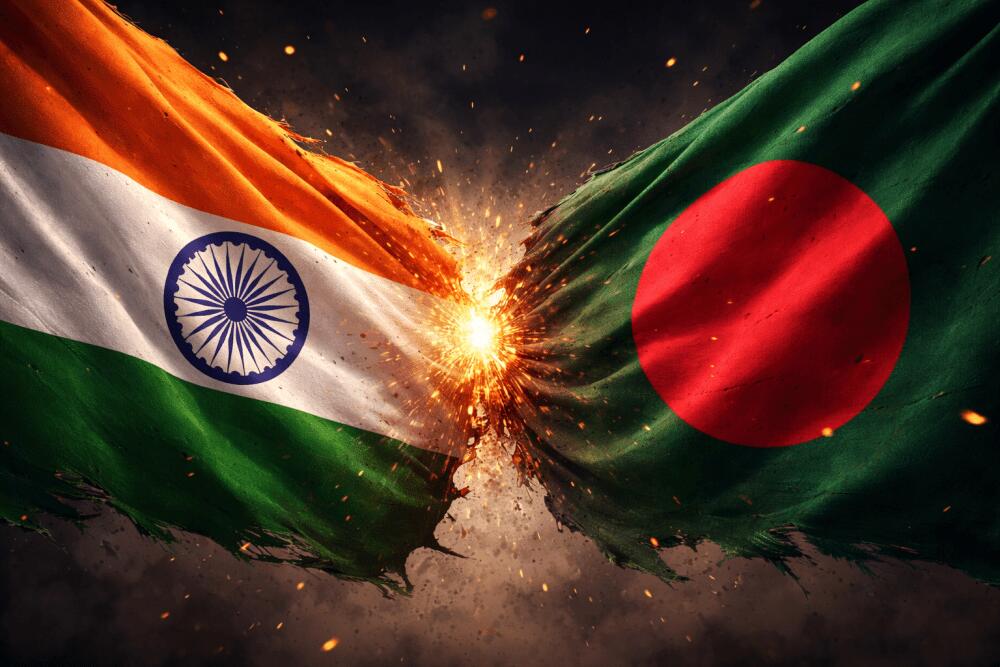
India’s recent announcement that it will withdraw the families of diplomats from its mission in Dhaka has sent ripples through South Asia, underlining deepening security concerns and a shift in the diplomatic landscape between the two neighboring countries. The decision, framed officially as a necessary precaution to ensure the safety of Indian nationals, reflects growing unease within New Delhi about the environment in Bangladesh and has prompted wide discussion among analysts, policymakers, and citizens alike. It is not simply a logistical adjustment but a stark reminder of the fragility that can accompany regional cooperation when perceptions of security concerns begin to dominate bilateral relations.
At the heart of India’s move is a calculus of risk. Governments routinely take measures to protect their citizens abroad when they assess that the security environment has deteriorated or faces unpredictable shifts. In this instance, India’s foreign ministry cited escalating security concerns that could affect the well-being of diplomatic families residing in Dhaka. The term “security concerns” has now become a central theme, repeated across official statements and media analyses, as observers try to understand both the immediate triggers and the broader implications of the withdrawal.
To appreciate the context, it is important to recognize that India and Bangladesh share a long and complex history. The two nations are bound by deep cultural connections, economic interdependence, and a shared interest in regional stability. Yet, this proximity also means that political turbulence in one country inevitably resonates in the other. Over recent months, Bangladesh has experienced episodes of civil unrest, protests, and incidents of violence that have raised questions about internal stability. While the Bangladeshi government has assured partners and its own citizens that it remains in control, the frequent invocation of “security concerns” by foreign missions underscores a gap between official reassurance and external perception.
For Indian diplomats, the safety of their families is paramount. Diplomatic postings in any nation involve a delicate balance of engagement and caution, but the decision to withdraw families signals a heightened level of perceived risk. India’s choice to articulate this as a response to security concerns rather than as a political statement is significant. It suggests that New Delhi aims to avoid antagonizing Dhaka while still prioritizing the welfare of its citizens. Nonetheless, the repetition of “security concerns” in official discourse inevitably feeds narratives about instability that can have broad repercussions for foreign investment, tourism, and regional cooperation.
The Bangladeshi government has responded to the announcement with measured diplomacy, emphasizing its commitment to the safety of all foreign missions and expressing confidence in the country’s law enforcement and security apparatus. Dhaka’s leadership framed India’s move as a temporary and precautionary measure, reiterating that Bangladesh remains a secure and welcoming environment for international partners. Still, the prominence of security concerns in the broader conversation cannot be ignored. It raises questions about how internal developments in Bangladesh are perceived externally and what this means for the nation’s international standing.
The implications of the Indian decision extend beyond bilateral relations. Regional organizations, investors, and international observers pay close attention to such moves, interpreting them as signals about the underlying health of political and social systems. When one of South Asia’s largest countries cites security concerns for distancing even diplomatically, it invites scrutiny from others who may be considering their own engagements. This makes it all the more critical for Bangladesh to address not just the reality of its security environment but also the perceptions that shape international confidence.
For ordinary citizens in both countries, the withdrawal may seem remote from their daily lives, yet it has tangible effects. Families of Indian diplomats adjusting to temporary separation, business leaders recalibrating plans that involve travel to Bangladesh, and students weighing opportunities for cross-border education all see the reverberations of a policy driven by security concerns. These are not abstract academic discussions but real decisions influenced by how governments assess the safety and predictability of an environment.
Security experts argue that the articulation of security concerns must be accompanied by transparent analysis and proactive measures. Simply stating that risks exist without contextualizing them can lead to misunderstandings or exaggeration of threats. In the case of Bangladesh, some analysts point out that while there have been notable incidents of unrest, the overall picture may not justify a blanket perception of danger. They suggest that targeted reforms, enhanced communication between security agencies, and coordinated risk assessments with foreign missions could help bridge the gap between perception and reality.
Political commentators also note that domestic developments in Bangladesh, including shifts in governance, civil liberties debates, and public dissent, inevitably influence how other nations perceive stability. In democracies and transitional political landscapes, episodes of protest or instability are not uncommon. However, when these episodes intersect with narratives of rising security concerns, they can be amplified in ways that affect foreign policy decisions. This reciprocal relationship between internal affairs and external reactions underscores the importance of nuanced engagement.
India’s emphasis on security concerns in its announcement also raises strategic questions about regional diplomacy. New Delhi and Dhaka share critical interests that range from trade and connectivity to water resource management and counterterrorism cooperation. A perception of instability can strain these avenues of collaboration. Therefore, both governments have incentives to manage the dialogue carefully, acknowledging legitimate concerns without allowing them to overshadow the broader partnership.
Ultimately, the withdrawal of diplomats’ families from Bangladesh amid rising security concerns highlights the complex interplay between perception, policy, and protection. It reflects a moment in which regional dynamics, internal developments, and international diplomacy converge in ways that test the resilience of bilateral ties. For India, the priority remains the safety of its citizens abroad. For Bangladesh, the challenge lies in addressing both the substance and perception of security concerns to reassure friends, partners, and investors alike. In a region where cooperation is essential for prosperity, navigating these challenges with clarity and confidence will be key to sustaining trust and mutual progress.