
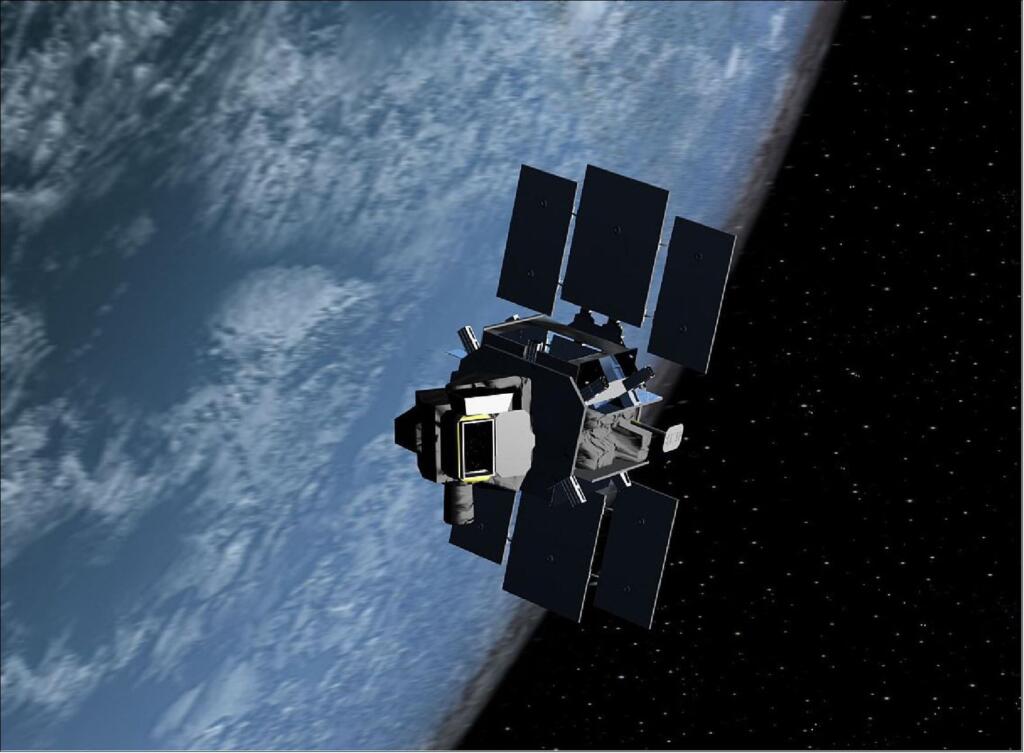
India is preparing a major expansion of its space-based surveillance capabilities, with plans to launch more than 50 new spy satellites and introduce night-time imaging to close critical intelligence gaps exposed during last year’s border conflict with Pakistan.
The Narendra Modi-led government is also considering the construction of overseas ground stations to enable faster and more comprehensive relay of satellite data.
Potential locations include the Middle East, Southeast Asia and Scandinavia, though the plans would require approvals from host governments, the people said, requesting anonymity due to the sensitive nature of the discussions.
As part of the upgrade, India plans to equip its satellites with advanced technology capable of capturing images in dark and cloudy conditions by shifting from electro-optical systems to synthetic aperture radar.
Additional improvements are being developed to allow satellites to transfer data among themselves without depending entirely on ground stations.
The launch of the first 52 satellites under the Space-Based Surveillance-3 programme is being fast-tracked to ensure more frequent monitoring of areas of strategic interest than India’s current systems allow.
The Times of India, which reported in June on the accelerated timeline, said the first batch of satellites could be launched by April.
India ultimately plans to deploy as many as 150 new satellites to strengthen border security, Mint reported in April, citing Indian Space Research Organisation (ISRO) Chairman V Narayanan at an event in Chennai.
The estimated cost of deploying the full constellation is around Rs 26,000 crore ($2.8 billion).
Lessons from Pahalgam Attack
The sweeping measures reflect lessons learned from last May, when the two nuclear-armed South Asian neighbours faced their most serious military confrontation in decades.
India is also seeking to develop so-called “bodyguard satellites” to detect and counter threats to spacecraft in orbit, Bloomberg News reported in September, as part of broader efforts to close capability gaps.
India’s Ministry of Defence, ISRO and Narayanan—who also serves as Secretary in the Department of Space—did not respond to requests for comment.
Satellites played a critical role in identifying and monitoring targets during the four-day military standoff, which brought India and Pakistan to the brink of full-scale war.
During the conflict, China provided support to Pakistan, helping Islamabad adjust its satellite coverage, according to a research group under India’s Ministry of Defence.
India currently has more than 100 satellites in orbit, compared with just eight for Pakistan, according to spacecraft tracking data from N2YO.com.
However, India’s satellites remain limited by their inability to capture images at night or through heavy cloud cover—a shortcoming highlighted during Operation Sindoor against Pakistan last year. In contrast, Chinese satellites possess night-imaging capabilities.
At present, the gap between successive satellite passes over a particular area can stretch into days. As a result, India was forced to procure satellite imagery from US-based companies to plan operations against Pakistan during the conflict, the people said.
The deployment of additional spy satellites could reduce that gap to just a few hours, significantly improving real-time intelligence gathering.
ISRO plans to use its existing rocket fleet to launch the new surveillance satellites, though the agency has experienced mixed results in recent months.
One of its rockets failed earlier this month, marking the second such failure in less than a year. At the same time, ISRO successfully placed the BlueBird Block-2 satellite for US-based AST SpaceMobile into orbit on December 24, highlighting the uneven but ongoing progress of India’s space programme.
Private-sector startups, including Skyroot Aerospace Pvt Ltd, are also part of the broader push to strengthen India’s space-based monitoring capabilities and support state-run initiatives.