
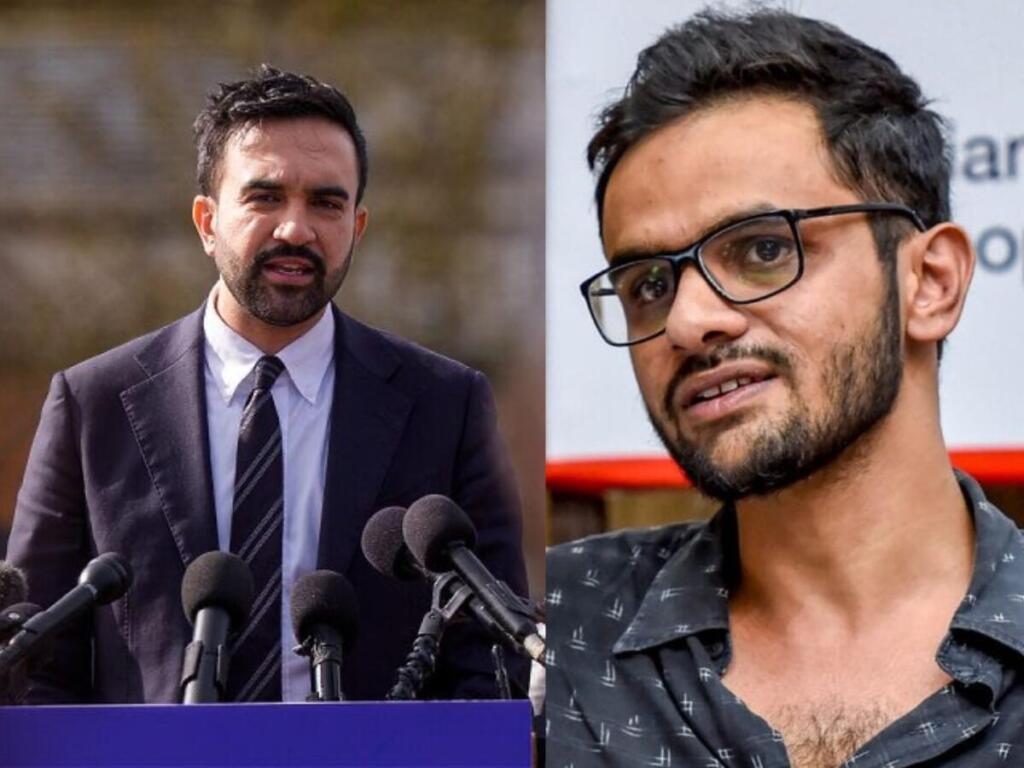
The recent circulation of a letter by Zohran Mamdani expressing support for Umar Khalid has ignited intense debate across social media and political circles. The controversy is not merely about one statement or one gesture of solidarity. It raises broader questions about ideological rigidity, selective outrage, and the responsibilities of public figures when engaging with deeply sensitive national and international issues. Critics argue that both Mamdani and Khalid represent a strain of politics that prioritizes ideological alignment over accountability and nuance, particularly on the issue of Kashmir and political violence.
Zohran Mamdani is a public official in the United States who has built a profile around progressive activism and vocal criticism of state power. Umar Khalid is an Indian political activist whose speeches and associations have placed him at the center of legal and political storms in India. While their personal contexts differ, the criticism leveled at them often converges on one central concern. Both are accused by opponents of advancing a narrative on Kashmir that undermines the sovereignty of India while downplaying or excusing violence committed in the name of political causes.
For many observers, Mamdani’s support for Umar Khalid is troubling because it appears to gloss over the most contentious aspects of Khalid’s public record. Khalid has been associated with slogans and speeches that critics interpret as endorsing the separation of Kashmir from India. He has also been accused by detractors of expressing sympathy for figures linked to militant movements. Whether one agrees with these interpretations or not, the controversy surrounding Khalid is well known. A public figure choosing to support him without addressing these concerns invites criticism for appearing careless or ideologically blinkered.
Mamdani’s own statements on Kashmir have also been a source of debate. Critics claim that his framing of the issue relies heavily on a one sided narrative that emphasizes alleged state oppression while minimizing the complexity of the conflict. Kashmir is not only a dispute over territory but also a region scarred by decades of violence, displacement, and competing claims. Simplifying it into a single moral story may be emotionally compelling but it risks erasing the suffering of those harmed by militant groups and cross border terrorism.
Umar Khalid’s critics argue that his activism consistently pushes boundaries in ways that inflame tensions rather than encourage dialogue. His speeches have often relied on provocative language that resonates with certain ideological audiences while alienating others. Supporters portray him as a victim of state overreach and repression. Opponents see him as an agitator who refuses to acknowledge the destructive consequences of separatist rhetoric. This divide is precisely why unqualified support from international figures like Mamdani becomes so controversial.
Another layer of criticism centers on the perception that both figures operate within a narrow ideological framework that treats certain political causes as beyond reproach. When ideology becomes sacred, critical self reflection tends to disappear. In this mindset, anyone opposing a particular narrative is quickly labeled as authoritarian or oppressive, while uncomfortable facts are dismissed as propaganda. Such an approach does little to build credibility among broader audiences who expect nuance from leaders and activists alike.
There is also the issue of moral consistency. Many critics point out that Zohran Mamdani and Umar Khalid are vocal about human rights abuses when committed by states they oppose, yet remain silent or evasive about abuses committed by non state actors aligned with their political narratives. This selective outrage undermines claims of principled activism. If human rights truly matter, then violence against civilians and the glorification of militancy should be condemned regardless of who commits it.
Public discourse suffers when complex conflicts are reduced to slogans and symbols. Kashmir demands careful engagement with history, law, and the lived experiences of its people across communities. It cannot be responsibly addressed through social media statements that signal virtue to one audience while alienating others. When influential figures choose symbolism over substance, they contribute to polarization rather than understanding.
Ultimately, the criticism of Zohran Mamdani and Umar Khalid is not about silencing dissent or suppressing political activism. It is about demanding responsibility from those who claim moral authority. Supporting controversial figures or causes requires clarity, context, and a willingness to confront uncomfortable questions. Without that, such support appears less like solidarity and more like ideological posturing.
In an age where statements travel faster than explanations, public figures must be especially cautious. Letters of support and viral posts are not neutral acts. They shape perceptions and legitimize narratives. If Mamdani wishes to be taken seriously beyond his ideological base, he must engage honestly with the full scope of the controversies he touches. If Umar Khalid seeks broader credibility, he too must reckon with the criticisms of his rhetoric and associations. Until then, scrutiny is not only justified but necessary for a healthier and more honest public debate.