
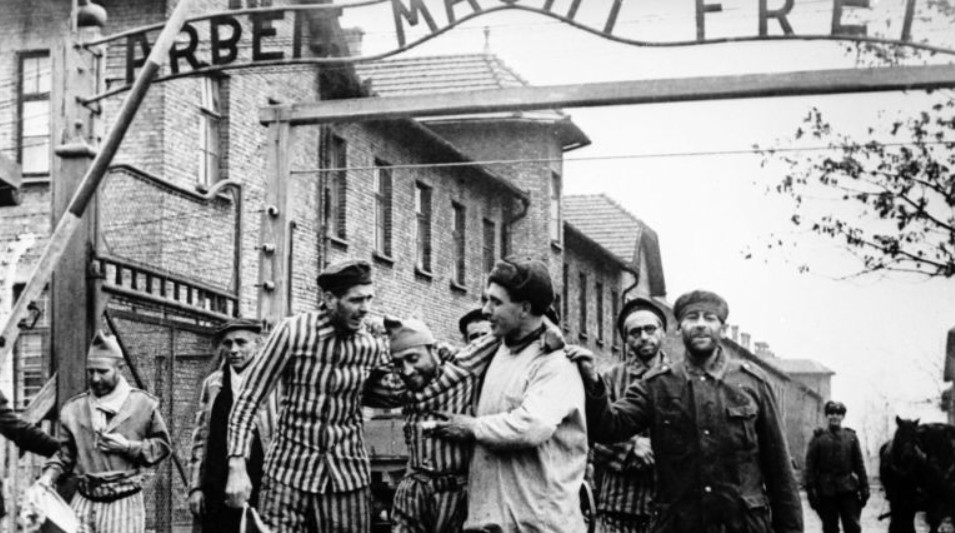
January 27, 2026, today, people around the globe observe International Holocaust Remembrance Day, a solemn memorial dedicated to the six million Jews brutally murdered by the Nazis and millions of other victims of Nazi persecution during World War II.
The United Nations chose January 27 as the international day of remembrance to mark the anniversary of the liberation of Auschwitz‑Birkenau by Soviet forces in 1945.
Auschwitz, located in German‑occupied Poland, was the largest Nazi concentration and extermination camp, where more than 1.1 million people were killed, most of them Jews.
On that day, Soviet troops discovered the horrors left behind, gas chambers, crematoria ruins, piles of personal belongings, and survivors in desperate condition. This liberation exposed to the world the full scale of the Nazis’ systematic genocide.
What Was the Holocaust?
The Holocaust was orchestrated by Adolf Hitler and the Nazi Party in Germany, beginning in the early 1930s and intensifying during World War II (1939–1945). Its root cause was virulent anti-Semitism, a central ideology of the Nazis, who falsely blamed Jews for Germany’s economic troubles, social instability, and Germany’s defeat in World War I.
The Nazis also targeted other groups they considered “racially or politically undesirable,” including Romani people, disabled individuals, Poles, Soviet POWs, and political dissidents.
The objective of the Holocaust was the systematic extermination of Jews and other groups, aiming to create a so-called “racially pure” Aryan state. This led to the industrial-scale genocide of approximately six million Jews and millions of others.
Between 1933 and 1945, Nazi Germany carried out the Holocaust— the organized, state‑sponsored persecution and murder of Jews and other groups it considered “undesirable.”
The Nazis enforced racist laws that stripped Jewish people of their rights, property, and dignity. They forced millions into overcrowded ghettos where starvation and disease were widespread, and then deported them to concentration and death camps.
The Nazis used gas chambers, forced labour, and brutal medical experiments as tools of mass murder. Families were torn apart, children separated from parents, and many people died from exhaustion, disease, or systematic killing. Camp survivors have described relentless cruelty, hunger, and loss beyond imagination.
Families were torn apart, children were separated from parents, and individuals were beaten, humiliated, and dehumanized simply because of their faith. Millions were deported to concentration and extermination camps such as Auschwitz, Treblinka, and Sobibor, where they faced gas chambers, forced labor, and inhumane medical experiments.
Many died from exhaustion, starvation, disease, or execution, while survivors endured unimaginable psychological and physical trauma. In total, six million Jews perished, making the Holocaust one of history’s most horrific and meticulously organized genocides.
Remembering the Victims and Survivors
When Auschwitz-Birkenau was liberated by Soviet forces on January 27, 1945, around 7,000 survivors were found in the camp in terrible condition. Many more had been killed in gas chambers, forced marches, or transferred to other camps before liberation. Overall, over 1.1 million people died in Auschwitz, mostly Jews.
International events today include moments of silence, candle‑light vigils, exhibitions, and educational programmes. Leaders, educators, and communities worldwide stress the importance of Holocaust education to ensure younger generations know the truth about what happened.
Survivors and their families often share personal testimonies that put human faces on this history. These first‑hand accounts are invaluable as the number of living survivors rapidly declines — fewer than 200,000 remain globally today.
In Poland, ceremonies at the former Auschwitz‑Birkenau site draw survivors, dignitaries, and visitors who lay wreaths, light candles, and pledge “never again” in tribute to the lost. Similar commemorations take place at Holocaust memorials in Berlin, Amsterdam, and New York, among many other cities.
The United Nations and cultural institutions emphasize that remembering the Holocaust is not just about mourning — it’s a warning about the consequences of unchecked hatred, antisemitism, racism, and bigotry.
Holocaust Paved the Way for the Formation of Israel
The Holocaust, one of the darkest chapters in human history, not only left an indelible mark on millions of lives but also played a critical role in shaping the modern Middle East.
The scale of the Holocaust shocked the world. Survivors returned from Europe traumatized, stateless, and often unwelcome in their native countries. Anti-Semitism, which had persisted for centuries, had escalated into a deadly, systematic campaign of genocide. This urgent reality underscored the need for a safe homeland for Jewish people — a place where they could live free from persecution.
The atrocities committed by the Nazis galvanized international opinion in favor of a Jewish state. The Balfour Declaration of 1917, which had promised a Jewish homeland in Palestine, gained renewed urgency in the post-war years.
Holocaust survivors and Jewish refugees poured into Palestine, then under British mandate, often fleeing Europe with nothing but the clothes on their backs. Their suffering lent moral and political weight to Zionist aspirations.
In 1947, the United Nations approved a plan to partition Palestine, paving the way for the creation of the State of Israel in 1948. Leaders argued that after witnessing the horrors of the Holocaust, Jews deserved a sovereign nation where they could defend themselves and ensure their survival.
Many historians note that, without the Holocaust, international and political momentum toward Israel’s formation might have been far weaker, and the sense of urgency for a secure Jewish homeland far less pressing.
The Holocaust thus left a dual legacy: a warning of humanity’s capacity for cruelty and a catalyst for the establishment of Israel. Today, Israel stands not only as a nation-state but also as a living memorial to the millions of Jews who perished, reminding the world that such atrocities must never happen again.
UN resolutions on Holocaust Remembrance also explicitly reject Holocaust denial or distortion and urge countries to preserve historical sites and records. The day encourages educational efforts that reinforce respect for human rights and the dignity of all people.
The Legacy and the Call to Action
Today’s observances remind the world that genocide and mass violence can happen when prejudice goes unchallenged, when people look away, or when hatred becomes normal.
International Holocaust Remembrance Day stands as both a tribute to the victims and a call to action, to confront antisemitism, to teach truth, and to uphold the rights and humanity of every person everywhere.
As communities reflect on the horrors of Auschwitz and other Nazi camps, they also reaffirm hope — hope that education, remembrance, and vigilance will prevent future atrocities and honour those who suffered and survived.