










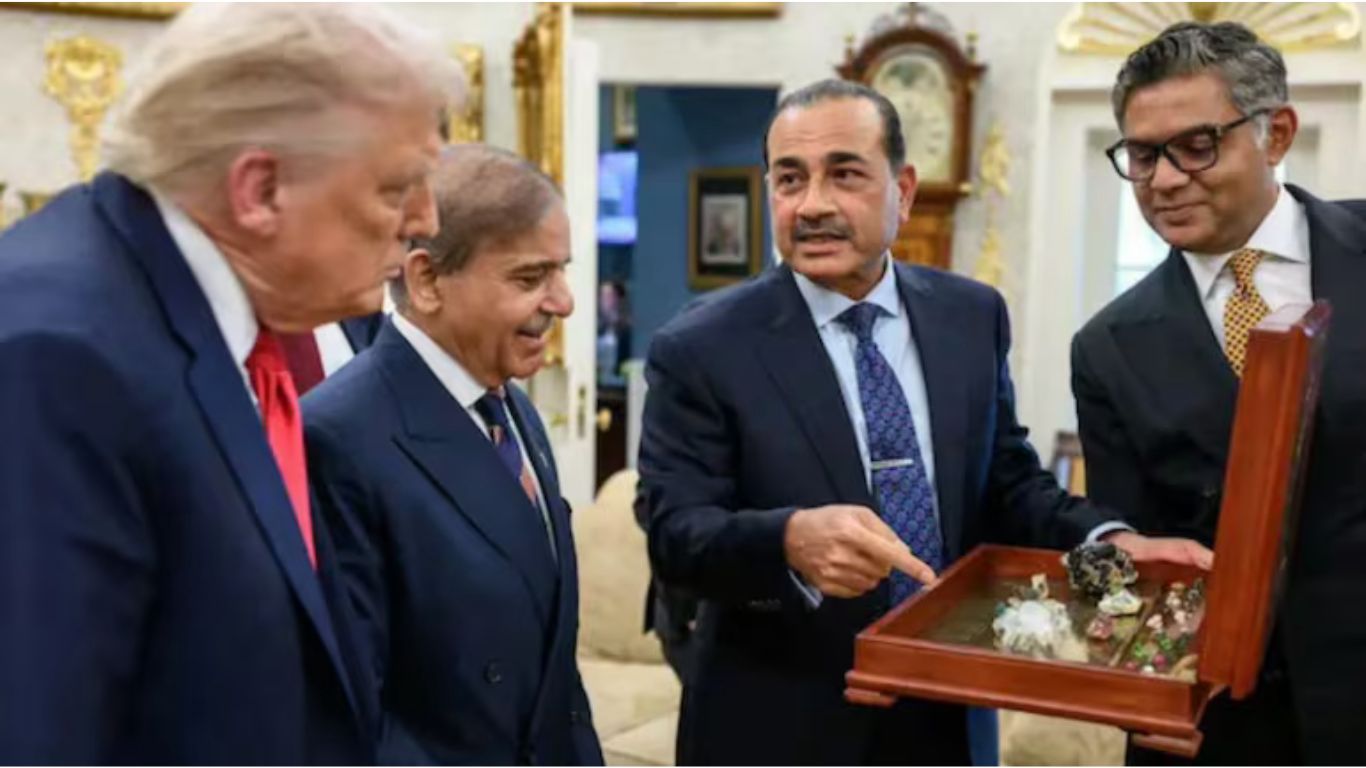
Documents released under the United States’ Foreign Agents Registration Act (FARA) have revealed how India and Pakistan both engaged American lobbying firms during the tense days following India’s Operation Sindoor, launched after the Pahalgam terror attack in April last year.
The filings show that Pakistan was deeply shaken by Operation Sindoor and made repeated efforts to prevent the situation from escalating into a full-scale conflict. At the same time, the documents also confirm that the Indian Embassy in Washington hired a US lobbying firm to strengthen communication with the Trump administration on trade and strategic issues.
While opposition leaders in India have raised questions about the timing of events on May 10, 2025, the Ministry of External Affairs (MEA) has said that lobbying is a legal, transparent, and long-standing diplomatic practice followed by governments across the world.
Pakistan’s Urgent Push to Halt Operation Sindoor
According to FARA disclosures filed with the US Department of Justice, Pakistan launched an aggressive lobbying campaign in Washington soon after India began Operation Sindoor.
The documents show that Pakistani diplomats contacted US officials nearly 60 times in a short period. These contacts included emails, phone calls, and in-person meetings with top officials from the White House, the Pentagon, the State Department, and members of the US Congress.
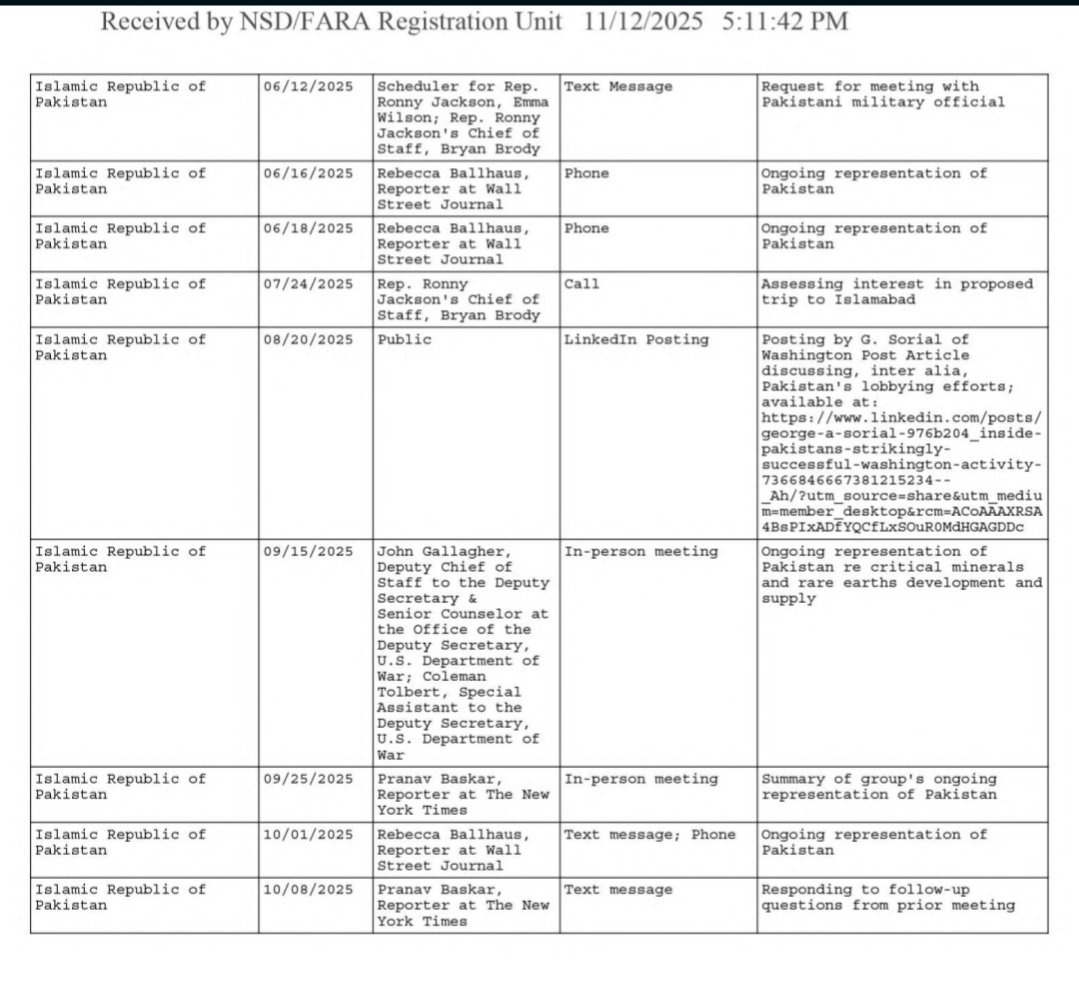
The lobbying effort began in late April and continued even after Operation Sindoor ended. India’s military operation lasted four days and ended on May 10, but Pakistani outreach to American officials continued beyond that date.
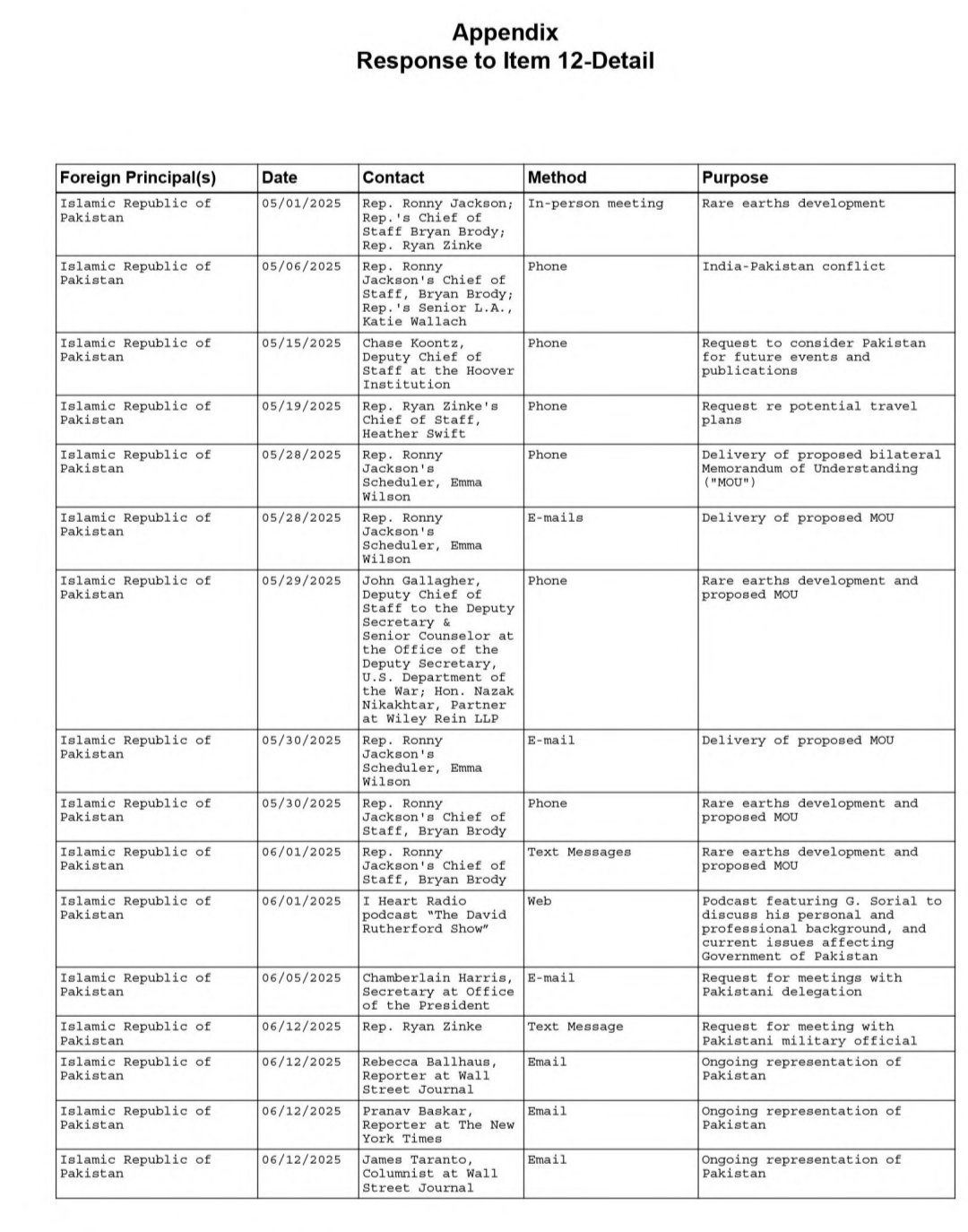
To pause the operation and avoid further escalation, Pakistan reportedly spent around ₹45 crore to hire six lobbying firms in the United States. The goal was clear: gain rapid access to decision-makers in the Trump administration and push for diplomatic pressure on India.
In a separate disclosure, Sidley Law LLP, a US-based lobbying firm, stated that it assisted Pakistan in strengthening economic engagement with the United States. The firm also provided support during the period of heightened India-Pakistan tensions.
These filings underline the level of concern in Islamabad during Operation Sindoor and show how Pakistan relied heavily on Washington to manage the crisis.
Also Read: The Fake Naval War: How Pakistan Flooded the Internet With AI ‘Strikes’ During Operation Sindooras
Indian Embassy’s Engagement Focused on Trade and Communication
At the same time, FARA documents also show that the Indian Embassy in the United States hired SHW Partners LLC to support discussions with the US government.
According to the filings, SHW Partners worked for the Indian Embassy between April and December 2025. The firm’s role mainly involved facilitating communication rather than influencing policy outcomes.
On May 10, SHW Partners helped establish contact between Indian officials and key US figures. These included White House Chief of Staff Susie Wiles, US Trade Representative Jamison Greer, and National Security Council official Ricky Gill.
During these interactions, discussions focused on the India–US trade agreement and media coverage of Operation Sindoor. Notably, May 10 was also the day when the four-day military confrontation between India and Pakistan came to an end.
The filings further reveal that the Indian Embassy sought help in arranging meetings for a multi-party Indian delegation with Vice President JD Vance and Secretary of State Marco Rubio. Several entries refer specifically to ongoing trade talks between New Delhi and Washington.
SHW Partners’ role was limited to arranging meetings, coordinating phone calls, and managing email communication. The documents do not indicate any mediation role by the United States in ending Operation Sindoor.
MEA Defends Lobbying, Congress Flags May 10 Timeline
Reacting to the disclosures, the Ministry of External Affairs said that all lobbying-related details are publicly available and fully compliant with US law.
MEA sources said that engaging lobbying firms in the US is a normal and legal practice under the Foreign Agents Registration Act. They added that several embassies, private companies, and business groups routinely hire such firms to improve communication and outreach.
The sources clarified that the Indian Embassy has hired lobbying firms since 1950, whenever required. They also rejected claims of any US mediation role, calling such interpretations “completely incorrect.”
However, the disclosures triggered a political reaction. The Congress party raised questions about the sequence of events on May 10, 2025.
Congress General Secretary Jairam Ramesh said that US Secretary of State Marco Rubio made the first public announcement about stopping Operation Sindoor at 5:37 pm on that day. He argued that the timing deserved closer scrutiny.
Congress leader Amitabh Dubey also pointed out that US Trade Representative Jamison Greer was contacted on the same day. He claimed this raised doubts about whether trade considerations influenced the decision to halt military operations.
Meanwhile, government sources stressed that lobbying is not new for India. After the Pokhran nuclear tests, the Vajpayee government hired firms such as APCO Associates and The Washington Group. Later governments, including the UPA government under Manmohan Singh, also engaged firms like BG&R and The Podesta Group during key moments such as the India-US nuclear deal.
Under the Modi government, firms like BGR, Cornerstone Government Affairs, Mercury, and SHW Partners have been engaged during periods of global uncertainty, including tariff disputes and trade negotiations.
As officials point out, Pakistan also uses the same lobbying route. In Washington’s power corridors, diplomacy and lobbying often go hand in hand—and India is far from being an exception.