














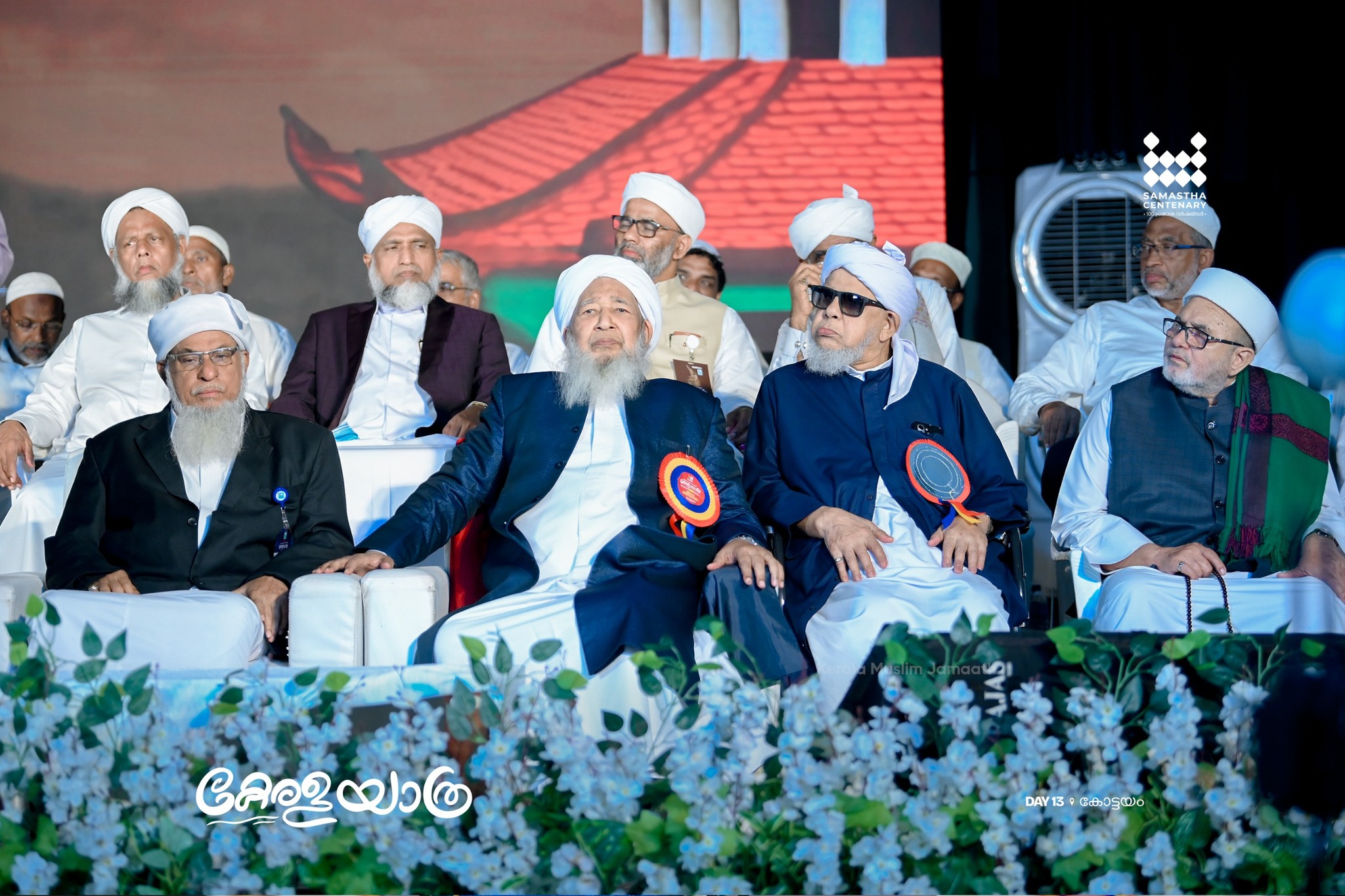
Kerala is currently wasting political energy on an absurd demand to bifurcate Ernakulam district and carve out a new district with Muvattupuzha as its headquarters — a proposal driven not by governance needs but by opportunistic religious politics and plain impracticality. The Kerala Muslim Jamaath’s recent call for this divisive restructuring is not just ill-timed, it is a blatant distraction from the real issues facing citizens across the district and a dangerous distraction in a state that has prided itself on administrative rationality. Kerala, thanks to unflinching support of Communists, is in the grip of Islamist rendezvous.
At its core, the push to divide Ernakulam district reflects a cynical gamble. Rather than presenting a meticulously reasoned case based on objective criteria like demographic shifts or administrative workload, advocates are attempting to frame the argument in terms of socio-religious identity and community aspirations. This is a slippery slope that undermines the very foundations of secular governance that Kerala’s administrative divisions are supposed to uphold. Ernakulam is already one of the most efficiently administered districts in the state, encompassing both urban megacities like Kochi and thriving rural pockets. Splitting it on questionable grounds would weaken governance, not strengthen it.
Supporters of the demand argue that the eastern towns around Ernakulam, including Muvattupuzha, are neglected compared to the coastal urban core. But the answer to perceived neglect isn’t to redraw maps based on religiously tinged political mobilisations. It’s to improve governance and resource distribution within the existing framework. The state can strengthen sub-collector offices, decentralise planning committees, or enhance public services where needed without inflaming communal sentiments or creating needless administrative overhead. The mere fact that this proposal emerges from a group with overt religious identity raises understandable concerns about motive.
Moreover, the clamour to bifurcate Ernakulam reveals how easily legitimate demands for better local infrastructure can be co-opted by partisan interests. Ernakulam has genuine issues — traffic congestion in Kochi, infrastructural demands in rural economic centres, and environmental pressures around its river systems. But transforming these into a demand for district reorganisation serves as a political smokescreen. Instead of focusing on practical issues like employment, healthcare access, and sustainable urban planning, the spotlight has shifted to a debate that seems engineered more for headlines than for real public benefit.
There is also widespread scepticism among ordinary residents about the motives behind the bifurcate movement. Voices within online communities have pointed out that such demands often amount to political bargaining, not genuine calls for administrative reform. Many argue that Ernakulam’s challenges would be better addressed through targeted public investment rather than creating a new bureaucratic entity that will require new infrastructure, offices, and staff — all at the cost of taxpayers. They see this push as a foot in the political door, possibly to increase legislative representation or regional bargaining power, rather than a thoughtful plan for improved governance.
Worse still, this demand may set a dangerous precedent. If Ernakulam can be split on flimsy justifications infused with identity politics, what stops similar proposals across the state? Districts like Malappuram, Palakkad, or even Thiruvananthapuram could become battlefields for carving out new religiously defined administrative units. This could lead to endless administrative fragmentation, increased government spending on bureaucracy, and heightened inter-community tensions — the exact opposite of the cohesive and efficient governance Kerala has historically aimed for. The very idea that district boundaries can be redrawn not for functional necessity but for factional advantage should alarm every citizen.
The argument that Ernakulam needs bifurcation because of demographic changes is overblown. The district already holds a manageable administrative load and, with proper investment, can accommodate evolving needs. Instead of this, Kerala’s leaders should question whether they want to lead through evidence-based policy or whether they will pander to segmented political interests that view administrative boundaries as leverage in election cycles. Bifurcating Ernakulam on unstable grounds would erode public faith in democratic processes and set a bad example for administrative decision-making in India.
Kerala’s political class should also reflect on the broader implications of this demand. Redrawing borders can inflame latent communal tensions, particularly in a district like Ernakulam that houses diverse communities with deeply interwoven cultural and economic ties. Pushing for a new district with Muvattupuzha as headquarters, especially under the aegis of religious organisations, threatens to fracture that unity for fleeting political gains. Instead of advancing communal harmony, it stokes suspicion and division under the guise of development.
As Kerala gears up for delimitation and future elections, politicians and civic leaders must prioritise substantive governance over superficial territorial reconfigurations. The citizens of Ernakulam deserve better than to have their concerns manipulated for factional advantage. They need improved infrastructure, better healthcare, and sustainable job creation — not endless debates over district boundaries. Splitting Ernakulam in pursuit of political ends would be an expensive distraction from these urgent needs.
Ultimately, the demand to bifurcate Ernakulam with Muvattupuzha as a new district headquarters exemplifies a broader malaise in contemporary politics, where identity and short-term advantage eclipse rational planning. If the state moves forward with this proposal, it risks not only administrative inefficiencies but also the erosion of the inclusive culture that has defined Kerala’s progress for decades. Responsible leaders must reject such divisive ventures and recommit to governance that prioritises functionality, unity, and sustainable development above religious or political expedience.