



















“It is a culture’s duty to take care of its elderly,” and the real weight of this statement does not come from emotion or sentiment, but from the responsibility it places on a society to act consistently and fairly over time.
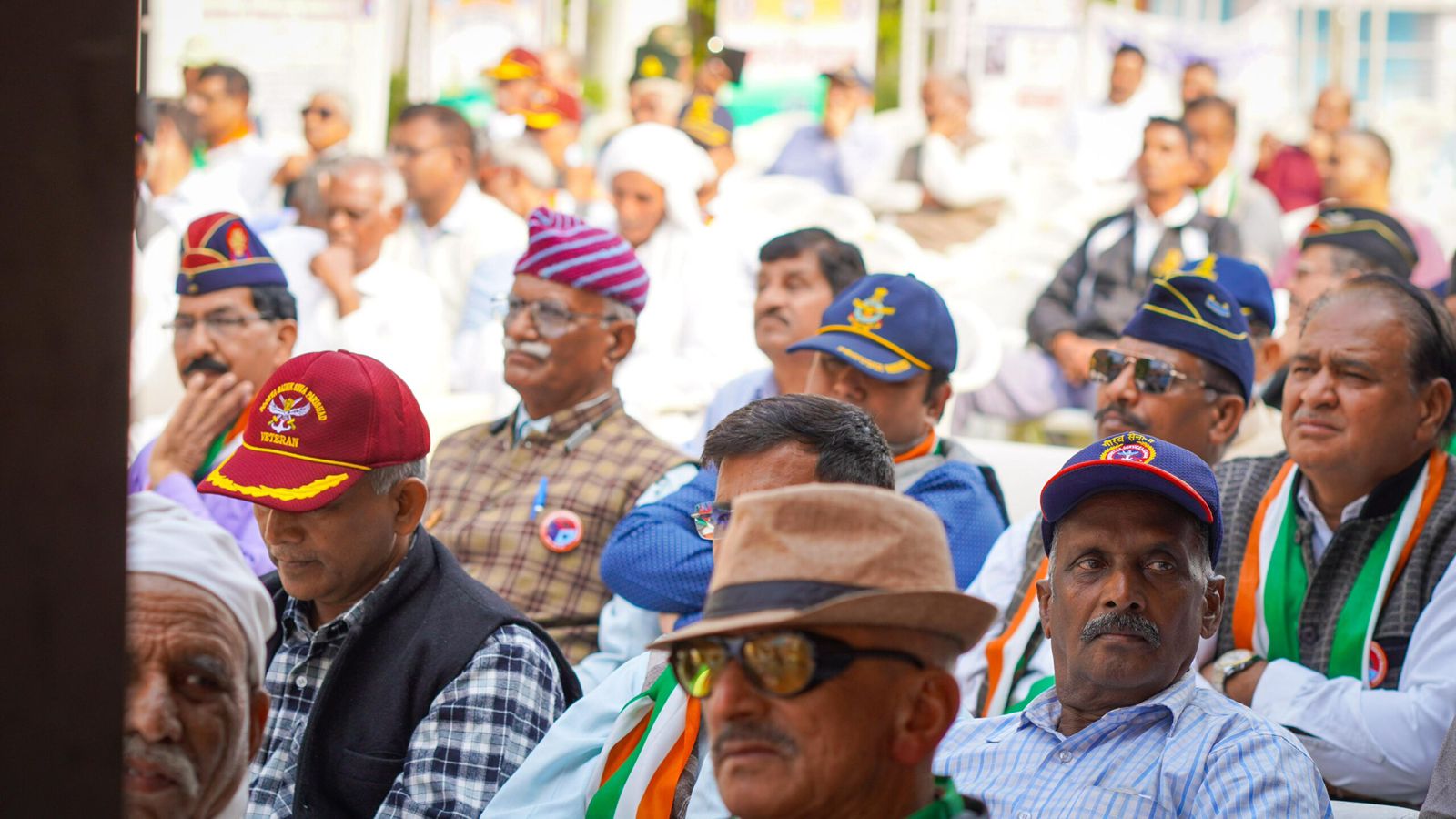
For nations, this responsibility is never theoretical, because it is tested in real systems, in how long processes take, and in how often—or how quietly—those who once served are required to ask for what was assured to them when they were younger and in uniform.
Veteran welfare is often spoken about in technical terms, through lists of schemes and provisions such as healthcare coverage, pension mechanisms, disability evaluations, and grievance redress platforms.
But taken together, these are not separate benefits or isolated policies; they represent a single moral agreement between the state and those who served it in roles where risk was unavoidable and duty left no room for negotiation.
How faithfully this agreement is honoured after service ends tells us far more about institutional credibility than speeches, commemorations, or ceremonial displays ever can.
Since the early 2000s, India’s veteran welfare framework has expanded in visible and meaningful ways, with initiatives such as the Ex-Servicemen Contributory Health Scheme, the consolidation of pensions through SPARSH, and the creation of specialised tribunals, all reflecting an effort to modernise and improve outcomes.
These reforms were not symbolic; they were introduced to address real and long-standing needs.
Yet for many veterans, the experience on the ground suggests that while welfare exists, its delivery remains uneven and unpredictable.
The central challenge is not a lack of policy, but a division of responsibility across multiple systems that do not always work smoothly together.
Healthcare operates under one administrative structure, pensions under another, while disability recognition moves through medical boards, accounting offices, and courts, each following its own procedures and interpretations.
Veterans, however, experience all of this as a single journey, and when one part of the system falters, the strain is felt across the entire chain.
International examples show what better coordination can achieve. In the United States, veteran welfare is managed within a single institutional framework that brings healthcare, compensation, rehabilitation, and legal support under one umbrella.
In the United Kingdom, the Armed Forces Covenant ensures that responsibility for veterans is shared across departments and local authorities, so that care does not fade after discharge.
Australia follows a similar path, focusing on early support and continuity of care as veterans age.
These systems face their own pressures and delays, but they are built around a shared understanding that veterans are not incidental beneficiaries, but a defined group with foreseeable needs that grow over time, which means systems are designed for continuity rather than occasional intervention.
India’s approach, by contrast, remains more compartmentalised. Parliamentary discussions and court observations frequently point to delays, differing interpretations of eligibility, and inconsistent grievance resolution.
This does not suggest indifference, but rather institutional inertia, where new reforms are added on top of older structures without being fully integrated.
The result is a welfare system that functions, but often requires veterans themselves to bridge its gaps. The moral consequences of this become most visible when delays occur.
A postponed pension correction is not just a bookkeeping matter; for an ageing veteran, it can affect medical decisions, household finances, and personal dignity.
A delayed disability assessment does more than stall paperwork; it extends uncertainty and compounds injury. Repeated appeals, even in cases where legal principles are already settled, slowly weaken trust in the system’s intent.
Courts have taken note of this pattern, with tribunal and Supreme Court judgments repeatedly stating that veterans should not be forced into prolonged legal battles for entitlements that are already recognised.
Parliamentary committees have raised concerns about backlogs and called for administrative restraint. These observations are not accusations, but indicators of strain within the system.
In this context, respect is not symbolic; it is practical. It shows up in whether grievance timelines are realistic, whether court rulings are implemented uniformly rather than selectively, and whether digital systems are supported by human assistance for those who struggle to navigate them.
Trust is not rebuilt through dashboards or portals alone, but through predictable and timely responses. Veterans’ organisations often express this distinction clearly.
The concern is not that benefits do not exist, but that access to them demands persistence, repeated verification, and personal effort that places the burden of clarity on the individual rather than the institution.
When welfare begins to feel like negotiation instead of assurance, confidence erodes. The intent of the state is rarely questioned.
Successive governments have publicly reaffirmed their commitment to veteran welfare, and senior military leaders have spoken about the importance of dignity after service.
These statements matter because they set direction and expectations. The remaining task is one of translation, where policy must evolve into a coherent structure.
Modernisation offers clear opportunities: integrated grievance systems that span departments, time-bound execution of judicial decisions, clearer disability assessment standards, and healthcare models that prioritise continuity instead of fragmented reimbursements.
None of this requires radical change, only coordination. A society is often judged by how it treats those who no longer wield influence.
Veterans are not a pressure group; they are a responsibility that carries forward. Their welfare is not charity, but duty deferred, already earned through service.
As India prepares for long-term strategic challenges and invests in future readiness, the way it treats its veterans remains a quiet but telling measure of institutional maturity.
The strength of a military does not end with retirement; it is reflected in how the state stands by those who once carried its weight. In the end, the moral contract is straightforward.
Service was given without hesitation, care must follow without friction. If it is indeed a culture’s duty to take care of its elderly, then veteran welfare is not a side policy, but a reflection of who we are—and whether the promises made in uniform still hold when the uniform is finally set aside.





