















After the Republic of China was declared in 1912, it marked a clear break from the empire. The fall of the Qing dynasty was meant to end rule based on conquest, hierarchy and inherited authority.
Sun Yat-sen and other republican leaders spoke of a modern state built on citizenship, representation and cooperation with the world. China, they argued, would no longer behave like an empire.
More than a century later, modern China bears little resemblance to that vision. The political system that governs Beijing today does not reflect republican ideas. Instead, its behaviour at home and abroad increasingly resembles the imperial model it once rejected.
From Tibet to Hong Kong, from Taiwan to the South China Sea, power is asserted through pressure and control rather than consent.
Expansion in Republican Language
The Chinese Communist Party presents itself as the rightful heir to China’s modern state. Yet its actions toward regions under its influence tell a different story. In Taiwan, Beijing claims sovereignty while refusing to allow the people of the island a decisive voice in their political future. Military drills, diplomatic isolation and economic pressure are used to reinforce a claim rooted in force, not participation.
Hong Kong offers another example. Under the “one country, two systems” framework, the city was promised a high degree of autonomy after its return to Chinese rule in 1997. That promise eroded steadily. Electoral reforms were reversed, dissent was criminalised, and independent institutions were brought under central control. The result was not integration through consent, but compliance enforced by law and fear.
In the South China Sea, the pattern continues. Artificial islands, military installations and sweeping maritime claims have reshaped disputed waters. Rather than resolving differences through negotiation, Beijing has relied on physical presence and pressure. Smaller states in the region have been left to adjust to new realities they did not choose. These policies resemble expansion, not republican governance. They assert authority outward without regard for local voices or shared rules.
Not the Republic’s Heir
The Chinese Communist Party often presents itself as the culmination of China’s modern history. In reality, it represents a break from the republican experiment that began in 1912. The aim of the republic was, even if imperfectly, to replace imperial rule with a system based on citizenship and law. The current system concentrates power in a single party and tolerates no challenge.
This approach is closer to dynastic thinking than republican tradition. Authority flows from the top. Loyalty is demanded, not negotiated. Diversity is treated as instability. Borders are viewed as possessions rather than spaces shared by communities with distinct histories.
The party-state does not govern as a republic. It governs as a centre surrounded by peripheries that must be managed, absorbed, or disciplined.
The Language of “Rejuvenation”
Beijing’s slogan of “national rejuvenation” is often presented as a modern project. In practice, it closely mirrors the language of dynastic restoration. Past greatness is invoked. Unity is framed as obedience. Strength is defined by control over territory.
This rhetoric does not reflect the republican idea of progress through participation and reform. Instead, it echoes older ideas of restoring a lost order through authority and force. The past is not examined critically but used to justify present power.
In this framework, dissent is portrayed as betrayal. Autonomy becomes fragmentation. Cooperation is acceptable only when it reinforces central control.
A Regional Consequence
The failure of China’s republican promise is not limited to its own borders. It has consequences across Asia. When China engages its neighbours, it often does so from a position of pressure rather than partnership. Economic leverage replaces dialogue. Military presence substitutes for trust.
For countries around the South China Sea, this has meant uncertainty and imbalance. For Taiwan, it has meant living under constant threat. For Hong Kong, it has meant the loss of political space once guaranteed.
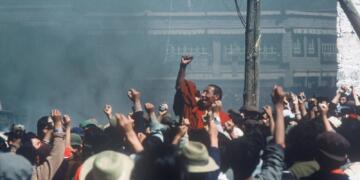
Tibet remains the earliest and clearest example. Its annexation after 1950 set the pattern: military entry followed by administrative absorption, cultural pressure, and long-term control. What happened there was not an exception. It became a model.
Exporting Coercion
A republic exports ideas. An empire exports power. Modern China increasingly exports coercion. Its influence is felt not through shared institutions or mutual agreement but through pressure.
In addition, the dependency and enforcement make it worse. This shift matters. It reshapes regional behaviour. It discourages cooperation. It replaces dialogue with calculation and fear.
The tragedy of the broken republican promise is therefore not only domestic. It has reshaped how China interacts with the world. A country that once spoke of citizenship and equality now demands deference and silence.
An Unfinished Question
China’s future remains open. History is not fixed. But the path taken so far has moved away from the republican ideals that once promised a different kind of state.
From Tibet to the South China Sea, the pattern is clear. Control has replaced consent. Authority has replaced participation. The imperial impulse has returned, wearing modern language.
The republic that was meant to end empire never fulfilled its promise. What has emerged in its place is not a modern republic asserting itself peacefully, but a powerful state reaching outward, repeating the habits of the past it once claimed to abandon.