






















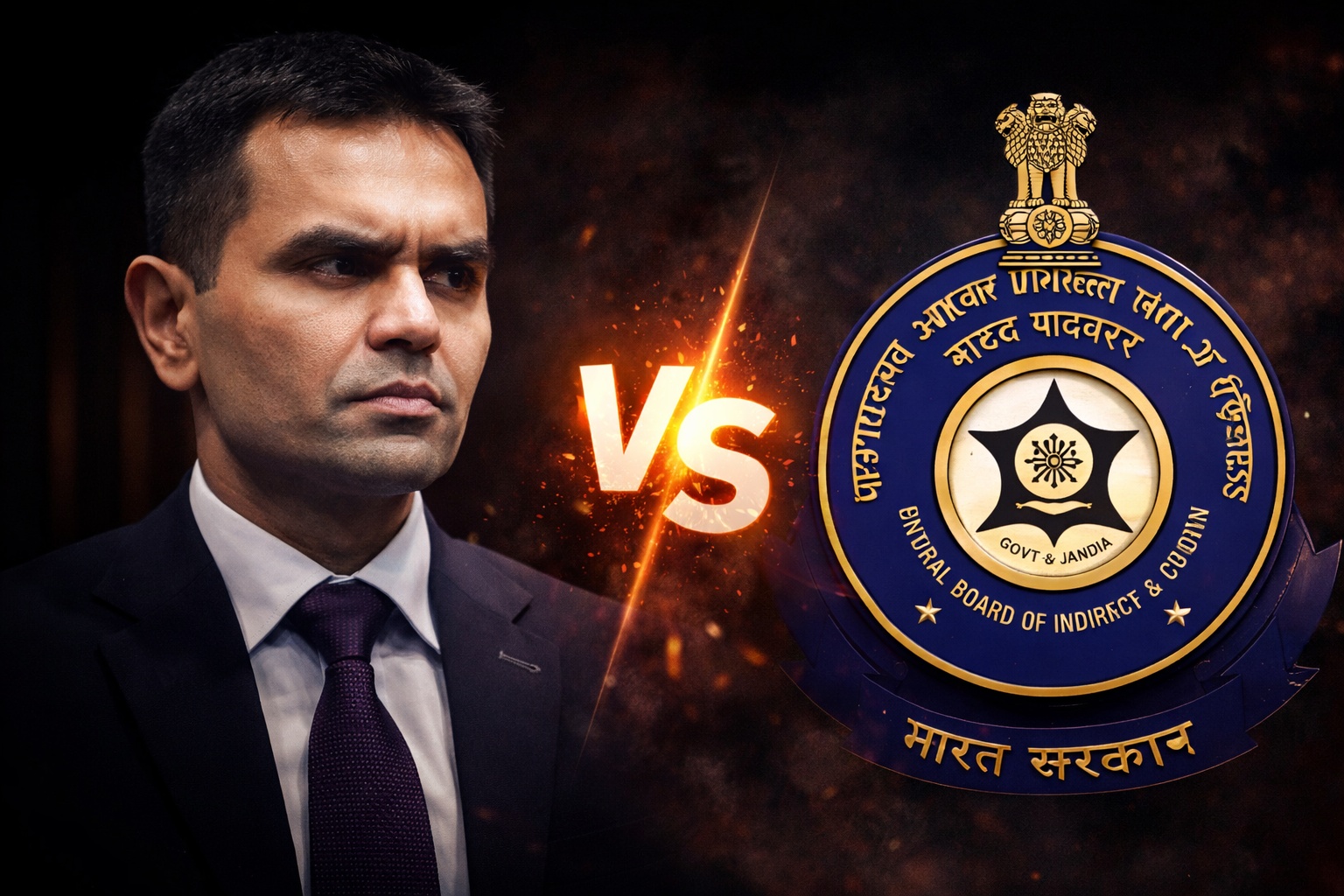
In a significant ruling with far reaching implications for administrative accountability, the Central Administrative Tribunal has set aside the disciplinary charge imposed on former IRS officer Sameer Wankhede, delivering a sharp rebuke to the conduct of the authorities involved. The tribunal did not merely provide relief to the officer but went further to record strong observations on the manner in which the case was pursued, describing it as tainted by malice and vendetta. The judgment has sparked a wider debate on fairness, due process, and the responsibility of institutions like CBIC to act without prejudice.
The case revolved around allegations that had been hanging over Sameer Wankhede for years, affecting his professional standing and personal reputation. The tribunal examined the charge sheet, the sequence of events, and the surrounding circumstances in detail before concluding that the disciplinary action lacked a sound legal and factual basis. In doing so, the tribunal emphasized that disciplinary proceedings cannot be weaponized to settle scores or silence officers who discharge their duties without fear or favor. Such observations have inevitably cast a critical spotlight on the role of CBIC in initiating and sustaining the proceedings.
At the heart of the tribunal’s reasoning was the principle that administrative power must be exercised with objectivity and restraint. The judgment underscored that suspicion, conjecture, or post facto rationalizations cannot substitute for concrete evidence. The tribunal noted inconsistencies and procedural lapses that weakened the foundation of the case. By highlighting these flaws, it implicitly questioned the internal decision making processes within CBIC and whether adequate safeguards were followed before proceeding against a senior officer.
Sameer Wankhede’s career has often placed him at the center of high profile and politically sensitive investigations. Supporters argue that this visibility made him vulnerable to retaliatory action, while critics had long claimed that scrutiny was inevitable given the nature of his assignments. The tribunal, however, made it clear that the popularity or notoriety of an officer cannot justify departures from established legal standards. Its findings suggested that the disciplinary action bore the imprint of personal animus rather than institutional necessity, a conclusion that places CBIC under uncomfortable scrutiny.
One of the most striking aspects of the ruling was the tribunal’s explicit use of the words malice and vendetta. Such language is rare in service jurisprudence and signals judicial disapproval at the highest level. The tribunal observed that when authorities act with a predetermined mindset, the entire process becomes vitiated. This warning resonates beyond the individual case and serves as a reminder to CBIC and similar bodies that their credibility depends on impartiality and transparency.
Legal experts see the judgment as reinforcing the protective role of tribunals in safeguarding civil servants from arbitrary action. They argue that while discipline and accountability are essential in public service, these goals must be pursued within the bounds of law. The ruling reiterates that institutions like CBIC are expected to rise above internal rivalries and external pressures, ensuring that their actions can withstand judicial scrutiny.
The impact of the decision on Sameer Wankhede is both professional and symbolic. Professionally, it clears a major cloud over his service record and restores a measure of dignity that had been eroded by prolonged proceedings. Symbolically, it affirms the principle that individual officers are not powerless against large bureaucratic structures. The tribunal’s observations suggest that even powerful organizations such as CBIC can be called out when they deviate from fairness and objectivity.
Beyond the individual relief granted, the judgment raises broader questions about internal governance and accountability mechanisms. It invites introspection on how disciplinary cases are initiated, vetted, and pursued. For CBIC, the ruling could prompt a reassessment of internal protocols to ensure that future actions are insulated from allegations of bias or vendetta. Such reforms would not only protect officers but also enhance institutional credibility.
The ruling also sends a message to the wider bureaucracy that judicial oversight remains a crucial check on executive power. Officers are encouraged to perform their duties lawfully and courageously, knowing that tribunals will intervene if authority is misused. At the same time, it cautions institutions like CBIC that disciplinary powers are a trust, not a tool for retribution.
In the final analysis, the CAT verdict stands as a reaffirmation of rule of law in service matters. By setting aside the charge against Sameer Wankhede and censuring the manner in which it was pursued, the tribunal has reinforced the idea that justice must not only be done but must also be seen to be done. For CBIC, the judgment is both a reprimand and an opportunity to restore faith through reform and adherence to principled governance.