
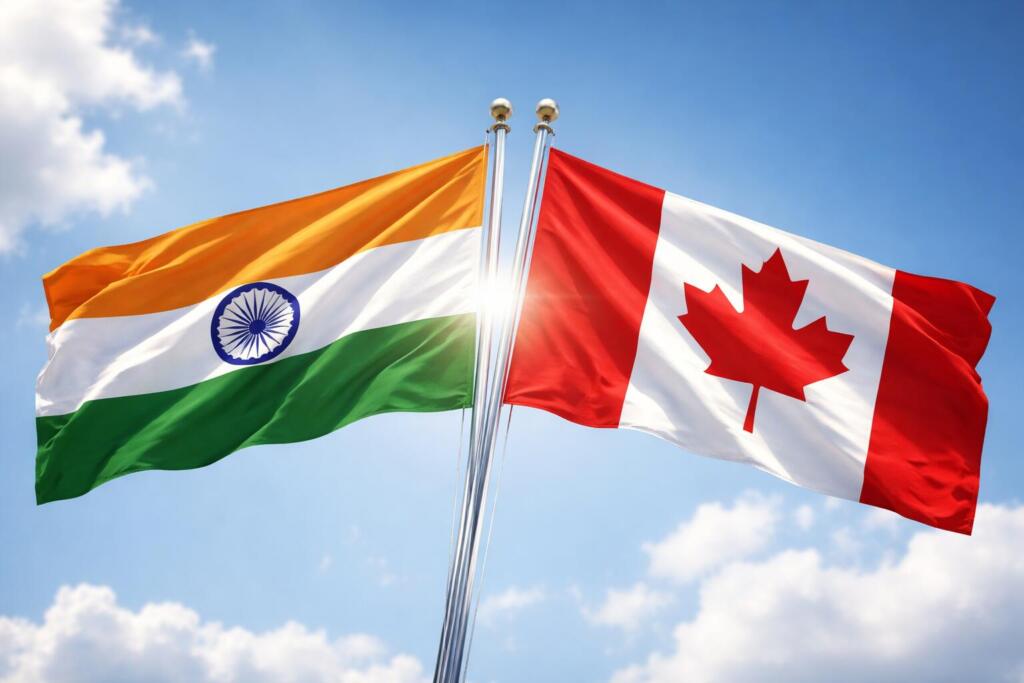
Recent remarks by the Prime Minister of Canada have unexpectedly strengthened India’s long held position on issues of sovereignty, rule of law, and responsible international conduct. What initially appeared to be a phase of diplomatic tension has now evolved into a moment where India’s consistent messaging has gained indirect validation. The shift in tone has drawn attention in policy circles, as it underscores how facts, legal frameworks, and institutional processes eventually shape global narratives.
For months, New Delhi maintained that sensitive allegations and international concerns must be addressed through evidence based mechanisms rather than political statements. India’s position was firm but measured, emphasizing that democratic nations are bound by legal standards and mutual respect. When the Prime Minister of Canada acknowledged the need for due process and institutional review, it echoed precisely what India had argued from the beginning, reinforcing the credibility of India’s diplomatic approach.
The statement carried significance because it marked a departure from rhetoric driven by domestic political pressures. By stressing investigations, judicial procedures, and cooperation between institutions, the leadership of Canada highlighted principles that align closely with India’s stance. This acknowledgment did not come as a dramatic reversal, but rather as a subtle recalibration that nevertheless sent a clear signal to the international community about the importance of restraint and responsibility.
From India’s perspective, the development demonstrated the strength of strategic patience. Rather than responding with escalation, New Delhi consistently emphasized dialogue, facts, and established channels. Over time, this approach allowed space for reflection within Canada, where policymakers recognized that international credibility depends on adherence to legal norms rather than emotionally charged claims. The episode thus became an example of how diplomacy rooted in principle can outlast short term controversy.
The broader implications extend beyond bilateral ties. Relations between democracies are often tested by internal political dynamics, diaspora politics, and media narratives. The Prime Minister of Canada signaling the importance of institutional processes reinforced a universal democratic value that India had highlighted repeatedly. It also reminded global observers that responsible leadership involves tempering political messaging with accountability and evidence.
This moment has also prompted discussions about the future trajectory of India’s engagement with Canada. While differences remain, the acknowledgment of due process creates room for rebuilding trust through dialogue and cooperation. Trade, education, technology, and people to people exchanges have long been pillars of the relationship, and a return to pragmatic engagement could help both sides move past recent strains.
At a deeper level, the episode illustrates how international politics often circles back to fundamentals. India’s insistence on sovereignty and lawful conduct was not merely defensive but rooted in global norms. When the Prime Minister of Canada echoed similar principles, it highlighted that democratic states, despite disagreements, ultimately rely on the same foundations of justice and institutional integrity. This convergence, even if gradual, strengthened India’s argument on the world stage.
In conclusion, the remarks by the Prime Minister of Canada served to validate India’s consistent and principled position. They demonstrated that calm diplomacy, respect for legal frameworks, and confidence in institutions can shape outcomes even amid tension. For India, the episode reinforced the value of staying the course, while for Canada, it marked an opportunity to recalibrate engagement based on shared democratic values.