
















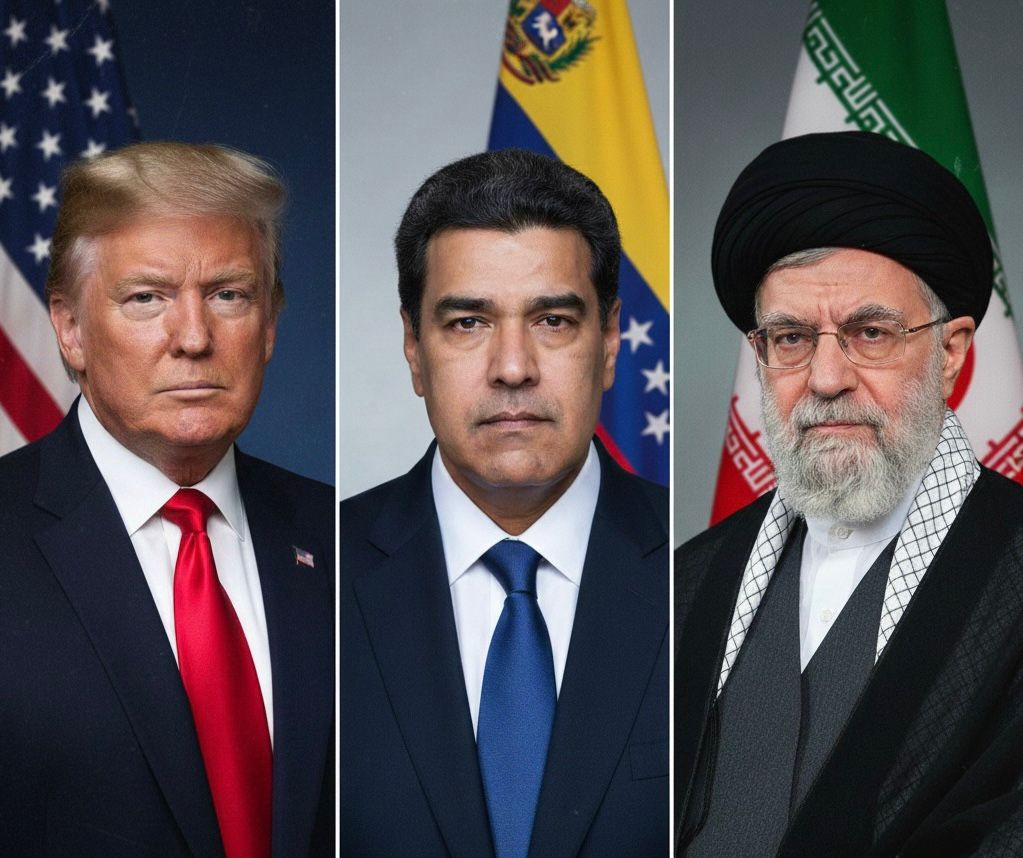
As protests continue to grip Iran, geopolitical tensions in the Middle East are once again on the rise.
A growing number of analysts are drawing parallels between US actions in Venezuela and the current situation in Iran, raising a critical question–Could Washington attempt a similar strategy against Tehran? Could the United States and Israel exploit Iran’s internal unrest to justify direct intervention?
Despite sharp rhetoric and escalating tensions, the likelihood of a direct US or Israeli military intervention in Iran remains low.
Roots of Iran’s Protests: Domestic Crisis, Not Foreign Conspiracy
The ongoing unrest in Iran is largely rooted in domestic economic and political challenges. Protests across several Iranian cities have been driven by deep economic frustration—rising inflation, unemployment, declining living standards, and long-standing grievances related to governance and accountability.
The Islamic government’s crackdown on protesters has reportedly resulted in violent clashes with security forces and multiple casualties. These developments have drawn strong reactions from Washington and Tel Aviv. US President Donald Trump warned Tehran against firing on civilians, stating that the United States would respond if protesters were killed.
However, the strategic and military costs of intervening in Iran are extremely high, making it unlikely that Washington—particularly under Trump—would be willing to pay that price at this stage.
Iran’s Supreme Leader Ayatollah Ali Khamenei and the ruling establishment have attempted to portray the protests as the result of foreign conspiracies, accusing outside powers of exploiting Iran’s internal problems to destabilize the country. Yet most independent analysts agree that the roots of the unrest are overwhelmingly domestic.
Years of US sanctions have placed Iran under severe economic pressure. The Iranian rial has sharply depreciated, reportedly reaching around 42,000 to the dollar. Food prices have soared, employment opportunities have shrunk, and public trust in the government has eroded. A lack of transparency and the suppression of basic civil liberties have further widened the gap between the state and society.
Despite these challenges, the Islamic Republic’s grip on power remains firm. Iran’s security apparatus—especially the Islamic Revolutionary Guard Corps (IRGC)—continues to be loyal, well-organized, and capable. This makes a sudden regime collapse, or a scenario resembling Venezuela, Libya, or Iraq, highly unlikely in the near term.
US Strategic Caution Toward Iran
While Washington’s rhetoric has been aggressive, its actions suggest caution. Trump publicly warned Iran not to kill protesters and claimed the US was “locked and loaded.” Such statements may signal solidarity with demonstrators, but they do not indicate imminent military action.
Historically, US policy toward Iran has relied more on pressure than invasion. Sanctions, diplomatic isolation, cyber operations, and covert actions have been Washington’s primary tools. American policymakers understand that a direct military strike on Iran could plunge the entire region into war—impacting the Persian Gulf, Iraq, Syria, and Lebanon.
Unlike Venezuela, Iran is not diplomatically isolated. It maintains strong strategic ties with Russia and China, both of which would strongly oppose any unilateral U.S. military action. This broader global context significantly limits Washington’s options.
Tehran’s Response: Sovereignty and International Law
Iranian officials have firmly rejected US statements. Senior leader Ali Larijani described them as blatant interference in Iran’s internal affairs, citing national sovereignty and international law. Tehran has made it clear that the protests are a domestic matter and that any external intervention would be considered hostile.
Moreover, securing international legitimacy for military action against Iran would be extremely difficult, further reducing the likelihood of direct intervention.
Israel’s Role: Strategic Threat, Tactical Restraint
Israel’s position remains somewhat ambiguous. Tel Aviv has long viewed Iran as its most serious strategic threat, particularly due to Iran’s nuclear program and its support for groups such as Hezbollah. Israeli leaders have openly backed U.S. pressure on Iran and have warned that Israel would act unilaterally if its security were directly threatened.
However, direct Israeli military involvement in Iran’s internal crisis appears uncertain. Any such move could open multiple fronts—from Lebanon and Gaza to Syria and potentially the Red Sea. Given Israel’s existing military commitments, relying on U.S.-led sanctions, intelligence operations, and diplomatic pressure appears far safer than outright confrontation.
What Lies Ahead for US and Israeli Strategy?
Considering all these factors, the prospect of a large-scale military campaign against Iran remains limited. It is far more likely that Washington will continue relying on familiar tools: expanding sanctions, increasing covert operations, and intensifying diplomatic efforts to isolate Iran internationally.
This approach allows the US to weaken Iran economically and politically while avoiding the unpredictability of war. Israel is expected to align closely with this strategy, reserving direct military action only if Iran crosses a clear red line.
Iran’s situation is undoubtedly unstable—but it has not yet reached a point that would justify direct U.S. or Israeli intervention. That said, the risk of miscalculation remains. Large-scale killings of protesters or direct attacks on American or Israeli interests could rapidly alter the equation.